

49 Discoveries and Innovations of 2025
Post Date: April 30, 2026 | Publish Date:

Investigators from 49 research divisions at Cincinnati Children’s produced more than 4,000 peer-reviewed journal articles, book chapters, and other publications in FY2025. The following summaries represent the most significant findings, as selected by each division.
Adolescent and Young Adult Medicine
Weight Stigma Fuels Anorexia Struggles for Youth in Larger Bodies
Allergy and Immunology
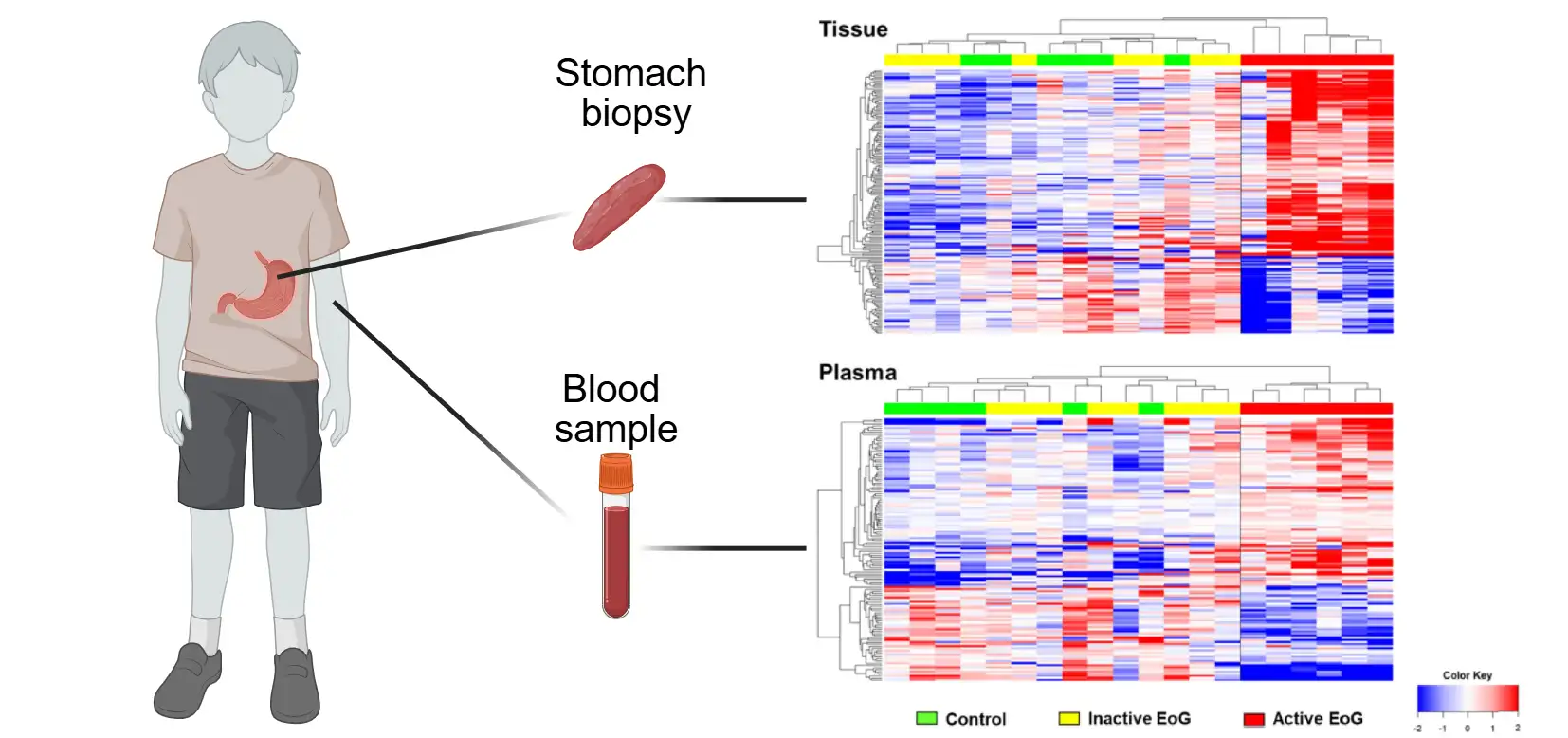
Milk Elimination Diet Shows Promise as First-Line Therapy for Children with EoE
Anesthesiology
Somatostatin Neurons Reveal Epilepsy’s Hidden Cascade
Asthma Research
Study Pierces a Mystery of Healthy Skin Barrier Formation
Biomedical Informatics
Splicing Dysregulation Reveals New Therapeutic Targets in AML
Biostatistics and Epidemiology
How Old ‘Redlining’ Policies Still Affect Childhood Asthma Risk
Cancer & Blood Diseases Institute
Bone Marrow Transplant and Immune Deficiency
Gentler Gene Therapy Eases Sickle Cell Complications
Experimental Hematology and Cancer Biology
How Bacteria in Our Aging Guts Can Elevate Risk of Leukemia and Perhaps More
Hematology
Hydroxyurea May Help People With HbSC Form of Sickle Cell Disease
Oncology
FLASH Proton Therapy Emerging as New Form of Biological Cancer Therapy
Critical Care Medicine
Biomarkers Predict Severe Kidney Injury in Sepsis
Dermatology
Unified Care for Fragile-Skin Patients
Developmental Biology
Developmental Origins of Tracheoesophageal Birth Defects
Diabetes and Endocrinology
National Collaboration Advances Diabetes Equity
Emergency Medicine
Children With Acute Allergic Reactions Often Spend Unnecessary Time in Hospitals
Every Child Succeeds
Early Trauma and Discrimination Shape Maternal Mental Health
Gastroenterology, Hepatology, and Nutrition
Genetic Risks Drive Diabetes After Childhood Pancreatitis
General and Community Pediatrics
Inequities Continue in Pediatric Patient-Family Experiences
Heart Institute
Cardiology
MRI Tech Helps ID Preemies Most in Need of PDA Closure
Cardiothoracic Surgery
Stroke Risk Remains a Challenge for Neonatal Cardiac Surgery
Molecular Cardiovascular Biology
Starvation Triggers Unexpected Gene Activation in Fibroblasts
Hospital Medicine
Few AAP Guidelines Based on Strong Evidence
Human Genetics
Circadian Disruption Drives Metabolic Disease Risk and Biomarker Discovery
Immunobiology
Pre-Surgical Antibody Treatment Might Prevent Heart Transplant Rejection
Infectious Diseases
CLIC/GEEC Pathway Drives HIV Particle Uptake in Macrophages
James M. Anderson Center for Health Systems Excellence
AI Tool Transforms Hydronephrosis Diagnosis
Mental and Behavioral Health Institute
Behavioral Medicine and Clinical Psychology
Fear of Movement Worsens Pain and Fatigue
Child and Adolescent Psychiatry
Rapid Brain Stimulation Shows Promise for Depression in Autism
Developmental and Behavioral Pediatrics
Improving Early Intervention for Head Start Preschoolers
Nephrology and Hypertension
Gucy1α1 Acts as Fibrosis Biomarker in Multiple Organs
Neurology
MEG Virtual Sensors Advance Epilepsy Surgery Planning
Neurosurgery
Fixation Device Improves Accuracy of EVD Placement
Ophthalmology
Improved Light Control Might Help Prevent Eye Problems in Premature Infants
Orthopaedics
Novel Implant Promotes Osteochondral Tissue Regeneration
Otolaryngology
CT Scans Improve Pediatric Voice Surgery Precision
Pathology
Cell Cycle Length Emerges as a Critical Cancer Driver
Patient Services Research
Self-Fitting Hearing Aids Prove Comparable to Those Professionally Fitted
Pediatric and Adolescent Gynecology
Saline Test Predicts Menstrual Health in Cloacal Patients
Pediatric Dentistry and Orthodontics
Early Establishment of a Dental Home Can Prevent Hospitalization
Pediatric General and Thoracic Surgery
Key Predictors Improve Survival After Serial Amnioinfusions
Perinatal Institute
Neonatology
Newborn Brains Are Smaller When Exposed to Opioids During Gestation
Pulmonary Biology
Phase 3 Drug Trial Shows Lung Function Improvement for Patients with aPAP
Plastic Surgery
Minimally Invasive Option for Complex Nasal Dermoid Surgery
Pulmonary Medicine
Gene Editing Strategy Shows Proof-of-Concept for Treating CF Variant
Radiology
Deep Learning Halves MRI Breath-Hold Time
Rehabilitation Medicine
Building Therapist Capacity for Brain Injury Care
Rheumatology
Stem-Cell Therapy Restores Lung Health in Severe Arthritis
Sports Medicine
Finding New Strength After ACL Reconstruction
Translational and Clinical Pharmacology
Machine Learning Sharpens Dosing for Pediatric Crohn’s Disease
Urology
PCNL Technique Produces Better Outcomes for Kids with Large Kidney Stones
Explore the 2025 Research Annual Report


Latest Posts

About this blog
The Research Horizons blog features news and insights about the latest discoveries and innovations developed by the scientists of Cincinnati Children's. This blog does not provide medical advice, diagnosis, or treatment. Email researchnews@cchmc.org with questions or ideas.
Subscribe to Our Newsletter