

Genetic Risks Drive Diabetes After Childhood Pancreatitis
Research By: Maisam Abu-El-Haija, MD, MS
Post Date: October 2, 2024 | Publish Date: October 2024

Gastroenterology, Hepatology, and Nutrition | Top Scientific Achievement

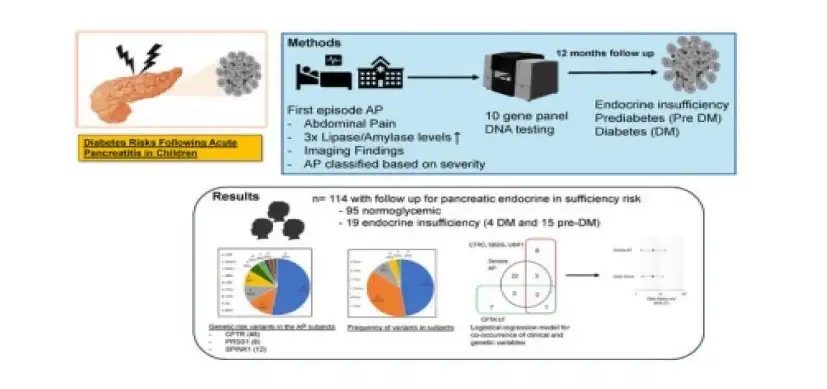
Approximately 17% of children who experience a single episode of acute pancreatitis (AP) will develop prediabetes or diabetes within a year, according to researchers at Cincinnati Children’s.
Led by Maisam Abu-El-Haija, MD, MS, the first prospective study of its kind was published in October 2024 in Clinical Gastroenterology and Hepatology.
The study analyzed 120 patients under age 21, following them for 12 months after their first AP episode. Genetic sequencing revealed that more than half carried at least one pancreatitis-associated variant. The team found that both pancreatitis severity and specific genetic variants in pancreatitis-related genes (including CFTR, SBDS, UBR1, and CTRC) are strong predictors of later endocrine insufficiency.
Children with both severe AP and a higher “genetic risk score” were most likely to develop abnormal glucose test results.
“These findings are critical because diabetes after pancreatitis can develop in a silent manner,” Abu-El-Haija says. “By identifying genetic and clinical risk factors early, we can closely monitor high-risk children and intervene before diabetes fully develops.”
The research team notes that this insight establishes a crucial foundation for pediatric diabetes prevention following AP—an area that has been previously explored only in adults. The predictive model developed from this work could eventually guide personalized surveillance and inform future screening guidelines.
The research team plans to soon expand their study across multiple centers and follow patients beyond the first year to define the timing and types of diabetes that emerge after AP.
About the study
Cincinnati Children’s co-authors included Wenying Zhang, MD, PhD; Rebekah Karns, PhD; David Vitale, MD; Peter Farrell, MD, MS; Alexander Nasr, MD; Sherif Ibrahim, MD; Tyler Thompson, BA; Vineet Garlapally, MS; Jessica Woo, PhD; and Lee Denson, MD. Collaborating institutions also included Medical College of Wisconsin; University of Minnesota Medical School; Stanford University and Stanford Medicine Children’s Health.
This study was financially supported by the National Institute of Diabetes and Digestive and Kidney Diseases (K23DK118190, R43DK105640), National Institutes of Health (P30DK078392) and the Digestive Diseases Research Core Center in Cincinnati.
Explore the 2025 Research Annual Report
Don’t Miss a Post:
- Subscribe to the Research Horizons Newsletter
- Follow Cincinnati Children’s Research Foundation on Bluesky, X and LinkedIn
| Original title: | The Role of Pancreatitis Risk Genes in Endocrine Insufficiency Development After Acute Pancreatitis in Children |
| Published in: | Clinical Gastroenterology and Hepatology |
| Publish date: | October 2024 |
Research By

In my research, I am focused on acute pancreatitis, predictive models for severe pancreatitis and diabetes that occurs after acute pancreatitis. I’m also actively working on research in acute recurrent chronic pancreatitis and total pancreatectomy islet auto-transplantation arenas.

Latest Posts

About this blog
The Research Horizons blog features news and insights about the latest discoveries and innovations developed by the scientists of Cincinnati Children's. This blog does not provide medical advice, diagnosis, or treatment. Email researchnews@cchmc.org with questions or ideas.
Subscribe to Our Newsletter