

Minimally Invasive Option for Complex Nasal Dermoid Surgery
Research By: Jesse Skoch, MD
Post Date: September 10, 2024 | Publish Date: Sept. 10, 2024

Plastic Surgery | Top Scientific Achievement

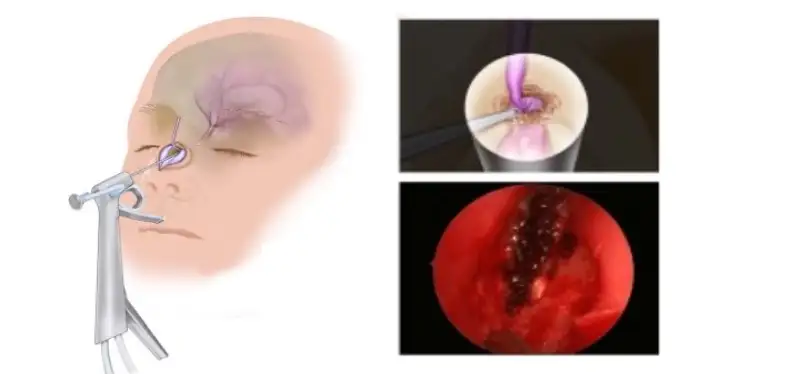
Nasal dermoid sinus cysts are rare congenital lesions that can extend from the nose into the skull base. If they aren’t removed completely, they place children at risk for infection, neurological complications and high recurrence rates. Traditionally, cysts with intracranial extension have required invasive surgical approaches, such as frontal craniotomy or nasal osteotomy. These procedures are associated with greater morbidity, longer hospital stays and visible scarring.
In a paper published online in September 2024 in The Journal of Craniofacial Surgery, researchers at Cincinnati Children’s report positive outcomes from a minimally invasive transnasal approach that uses endoscopic assistance to remove nasal dermoid sinus cysts with intracranial extension while avoiding craniotomy or nasal bone osteotomy in most cases. The retrospective study evaluated 18 pediatric patients treated between 2017 and 2023. Fifteen patients underwent complete cyst excision through a small midline nasal incision with endoscopic visualization to the skull base.
All patients treated with the transnasal endoscopic approach achieved total resection with no recurrences observed during follow-up imaging. Surgical morbidity was low, blood loss was minimal, and no patients required transfusion. Only one child experienced a cerebrospinal fluid leak, which was successfully managed without long-term complications. Compared with historical approaches, this technique resulted in shorter incisions, reduced scar burden and excellent cosmetic outcomes.
“This technique offers a unique transnasal approach without osteotomy, craniotomy or bicoronal incision to decrease scar burden, morbidity and post-operative pain,” says Jesse Skoch, MD.
By combining craniofacial plastic surgery, pediatric neurosurgery and pediatric otolaryngology expertise, the team tailored surgical planning to cyst anatomy while preserving safety and effectiveness.
This work highlights the benefits of multidisciplinary collaboration and surgical innovation in improving outcomes for children with complex craniofacial conditions. Through ongoing follow-up, the team will continue to monitor long-term recurrence and facial growth. Future studies aim to refine patient selection criteria and expand the adoption of this approach at specialized pediatric centers.
Cincinnati Children’s co-authors also included Kiersten Woodyard De Brito, MD, MPH; Douglas Dembinski, MD; Nathan Lawera, MD; Mitchell Buller, MD, MEng; Alessandro de Alarcon, MD; and Brian Pan, MD.
Explore the 2025 Research Annual Report
Don’t Miss a Post:
- Subscribe to the Research Horizons Newsletter
- Follow Cincinnati Children’s Research Foundation on Bluesky, X and LinkedIn
| Original title: | Transnasal Endoscopic Approach for Excision of Intracranial Nasal Dermoid Sinus Cysts |
| Published in: | The Journal of Craniofacial Surgery |
| Publish date: | Sept. 10, 2024 |


Latest Posts


About this blog
The Research Horizons blog features news and insights about the latest discoveries and innovations developed by the scientists of Cincinnati Children's. This blog does not provide medical advice, diagnosis, or treatment. Email researchnews@cchmc.org with questions or ideas.
Subscribe to Our Newsletter