

Key Predictors Improve Survival After Serial Amnioinfusions
Research By: Stefanie Riddle, MD
Post Date: May 8, 2025 | Publish Date: May 8, 2025

Pediatric General and Thoracic Surgery | Top Scientific Achievement

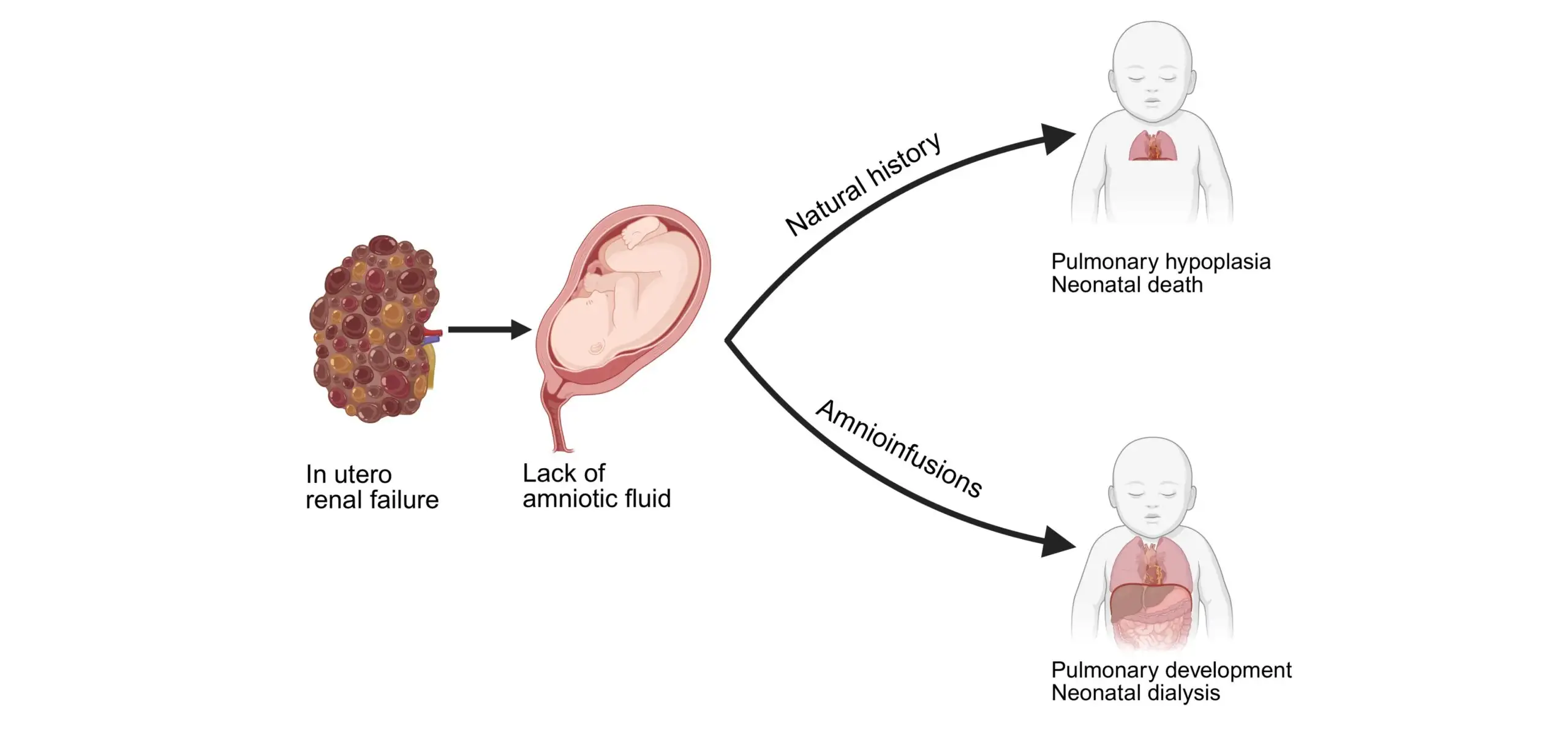
A multidisciplinary team at Cincinnati Children’s and the University of Cincinnati has identified critical factors that predict neonatal survival following serial amnioinfusions for fetuses with in-utero renal failure.
The retrospective study, published in the American Journal of Obstetrics & Gynecology, analyzed 100 pregnancies from 2011 to 2023 involving conditions such as bladder outlet obstruction (BOO), multicystic dysplastic kidney (MCDK), and bilateral renal agenesis (BRA).
Researchers found that maintaining normal amniotic fluid for at least 10 weeks after starting amnioinfusions significantly improved survival to both seven days of life and hospital discharge. Later gestational age at last infusion and delivery, as well as higher 5-minute Apgar scores, also predicted better outcomes. In contrast, inability to maintain the amniotic fluid volume due to procedure-related complications or prolonged periods at the end of pregnancy without fluid was linked to poorer survival.
“The longer we can maintain amniotic fluid after starting treatment, the better the baby’s chances,” says Stefanie Riddle, MD, neonatologist at Cincinnati Children’s and co-author. “These insights help us guide families through difficult decisions about fetal therapy and neonatal care.”

The study also revealed that survival was highest in babies with BOO, followed by MCDK, and lowest in BRA. The use of an amnioport improved early survival but not survival to discharge, suggesting that the procedural technique may influence short-term outcomes. The findings underscore the value of refining treatment duration and timing to improve outcomes for these complex pregnancies.
Prospective studies to validate these predictors and explore how advances in neonatal renal replacement therapies—such as Carpe-DIEM and aquapheresis—will be next, as they can further enhance survival and quality of life for affected infants.
About the study
Cincinnati Children’s co-authors included Braxton Forde, MD; Mounira Habli, MD; Foong-Yen Lim, MD; David McKinney, MD; Mallory Hoffman, MD; Kara Markham, MD; Meredith Schuh, MD; Donna Claes, MD; and Mel Minges, RN. Collaborating institutions included co-authors from the University of Cincinnati College of Medicine and TriHealth.
Explore the 2025 Research Annual Report
Don’t Miss a Post:
- Subscribe to the Research Horizons Newsletter
- Follow Cincinnati Children’s Research Foundation on Bluesky, X and LinkedIn
| Original title: | Predictors of neonatal survival in pregnancies undergoing serial amnioinfusions for in utero renal failure |
| Published in: | American Journal of Obstetrics & Gynecology |
| Publish date: | May 8, 2025 |



Latest Posts

About this blog
The Research Horizons blog features news and insights about the latest discoveries and innovations developed by the scientists of Cincinnati Children's. This blog does not provide medical advice, diagnosis, or treatment. Email researchnews@cchmc.org with questions or ideas.
Subscribe to Our Newsletter