

Circadian Disruption Drives Metabolic Disease Risk and Biomarker Discovery
Research By: John Hogenesch, PhD
Post Date: July 15, 2024 | Publish Date: July 15, 2024

Human Genetics | Top Scientific Achievement

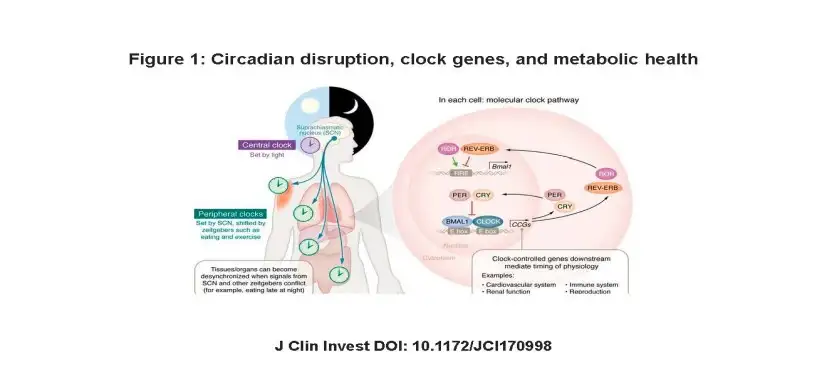
Disruption of the body’s circadian rhythm—caused by factors such as irregular sleep cycles, altered dietary timing, and extended exposure to artificial light—has emerged as a key contributor to metabolic syndrome, obesity, Type 2 diabetes, and cardiovascular disease.
A comprehensive review article, published in July 2024 in the Journal of Clinical Investigation, synthesizes evidence from animal models and human epidemiologic studies to recap how changes in clock gene expression (including BMAL1, CLOCK, NPAS2, PER1, PER2, PER3, REVERBA, CRY1, and CRY2) can drive adverse metabolic outcomes.
The review, co-authored by John Hogenesch, PhD, underscores the complexity of disentangling the effects of multiple circadian disruptors, such as shift work and screen time, on human health. The authors also emphasize the importance of cataloging the functions of oscillating clock-controlled genes (CCGs) for potential use as biomarkers with implications for diagnostics, drug dosing, and more.
“This work highlights how understanding circadian gene expression can transform our approach to preventing and treating metabolic diseases. By identifying reliable biomarkers, we can better target interventions and improve outcomes for those most at risk,” Hogenesch says.
Next steps for this research include expanding human studies to increase sample diversity and duration, validating CCG biomarkers in real-world settings, and developing strategies to mitigate circadian misalignment in vulnerable populations such as shift workers and frequent travelers.
About the study
Co-authors included experts from the University of Wisconsin and the University of Illinois Chicago. Funding sources included grants from the NIH (R35-ES028377, T32-ES007015, R01-AG061080, R21-AI142481, P30-CA014520, and P30ES027792).
Explore the 2025 Research Annual Report
Don’t Miss a Post:
- Subscribe to the Research Horizons Newsletter
- Follow Cincinnati Children’s Research Foundation on Bluesky, X and LinkedIn
| Original title: | Circadian disruption, clock genes, and metabolic health |
| Published in: | Journal of Clinical Investigation |
| Publish date: | July 15, 2024 |
Research By

The Hogenesch lab studies transcriptional outputs of the clock in animal models and humans.

Latest Posts

About this blog
The Research Horizons blog features news and insights about the latest discoveries and innovations developed by the scientists of Cincinnati Children's. This blog does not provide medical advice, diagnosis, or treatment. Email researchnews@cchmc.org with questions or ideas.
Subscribe to Our Newsletter