

Developmental Origins of Tracheoesophageal Birth Defects
Research By: Nicole Edwards, PhD | Aaron Zorn, PhD
Post Date: May 23, 2025 | Publish Date: May 23, 2025

Developmental Biology | Top Scientific Achievement

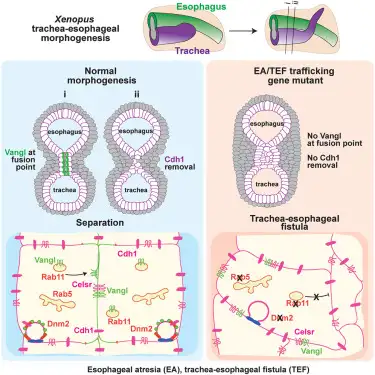
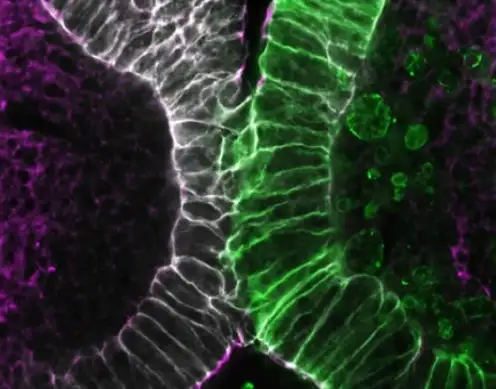
Each year in the United States, about 300 to 400 infants are born with malformations of their esophagus or trachea that require surgery for the child to survive. Now, thanks to research involving the African clawed frog (Xenopus), scientists report pinpointing when and how the fetal development process goes wrong.
A study led by first author Nicole Edwards, PhD, and corresponding author Aaron Zorn, PhD, traces these rare birth defects to specific disruptions in the cellular trafficking process required for the developing esophagus and trachea to separate from the embryonic foregut. Their findings were published online in May 2025 in Developmental Cell.
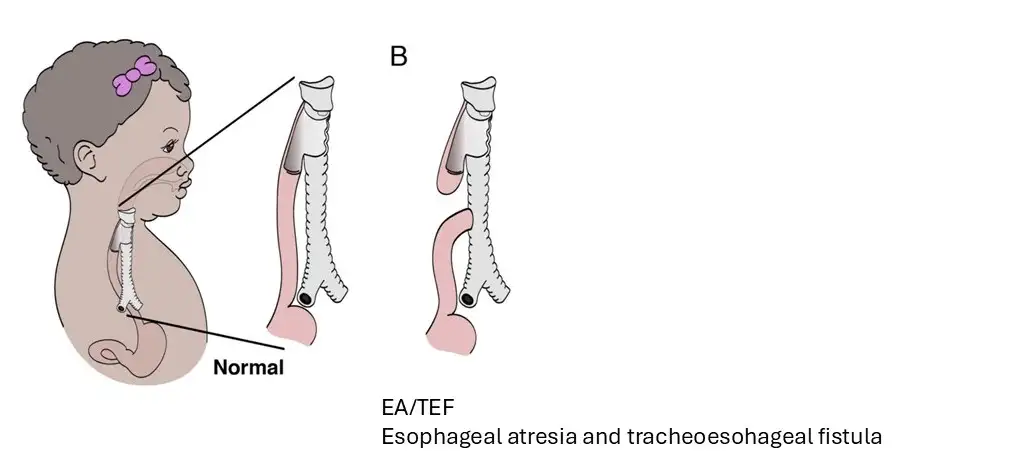
Zorn leads a multi-institutional NICHD-funded project known as the CLEAR consortium researching the cause of tracheoesophageal birth defects. Through whole genome sequencing the team identified hundreds of potential mutations, but the challenge is finding which ones might cause the defects. In a series of experiments, using Xenopus models, they discovered that mutations in genes that drive endosomal trafficking of the Vangl-Celsr cell polarity complex resulted in a failure of the foregut to form into separate esophagus and tracheal tubes, similar to what is observed patients.
“This research highlights a critical bottleneck in organogenesis that may inform future therapies for children affected by conditions such as esophageal atresia and tracheoesophageal fistulas,” Zorn says.
Next, the research team plans to make human organoids that model key variants detected in the Xenopus experiments. The team seeks to further define the complex cell signaling that contributes to tissue separation, which eventually could lead to cell therapies or customized replacement tissues to improve outcomes for affected children.
About the study
Cincinnati Children’s co-authors included Scott Rankin, PhD, Adhish Kashyap, PhD, Alissa Warren, Zachary Agricola, BS, Alan Kenny, MD, PhD, and Matthew Kofron, PhD. These core facilities also contributed: Bio-Imaging and Analysis Facility, Division of Veterinary Services, and the DNA Sequencing Core. Experts from Columbia University and Boston Children’s Hospital also collaborated.
Explore the 2025 Research Annual Report
Don’t Miss a Post:
- Subscribe to the Research Horizons Newsletter
- Follow Cincinnati Children’s Research Foundation on Bluesky, X and LinkedIn
| Original title: | Disrupted endosomal trafficking of the Vangl-Celsr polarity complex underlies congenital anomalies in Xenopus trachea-esophageal morphogenesis |
| Published in: | Developmental Cell |
| Publish date: | May 23, 2025 |
Research By
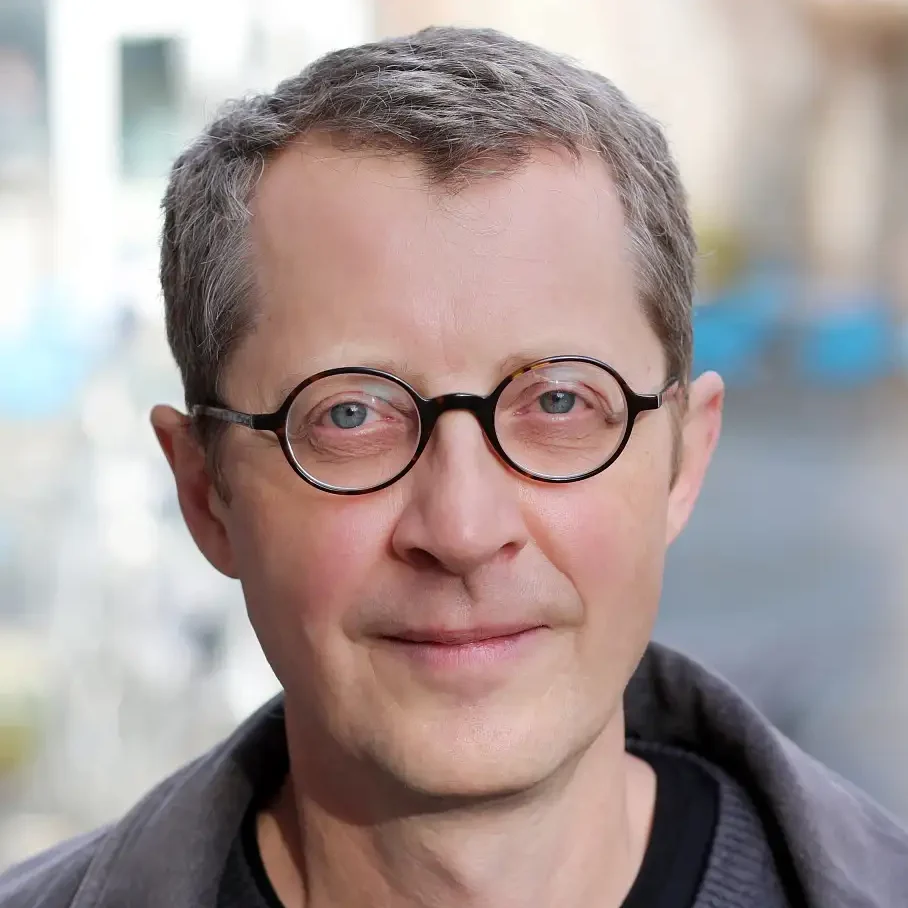
Our goal to elucidate the molecular mechanisms controlling the embryonic development of digestive and respiratory organs. We use a combination of Xenopus and mouse animal models, human pluripotent stem cells and cutting-edge genomics to investigate the underlying gene regulatory networks of organogenesis.
Latest Posts
About this blog
The Research Horizons blog features news and insights about the latest discoveries and innovations developed by the scientists of Cincinnati Children's. This blog does not provide medical advice, diagnosis, or treatment. Email researchnews@cchmc.org with questions or ideas.
Subscribe to Our Newsletter