Fontan Outcomes Network Study Reveals Health Needs Beyond the Heart
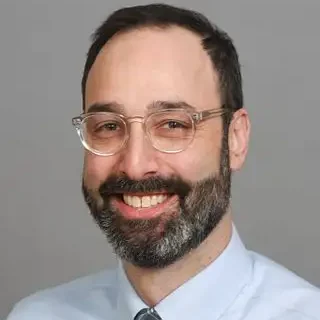
Research By: Alexander Opotowsky, MD, MMSc
Post Date: March 25, 2026 | Publish Date: March 25, 2026

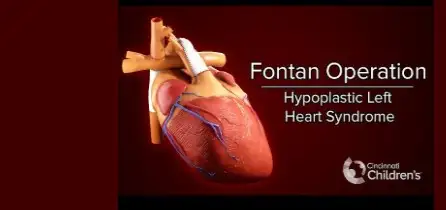
First findings from a multicenter network coordinated by Cincinnati Children’s reveal the common complications and highlight the mental health needs of people living with a Fontan circulation
Single ventricle heart disease encompasses congenital heart diagnoses in which only one ventricle is strong enough to support the circulation. For children born with this condition, a series of surgeries culminating in the Fontan procedure can improve blood flow and oxygen levels.
Children usually undergo this procedure between the ages of 2 and 5 years and, once completed, blood is directed to the lungs without first passing through the heart. This separates oxygen-poor blood from oxygen-rich blood, so the body gets more oxygen, and the heart doesn’t have to work as hard.
Even though the Fontan procedure has allowed many children with single ventricle heart disease to reach adulthood, it creates other challenges. The procedure raises pressure in the veins for life, for example, potentially affecting the liver, kidneys and other organs. And researchers still have a limited understanding of how patients’ health will change over their lifetimes.
“These diagnoses and their consequences are complex and lifelong. It can be very hard to identify which patients will develop what problems,” says Alexander Opotowsky, MD, MMSc, director of the Adult Congenital Heart Disease Program at Cincinnati Children’s. “Even the largest medical centers don’t have enough patients to see the whole picture of all the different complications and risk factors.”
That’s why Cincinnati Children’s helped build the Fontan Outcomes Network (FON), which included 38 congenital heart centers across the United States and Canada at the time of this study. This collaboration, which has since expanded and is now called the Single Ventricle Outcomes Network (SV-ONE), aims to better define and improve the long-term health of these patients. The network shared its first major registry findings in a study published in Circulation with Opotowsky as senior author.
A Registry Built for Long-Term Discovery
SV-ONE brings together the Fontan Outcomes Network and the National Pediatric Cardiology Quality Improvement Collaborative, which Cincinnati Children’s has coordinated for more than a decade. The network follows patients across the lifespan and combines research with quality improvement to help centers learn from one another. Cincinnati Children’s serves as the central coordinating site, with the Heart Institute managing data, and the James M. Anderson Center for Health Systems Excellence leading quality improvement and project management. Patients and parents serve on every committee across SV-ONE.
From August 2022 to August 2024, 16 of the 38 institutions in the network enrolled 1,121 participants ranging from young children to adults. SV-ONE currently includes 65 centers and has to date enrolled over 2,500 patients. It’s already one of the largest prospective, multicenter datasets of people living with single ventricle heart disease. Opotowsky notes this continued growth and ongoing follow-up over time means that SV-ONE will be able to address critical scientific questions.
“It shows that it’s feasible to build a large, detailed, multinational, multicenter lifespan registry for a rare and medically complex population,” he says.
Fontan Impacts—Much More Than the Heart
Nearly six in 10 participants (59%) had at least one Fontan-related complication, such as fluid build-up around the lungs, blood clots or stroke. About 41% had a history of arrhythmias (heart rhythm problems), and 58% had other health conditions, such as asthma or sleep apnea. And these complications tend to become more common with age.
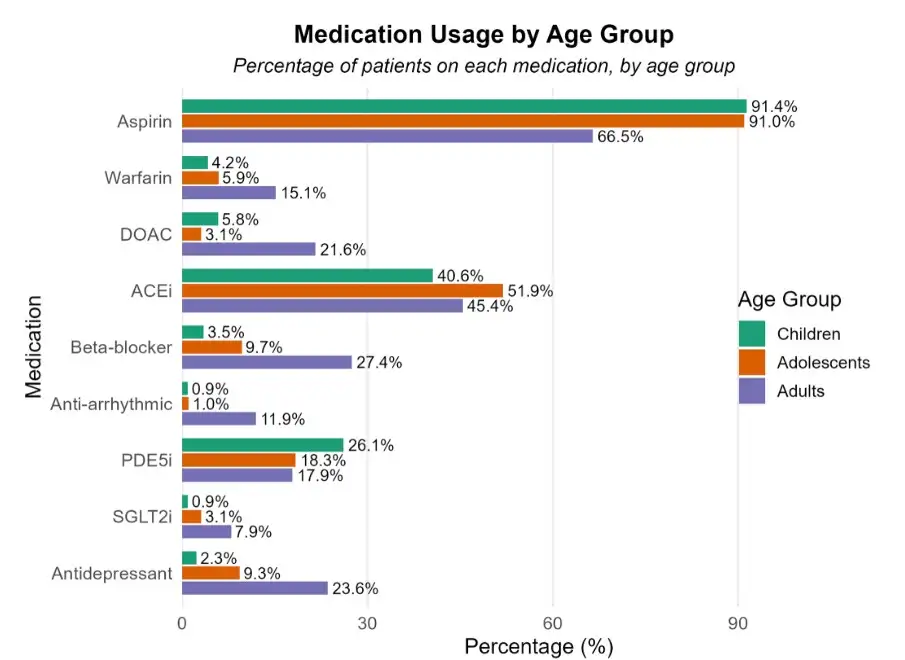
But the most striking finding, Opotowsky says, was in relation to mental health. About 34% of patients had a diagnosed anxiety disorder, including nearly half of all adult participants. Antidepressants were being actively prescribed to roughly 12% of participants overall and nearly one-quarter of adults.
“The study underscores that Fontan care is about much more than the heart,” he says. “Such a high proportion of patients with these diagnoses and the number of patients on antidepressants really emphasizes that mental health and overall well-being need to be part of heart center care.”
At Cincinnati Children’s, the Heart and Mind Wellbeing Center is helping put this philosophy into practice by integrating psychological care into cardiac services for children and adults with congenital heart disease and their families. The Center reflects a growing recognition that supporting mental health and emotional wellbeing is not an optional addition to cardiac care, but an essential part of helping patients and families thrive across the lifespan.
Opotowsky stresses that this study is a snapshot of patients receiving care today. It doesn’t yet show long-term outcomes. Still, he says documenting these patterns across medical centers will help hospitals make a strong case for multidisciplinary Fontan clinics, with inclusion not only of various medical subspecialities but also of psychological care.
What Comes Next?
The network is already helping participating centers to share best practices and put the findings of research into action, Opotowsky says. Current quality improvement efforts focus on exercise and physical activity, liver health and neurodevelopment. And according to Opotowsky, future initiatives may address other topics, such as emotional wellbeing and the transition from pediatric to adult care.
The registry is also building evidence to guide surgical decisions. In one early network study of more than 500 patients, Cincinnati Children’s cardiologist David Leone, MD, MS, found that the size of the tube used to create the Fontan connection, which is within the range surgeons commonly use, didn’t affect exercise capacity. Most earlier studies that tried to examine this included 100 patients or fewer from a single center.
Eventually, Opotowsky says, the network hopes to run clinical trials within the registry. Having a ready-made participant population across multiple locations could not only facilitate research but also enable centers to implement what is learned more quickly and easily.
“This network gives us a way to replace our isolated experience with shared learning,” he says. “And it really allows us to make that learning matter in the lives of patients and families.”
ABOUT THE STUDY
In addition to Opotowsky, Cincinnati Children’s co-authors included Nadine Kasparian, Rohith Vanam, Jeffrey Theobold, Sarah Hummel, and Carole Lannon. Funding sources included a grant from NCATS (UM1 TR005265).
Don’t Miss a Post:
- Subscribe to the Research Horizons Newsletter
- Follow Cincinnati Children’s Research Foundation on Bluesky, X and LinkedIn
| Original title: | The Fontan Outcomes Network: Findings After 2 Years and 1121 Participants |
| Published in: | Circulation |
| Publish date: | March 25, 2026 |
Research By
Latest Posts

About this blog
The Research Horizons blog features news and insights about the latest discoveries and innovations developed by the scientists of Cincinnati Children's. This blog does not provide medical advice, diagnosis, or treatment. Email researchnews@cchmc.org with questions or ideas.
Subscribe to Our Newsletter