

Road to Researcher: Ronald Waclaw, PhD
Post Date: November 19, 2026 | Publish Date:

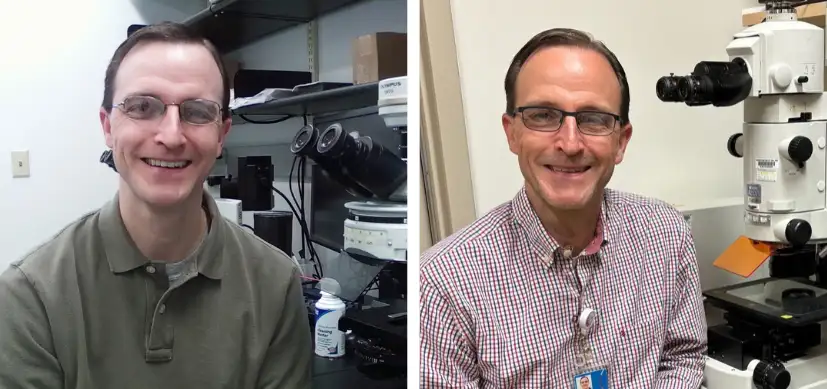
How unexpected opportunities, lasting relationships and a passion for discovery shaped a journey from graduate student to independent researcher.
Sometimes, the path to becoming an independent researcher is anything but predictable. For Ronald Waclaw, PhD, one of the defining moments in his career came when his PhD mentor decided to move his lab—leaving him with a choice: follow or stay and start over. Years later, his decision would help shape the scientist and research program he has built at Cincinnati Children’s.
Today, Waclaw is a researcher in the Division of Experimental Hematology & Cancer Biology’s RASopathy Program and Cancer Biology and Neural Tumors Program with a secondary appointment in the Division of Developmental Biology. He is an associate professor and the co-director of the Development, Stem Cells and Regenerative Medicine Graduate program. His lab focuses on the development of the forebrain, exploring how cells respond to mutations associated with neurodevelopmental disorders, including RASopathy syndromes.
But Waclaw’s path to this work began long before he had his own lab. Early mentors introduced him to developmental biology and genetic approaches to studying brain development, sparking interests that would follow him through his PhD and postdoctoral training at the University of Cincinnati and Cincinnati Children’s. When an opportunity eventually arose to launch his own lab at Cincinnati Children’s, he again found himself at a crossroads.
More than two decades after first arriving at Cincinnati Children’s, Waclaw remains motivated by the unanswered questions about brain development and the genetic basis of neurodevelopmental disorders. He credits his trainees and colleagues with keeping that curiosity alive, along with a research environment where a hallway conversation can become a new collaboration or a different direction for discovery.
Here, Waclaw reflects on the twists and turns that shaped his career, the mentors who helped him find his scientific niche and the reasons he ultimately chose to build his career at Cincinnati Children’s. He also shares lessons learned from the inevitable setbacks of research—and how persistence, collaboration and a willingness to see challenges as opportunities have guided him along the way.
What are some defining moments—pivots or challenges—that you’ve experienced along your career path?
I came to the University of Cincinnati and Cincinnati Children’s for the Molecular and Developmental Biology PhD program in 1999. I stayed in 2005 for a postdoctoral fellowship, and then, quite unexpectedly, remained at Cincinnati Children’s when the opportunity to start my own lab presented itself in 2010.
Establishing a new laboratory as a junior investigator is quite challenging, particularly in securing external funding. Promoting a highly collaborative culture became the cornerstone of the lab’s success. I had colleagues to talk with daily, to read my grants, to give me feedback and to help evaluate new data. These collaborators, including Kenneth Campbell [PhD], Masato Nakafuku [MD, PhD], Brian Gebelein [PhD], Yi Zheng [PhD] and Nancy Ratner [PhD], helped me grow into an independent investigator and create my own niche.
When my PhD mentor decided to relocate his lab about two years into my graduate program, I decided to stay. But it meant starting over in a new lab. I decided to view that more as an opportunity than another challenge. And that single change altered my science trajectory, leading me to where I am now.
Describe the mentor, project or experience early in your training that influenced your research direction or career decisions.
There were many individuals who were crucial in shaping me as a scientist early in my training and who enabled me to discover my current niche in the field of developmental biology. To name a few: Dr. Clare Chatot, who I worked with at Ball State University while getting my master’s degree, opened my eyes to developmental biology. She connected me with faculty here at Cincinnati Children’s, including the late Dr. William Scott, who introduced me to Developmental Biology research, which eventually led me to the Molecular and Developmental Biology graduate program. She also connected me with my PhD and postdoctoral mentor Dr. Campbell, who provided me with the opportunity and training environment to learn about genetic approaches in developmental neuroscience and brain development.
These mentors shared their excitement for the science and led by example. They gave me opportunities during my graduate training that shaped my future direction in science, which has influenced me to try to provide the same opportunities for students and collaborators in my lab.
Is there a particular project, collaboration or discovery at Cincinnati Children’s that you’re especially proud of?
A highlight of my work has been generating models for novel neurodevelopmental and rare RASopathy mutations to investigate their effects on the brain. This has led us into studying the development of oligodendrocytes in the white matter brain regions and establishing collaborations with Dr. Ratner and Dr. Elliott Robinson [MD, PhD] in the RASopathy program.
The other highlight has origins from my graduate training and from a long-term productive collaboration with Dr. Campbell generating new models to examine the development of distinct forebrain structures and axon tracts, which has implications for neurodevelopmental disorders. In general, I’m excited by the opportunity to uncover how these cells respond to distinct mutations and how specific genes or pathways are activated. Ultimately, the information gained from these studies is crucial for deciphering mechanisms that drive distinct neurodevelopmental defects.
Cincinnati Children’s leads the way in integrating clinical and basic science research to drive impactful discoveries. Some of my projects began as conversations with other colleagues in passing. I have been fortunate to have support from our Center for Pediatric Genomics and the Center for Molecular Genetic Therapeutics and grants from the NIH to develop these ideas and projects.
What makes you stay? What keeps you motivated here?
Much remains to be discovered about brain development, the genetic basis of brain development, and the underlying mechanisms that cause brain phenotypes and neurodevelopmental syndromes. I am still excited by the basic science questions: finding a new gene that might have unique expression in a distinct cell lineage and trying to understand what that means for development.
Thanks to advancements in human genetics and genetic technology, we have a unique opportunity today to leverage the vast amount of genetic information being generated in the clinic to focus our basic science research efforts with the final goal of making discoveries that can guide potential targets for future therapeutics.
The people in my lab, division and research area are yet another reason. I have an amazing team in my lab—supportive colleagues who are full of ideas and excitement.
If you could go back and tell your younger self one thing, what would that be?
It’s two-fold. First, have a level of persistence. Manuscripts take time to develop and are rarely accepted on the first submission or first journal. Grants require revisions and are rarely funded on the first submission. Experiments almost always require troubleshooting. Presentations always have room for improvement. Learn from your challenges and look at each problem as an opportunity.
Second, we are trained to be critical of everything, including our own thoughts and ideas that drive future projects. But don’t let self-doubt creep in. Continue to try new approaches and ideas.
What’s something you’ve learned that’s helped you navigate the challenges of a research career?
The most important thing is not working in a silo. Make sure you have strong interactions with your colleagues and develop a productive team to discuss ideas and projects.
Outside of the lab, what do you enjoy doing? What helps you recharge?
I enjoy spending quality time with my wife and daughter and I am lucky to have a very supportive family. My wife is also a scientist, and her support, help and insight has directly contributed to my success at each stage of my career.
Outside of the lab, we often try to find small coffee shops, bakeries or restaurants locally and also when we travel. Our daughter is in college now, and watching her go through school and activities has taught me a great deal about drive, persistence and hard work. I discovered my passion for biology at this same stage in college, and I enjoy learning about her experience and the path that she’s taking in her education.
I like to be active; running and tennis help recharge my brain. My wife also loves tennis, so we enjoy playing that or pickleball, or even watching tennis.
Is there something about your background or personal journey that people might not expect, but has shaped who you are as a scientist?
A few years into my fellowship, I began evaluating my career options. In science and biomedical research, relocating to a new institution is widely considered the natural next step, so I hadn’t initially planned on staying at Cincinnati Children’s. However, during the end of my job search, I was trying to finalize my decision and discussed my options with Drs. Campbell and Gebelein. I am incredibly grateful for that conversation, as they mentioned an open faculty position search at Cincinnati Children’s and encouraged me to explore that option.
Drs. Zheng and Ratner had an ongoing national search for a faculty position in the Division of Experimental Hematology and Cancer Biology with an emphasis on RAS mutations and CNS anomalies/neural tumors, which was very similar to a project I was developing in the Campbell lab. I applied for the position, interviewed and loved everything I learned about it. Accepting that offer was an easy decision. While comparing my potential opportunities, Cincinnati Children’s deep investment in research and technology were major draws and the strong relationships and collaborations I’ve built here made staying the correct choice.
Don’t Miss a Post:
- Subscribe to the Research Horizons Newsletter
- Follow Cincinnati Children’s Research Foundation on Bluesky, X and LinkedIn
Latest Posts
About this blog
The Research Horizons blog features news and insights about the latest discoveries and innovations developed by the scientists of Cincinnati Children's. This blog does not provide medical advice, diagnosis, or treatment. Email researchnews@cchmc.org with questions or ideas.
Subscribe to Our Newsletter