

Why Do Women with IBD Face Higher Risk of Pregnancy Complications?
Research By: Sing Sing Way, MD, PhD
Post Date: March 23, 2026 | Publish Date: March 23, 2026

Experts at Cincinnati Children’s reveal new connections between intestinal inflammation, infertility and pregnancy complications
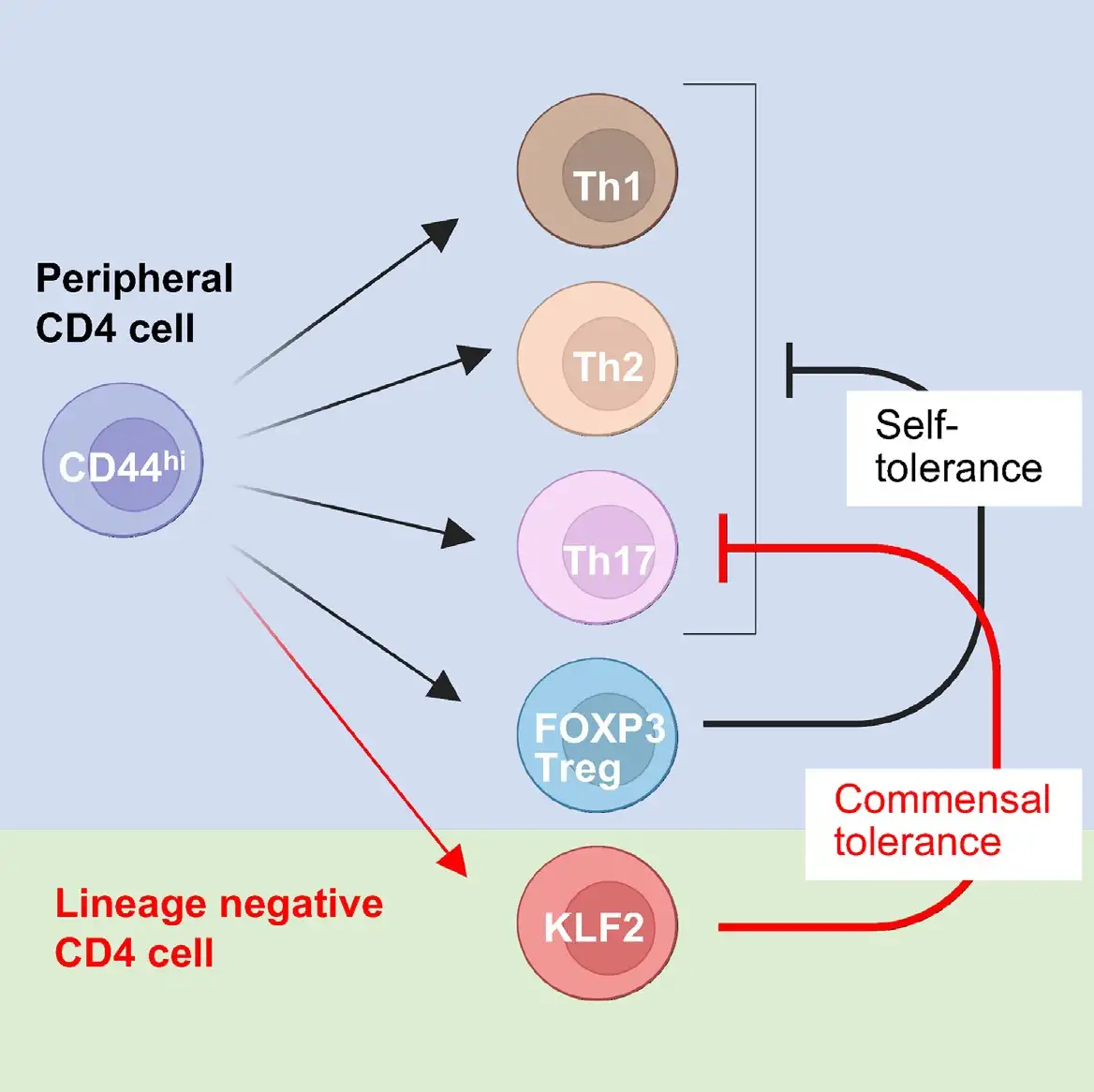
Many studies in recent years have reinforced how deeply human health can be influenced by the microbes living in our guts. Now, scientists at Cincinnati Children’s show how disrupted tolerance of commensal (friendly) microbiota can result in intestinal inflammation that also can lead to pregnancy complications.
The findings were published March 23, 2026, in PNAS. The research was led by first author Ngan “Amelia” N.M. Nguyen and corresponding author Sing Sing Way, MD, PhD.
The study analyzed—in mice—a particular subset of immune cells called KLF2+ CD4 T cells. These cells prevent intestinal tissue inflammation induced by commensal microbes. Previous studies have shown these cells to be reduced among people with Crohn’s disease.
It turns out that these specialized cells also support fertility. Pregnancy naturally stimulates increased levels of KLF2+ CD4 T cells in the mother. Mice lacking these cells become pregnant very inefficiently. Without KLF2+ cells, mothers become less tolerant of the developing fetus, which in turn can lead to pregnancy complications such as miscarriage and stillbirth.
“Previous research has shown that women with uncontrolled inflammatory bowel disease can have difficulty becoming pregnant and can experience higher rates of pregnancy complications. Our new findings help pinpoint the mechanisms involved,” Way says.
So far, these KLF2+ suppressive immune cells have been shown to be necessary for healthy pregnancy in mice. More research is needed to confirm that a similar process is happening in humans, and whether the supply of such cells can be enhanced if found to be lacking.
“This discovery is an important early step. Having more understanding of how fetal tolerance is maintained holds exciting potential for identifying ways to help more women have successful pregnancies,” Way says.
About the study
Cincinnati Children’s co-authors also included Alexander Brady, PhD, Abigail Russi, MD, PhD, Giang Pham, PhD, Bo Li, PhD, Lucien Turner, PhD, Michael Kotliar, MS, Artem Barski, PhD, and Xiaofei Sun, PhD. The Cincinnati Children’s Division of Veterinary Services and Research Flow Cytometry Facility also contributed to the study.
This research was supported in part by grants from the National Institute of Allergy and Infectious Diseases (NIAID) (R01AI172960, R01AI184537, and T32AI165396); the Eunice Kennedy Shriver National Institute of Child Health and Human Development (NICHD) (R01HD068524); the Burroughs Wellcome Fund, the March of Dimes Ohio Prematurity Research Collaborative and the Lalor Foundation.
Don’t Miss a Post:
- Subscribe to the Research Horizons Newsletter
- Follow Cincinnati Children’s Research Foundation on Bluesky, X and LinkedIn
| Original title: | Maternal Krüppel-like factor 2 (KLF2)+ CD4 T cells promote fertility and fetal tolerance |
| Published in: | PNAS |
| Publish date: | March 23, 2026 |
Research By

My research interests include infectious diseases, reproductive biology, developmental biology and immunology.
Latest Posts

About this blog
The Research Horizons blog features news and insights about the latest discoveries and innovations developed by the scientists of Cincinnati Children's. This blog does not provide medical advice, diagnosis, or treatment. Email researchnews@cchmc.org with questions or ideas.
Subscribe to Our Newsletter