

Largest Pediatric Pancreatitis Genetics Study Identifies Risk Variants Tied to Disease Progression
Research By: Wenying Zhang, MD, PhD, MBA | Maisam Abu-El-Haija, MD, MS
Post Date: June 17, 2026 | Publish Date: June 16, 2026

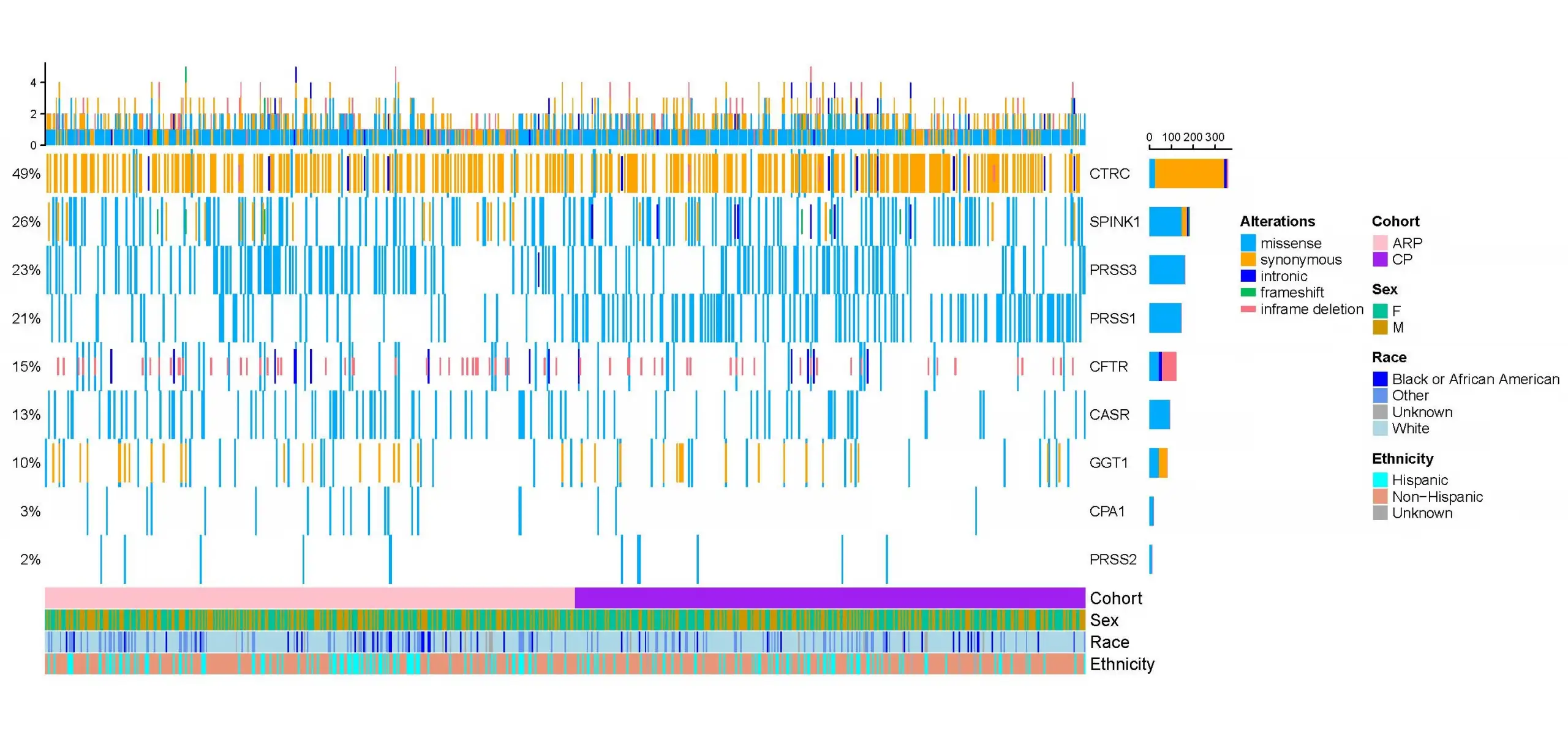
INSPPIRE analysis finds variants in several pancreatitis-related genes that may help predict which children are more likely to develop chronic disease
Genetic risk factors appear to play a major role in pediatric pancreatitis, according to a large multicenter study led by researchers at Cincinnati Children’s, the INSPPIRE network, and the NIH funded Chronic Pancreatitis Clinical Research Consortium (CPCRC).
The study analyzed genetic data from 944 children with acute recurrent pancreatitis or chronic pancreatitis and found that 74% carried at least one focused genetic risk variant. Children with one or more of these variants progressed faster from a first acute pancreatitis episode to chronic pancreatitis than children without identified variants.
The findings, published June 16, 2026, in the journal Clinical Gastroenterology and Hepatology, support broader use of genetic testing in the evaluation and management of children with recurrent or chronic pancreatitis.
“These findings show that genetics play a central role in understanding which children with pancreatitis may be at higher risk for disease progression,” says Maisam Abu-El-Haija, MD, MS, founding director of the Pancreas Care Center at Cincinnati Children’s and co-first author of the study. “Knowing a child’s genetic profile may help families and clinicians make more informed decisions earlier in the course of disease.”
Largest genotyped pediatric pancreatitis cohort to date
Pancreatitis occurs when the pancreas becomes inflamed. In children, repeated acute attacks can lead to chronic pancreatitis, a progressive condition linked to long-term abdominal pain, diabetes risk and problems digesting food because of impaired pancreatic function.
To better understand the role of inherited risk factors, the research team sequenced pancreatitis-related genes in children from Cincinnati Children’s and the INternational Study group of Pediatric Pancreatitis: In search for a cuRE (INSPPIRE). The analysis included genes previously linked to pancreatitis, including PRSS1, CFTR, SPINK1, CTRC, CASR and CPA1.
The team identified 120 variants that were more common in children with pancreatitis than in the general population. Of these, 79 had not previously been reported as associated with pancreatitis. After additional filtering, researchers focused on 38 variants across nine genes for further analysis.
Key findings
- Among 944 children with acute recurrent or chronic pancreatitis, 74% carried at least one focused genetic risk variant.
- Children with any focused variant progressed more quickly from a first acute pancreatitis episode to chronic pancreatitis than children without identified variants.
- Variants in PRSS1, CTRC and SPINK1 were linked to faster progression to chronic pancreatitis.
- Variants in CASR and CPA1 were more common in children with acute recurrent pancreatitis and were associated with slower progression to chronic pancreatitis.
- The study found 79 variants not previously associated with pancreatitis, creating new leads for future research.
How patients and families may be affected
For families, the study underscores that recurrent and chronic pancreatitis in children often has a genetic component and may not be “idiopathic,” or without a known cause. Genetic testing may help explain why a child has repeated attacks and may identify children who need closer monitoring for progression to chronic pancreatitis.
The results do not mean every child with a risk variant will develop chronic pancreatitis. Instead, the findings may help families and care teams better understand risk, plan follow-up, consider referral to specialized centers and discuss the role of genetic counseling.
Support for broader gene testing
For pediatric gastroenterologists and other clinicians, the findings support the use of broader gene panel testing when evaluating children with acute recurrent pancreatitis or chronic pancreatitis. Genetic results may help stratify risk, reduce uncertainty, guide surveillance and support earlier referral to multidisciplinary pancreatitis programs.
The study also suggests that genetic results may help clinicians distinguish children more likely to progress quickly to chronic pancreatitis. However, the authors note that genetic findings should be interpreted alongside clinical history, imaging, symptoms and family context.
A foundation for future research
For researchers, the study identifies dozens of variants that warrant further investigation. The findings reinforce the importance of building multicenter cohorts to study rare pediatric diseases and rare genetic variants.
Future steps include exploring how newly identified variants contribute to disease risk, how genetic factors interact with clinical and environmental factors, and whether genetic profiles can be used to personalize treatment or prevention efforts.
“This study gives the field a stronger foundation for linking genotype to phenotype in pediatric pancreatitis,” said Wenying Zhang, PhD, co-first author and director of the Genetics and Genomics Diagnostic Laboratory at Cincinnati Children’s. “The next step is to understand how these variants affect disease mechanisms and how that knowledge can improve care.”
About the study
In addition to the co-first authors, this study includes 34 co-authors from more than 20 institutions working on behalf of the Consortium for the Study of Chronic Pancreatitis, Diabetes, and Pancreatic Cancer (CPDPC). These co-authors include Brian Dawson, PhD, director of the Genetics and Genomics Diagnostic Laboratory at Cincinnati Children’s. The research was funded by grants from the National Institutes of Health.
Learn More About Genetic Testing for Heritable Pancreatic Disease
Don’t Miss a Post:
- Subscribe to the Research Horizons Newsletter
- Follow Cincinnati Children’s Research Foundation on Bluesky, X and LinkedIn
| Original title: | Pancreatitis Risk Genes Play a Major Role in Pediatric Pancreatitis: Insights From INSPPIRE |
| Published in: | Clinical Gastroenterology and Hepatology |
| Publish date: | June 16, 2026 |
Research By


In my research, I am focused on acute pancreatitis, predictive models for severe pancreatitis and diabetes that occurs after acute pancreatitis. I’m also actively working on research in acute recurrent chronic pancreatitis and total pancreatectomy islet auto-transplantation arenas.

Latest Posts

About this blog
The Research Horizons blog features news and insights about the latest discoveries and innovations developed by the scientists of Cincinnati Children's. This blog does not provide medical advice, diagnosis, or treatment. Email researchnews@cchmc.org with questions or ideas.
Subscribe to Our Newsletter