

New Clues to How Diet Regulates Intestinal Immunity
Research By: Bailey Didriksen, PhD | Emily Eshleman, PhD | Theresa Alenghat, VMD, PhD
Post Date: August 13, 2026 | Publish Date: August 12, 2026

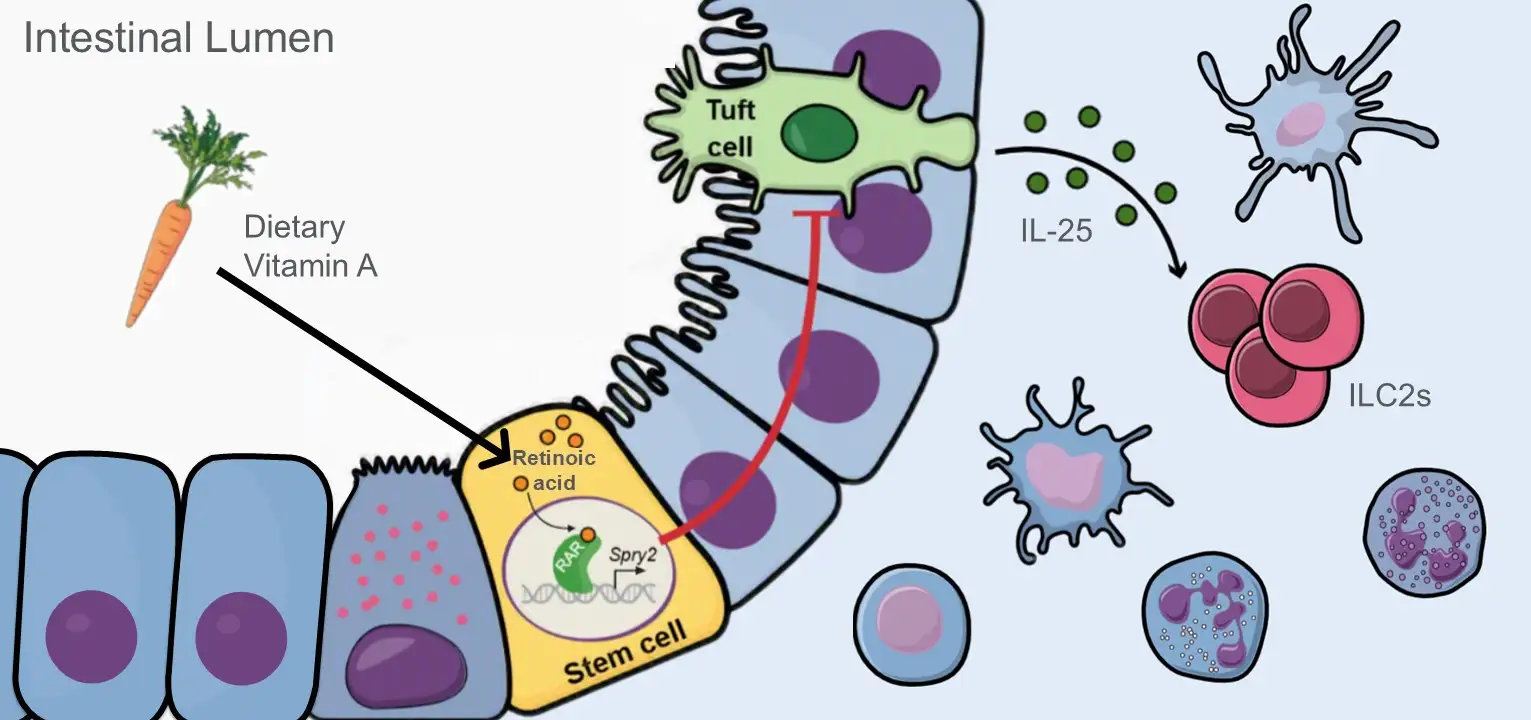
Researchers uncovered a pathway linking vitamin A signaling to the development of specialized intestinal cells that help shape immune responses
Vitamin A is a powerful regulator of immune activity in the intestine, but many of the mechanisms behind its effects remain unclear.
Researchers at Cincinnati Children’s have now uncovered one of those mechanisms. In a new study published online on August 12, 2026 in Cell Reports, the team found that vitamin A helps shape the intestinal lining by influencing how intestinal stem cells develop into specialized cell types. The work identified a previously unknown pathway that limits the formation of tuft cells, which regulate immune responses in the gut.
“While there is a general sense that nutrition and the immune system are closely connected, we really have a very limited understanding of how these two are linked,” says Theresa Alenghat, VMD, PhD, senior author of the study. “Our findings show that nutrients we eat can influence immune responses by shaping the cellular makeup of the intestinal lining itself, adding a new layer to how our diet can affect our health.”
A Bridge Between Vitamin A and Tuft Cells
The intestinal lining is constantly renewing itself. Intestinal stem cells produce a variety of specialized cells that help the gut absorb nutrients, maintain the intestinal barrier and coordinate immune responses.
One of those cell types is the tuft cell. Although relatively rare, tuft cells play an important role in sensing signals in the intestine and helping activate immune responses, particularly those involved in defending against parasitic infections. Researchers have increasingly recognized tuft cells as important regulators of intestinal immunity, but the factors that control how these cells develop are not fully understood.
Vitamin A is one potential regulator. In the body, vitamin A is converted into retinoic acid, a signaling molecule known to influence immune responses and other important processes in the intestine. Whether retinoic acid also influences tuft cells remained unclear.
Testing The Connection
Using a combination of mouse models and laboratory-grown intestinal organoids, the team explored how vitamin A and its active metabolite, retinoic acid, influence tuft cell development.
Key findings included:
- Vitamin A in the diet reduced the number of tuft cells in the intestine, while a vitamin A-deficient diet increased them.
- These changes were reversible when vitamin A was restored in the diet, and involved signaling pathways in intestinal stem cells, including the retinoic acid receptor and a protein called Sprouty2.
- Lower vitamin A consumption boosted tuft cell numbers and downstream immune responses in the intestine. This was characterized by increased type 2 immunity and improved clearance of parasitic worms in mice.
Importantly, the findings showed that dietary vitamin A can influence type 2 immune responses by shaping the development of tuft cells, revealing a new link between nutrition, intestinal biology and immunity.
Looking Ahead
The findings provide new insight into how nutrients can shape intestinal health and immunity by influencing decisions made by intestinal stem cells. Rather than acting only through immune cells, a metabolite from dietary vitamin A was shown to directly affect the development of specialized cells within the intestinal lining.
The researchers say future studies will explore whether this pathway plays a role in other conditions linked to type 2 immune responses, including allergic inflammation and intestinal disease. They also plan to investigate additional signals that may work alongside vitamin A to influence stem cell behavior and intestinal cell development.
“By uncovering this pathway, we’ve identified a new connection between nutrition and intestinal cellular dynamics,” says Alenghat. “That knowledge could help guide future research into whether dietary factors can be used to improve gut health along with conditions ranging from parasitic infections to allergic diseases.”
About the Study
Bailey Didriksen, a student in the Immunology graduate program, and Emily Eshleman, PhD, a co-corresponding author and Instructor in the Division of Immunobiology, were co-first authors of the study. Additional Cincinnati Children’s co-authors included Taylor Rice, Amanda Waddell, PhD, Shikha Negi, PhD, Laura Engleman, Seika Hashimoto-Hill, DVM, PhD, and Rebekah Karns, PhD, members of the Divisions of Immunobiology and Gastroenterology, Hepatology and Nutrition and the Center for Inflammation and Tolerance.
External collaborators include experts from Children’s Hospital Los Angeles and the University of Southern California Keck School of Medicine.
Support for this study was provided by the National Institutes of Health (R01DK137771, R01DK116868, K01DK135647, K08DK134884, R01DK116868-08S1, R01DK119694, P30 DK078392 and U54 DK126108, the Crohn’s and Colitis Foundation and the Burroughs Wellcome Fund.
Don’t Miss a Post:
- Subscribe to the Research Horizons Newsletter
- Follow Cincinnati Children’s Research Foundation on Bluesky, X and LinkedIn
| Original title: | Dietary vitamin A restricts intestinal tuft cell differentiation |
| Published in: | Cell Reports |
| Publish date: | August 12, 2026 |
Research By



The Alenghat Lab investigates epithelial and immune cell homeostasis in the context of intestinal health and disease.

Latest Posts


About this blog
The Research Horizons blog features news and insights about the latest discoveries and innovations developed by the scientists of Cincinnati Children's. This blog does not provide medical advice, diagnosis, or treatment. Email researchnews@cchmc.org with questions or ideas.
Subscribe to Our Newsletter