

Breakthrough Therapy for RASA1 Variants
Research By: K. Nicole Weaver, MD
Post Date: May 5, 2026 | Publish Date: Jan. 28, 2026

Targeted therapy offers new hope for infants with RASA1-related lymphatic disease
A team at Cincinnati Children’s pioneered the first documented use of MEK inhibition in newborn children with multisystemic RASA1-related lymphatic disease—an approach that led to rapid improvement and sustained benefit even after treatment ended.
Patients with RASA1 mutations can experience capillary malformation–arteriovenous malformation (CM–AVM) syndrome—a disorder involving distinctive skin markings, abnormal blood vessels and severe lymphatic complications. Ultimately, this may result in life-threatening swelling caused by fluid buildup around the lungs and abdomen. Historically, treatment options have been limited and largely supportive.
Clinicians at Cincinnati Children’s published a case series on Jan. 26, 2026, in Circulation: Genomic and Precision Medicine describing the short-term use of the MEK inhibitor trametinib, which led to dramatic improvements in three premature infants with severe RASA1-associated lymphatic disease. While trametinib has been shown to resolve severe lymphatic manifestations in infants with RAS/MAPK pathway disorders (RASopathies), this is the first documented use to treat RASA1-associated lymphatic manifestations.
“This is a breakthrough for a very fragile patient population,” says Nicole Weaver, MD, a clinical geneticist at Cincinnati Children’s and senior author of the publication. “We observed rapid stabilization and sustained gains with time-limited therapy—results that open new paths for care and future study.”
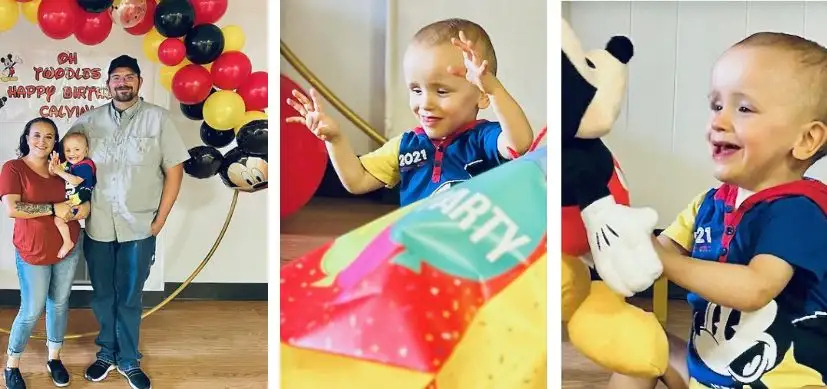
Calvin’s Story
Calvin—an infant treated at Cincinnati Children’s—was the first newborn child known to receive trametinib off-label for RASA1-associated multisystemic lymphatic disease. Treatment was delivered under careful multidisciplinary oversight, with adverse events managed through dose adjustments and supportive care. Calvin continued to improve after trametinib was weaned and stopped. No long-term recurrence was observed within the follow-up periods reported. Lessons learned from treating Calvin were used to care for two other children with RASA1 variants, one at Cincinnati Children’s and one at the University of Utah.
“These cases show that severe lymphatic symptoms can be successfully treated in children with RASopathies—and once the patient is stable, the treatment may be safely discontinued,” says Weaver. “These early findings set the stage for prospective, multi-center studies to define optimal dosing, duration, monitoring, and long-term outcomes.”
How This Could Change Care
Across all three infants, clinicians observed continued improvement even after trametinib was stopped—a surprising pattern compared with other MEK inhibitor uses. This raises key mechanistic questions about how the lymphatic system recovers in RASA1-associated disease.
RASA1 normally helps regulate MAPK pathway activity; when it’s impaired, signaling becomes overactive and contributes to severe lymphatic dysfunction. By dialing down this excess signaling, MEK inhibitors, such as trametinib, may give the developing lymphatic system a chance to stabilize and recover.
Together, these cases suggest that prolonged—or lifelong—therapy may not be necessary for RASA1‑associated lymphatic disease. That possibility has major implications for safety, cost, and family burden.
Looking Ahead
The team is sharing lessons learned and encouraging collaboration to validate these findings across larger, diverse cohorts. As awareness grows, the hope is to accelerate evidence-based protocols for neonatal lymphatic disease linked to RASA1 variants and related RAS/MAPK pathway disorders.
Although trametinib is FDA-approved for other pediatric indications, its use here was off-label, and decisions were made with careful regulatory oversight and family partnership.
“Families facing fetal hydrops — a severe form of prenatal swelling — and complex lymphatic problems in their newborns often have very few options,” says Weaver. “These cases suggest a promising, targeted path forward—and, importantly, one that may not require lifelong therapy.”
About the Study
Cincinnati Children’s co-authors included the Division of Neonatology’s Laura Peterson, MD, and John Ericson, MD, PhD, the Division of Human Genetics’ Ryan Monsberger, MD, and the Division of Hematology’s Jessica Alfonso, DO.
Elizabeth Baker, MD, Levine Children’s Hospital at Atrium Health, was the study’s first author and a former fellow in Cincinnati Children’s Human Genetics Fellowship Program. Co-authors included four experts with the University of Utah.
This research was funded in part by the National Center for Advancing Translational Sciences (UM1TR004409).
Don’t Miss a Post:
- Subscribe to the Research Horizons Newsletter
- Follow Cincinnati Children’s Research Foundation on Bluesky, X and LinkedIn
| Original title: | MEK Inhibition Improves Clinical Outcome in Premature Infants With Multisystemic RASA1 Disease |
| Published in: | Circulation: Genomic and Precision Medicine |
| Publish date: | Jan. 28, 2026 |
Research By


Latest Posts

About this blog
The Research Horizons blog features news and insights about the latest discoveries and innovations developed by the scientists of Cincinnati Children's. This blog does not provide medical advice, diagnosis, or treatment. Email researchnews@cchmc.org with questions or ideas.
Subscribe to Our Newsletter