

AI, Mental Health and the Common Good
Research By: John Pestian, PhD, MBA
Post Date: October 1, 2026 | Publish Date:

Post authored by John Pestian, PhD, MBA
Endowed Professor: Pediatrics, Psychiatry and Biomedical Informatics
Cincinnati Children’s Hospital Medical Center and
University of Cincinnati College of Medicine
I recently presented some of our Decode mental health work at the AI4Peace Symposium in Rome. The meeting was held at the Pontifical Lateran University, with the Vatican involved through the Pontifical Academy for Life. More than 250 people from around the world attended to consider the scientific, ethical, and societal implications of AI.
Pope Leo XIV sent a message to participants, expressing his hope that our work would lead to “a renewed and widespread commitment to placing technological innovation at the service of the common good.” The question underneath that message ran through the whole meeting: how do we build AI that protects human dignity and serves people? It was a fitting place to present what we have been developing through the Decode program at Cincinnati Children’s and what it could mean for patient care.
Biomarkers and Thought Markers
Helping a person with mental illness requires understanding both their biology and how they think. Clinicians know this well.
In medicine, we rely on biomarkers. In diabetes, for example, blood glucose and HbA1c are used to diagnose the disease, track its progression, and guide treatment. These measurements tell clinicians whether treatment is working and when to adjust it. Mental health care has far fewer objective measures of this kind.
Decode is working to close that gap by finding meaningful patterns in language that help clinicians understand a patient and tailor care. This matters more as AI is used to support clinical decision-making. AI can recognize patterns across enormous amounts of information, but recognizing a pattern is not the same as understanding the person behind it.
In Rome, I presented our work on the language of people in crisis from English-, French-, and Chinese-speaking groups. The material differed by group and included crisis narratives and suicide notes. We found recognizable differences between cultures, and also important differences among people within the same culture. Those within-culture differences carry information about who the person is and what they are going through. When AI flattens them, it erases information that may be essential to understanding a crisis and providing individual care.
Through Decode, we have developed approaches that use mathematical geometry to examine the structure of thought as expressed in language. Biomarkers reflect physiological processes. What we call thought markers are measurable patterns in language that reflect how a person organizes and expresses experience.
By examining the geometric relationships among these markers, we can see the underlying structure of a person’s language and how it differs from someone else’s. This gives clinicians a view of distress that biological measures alone cannot provide.
The Shape of Language
Combining thought markers with biomarkers could give clinicians a fuller picture of the person they are caring for. I think of it as a landscape.
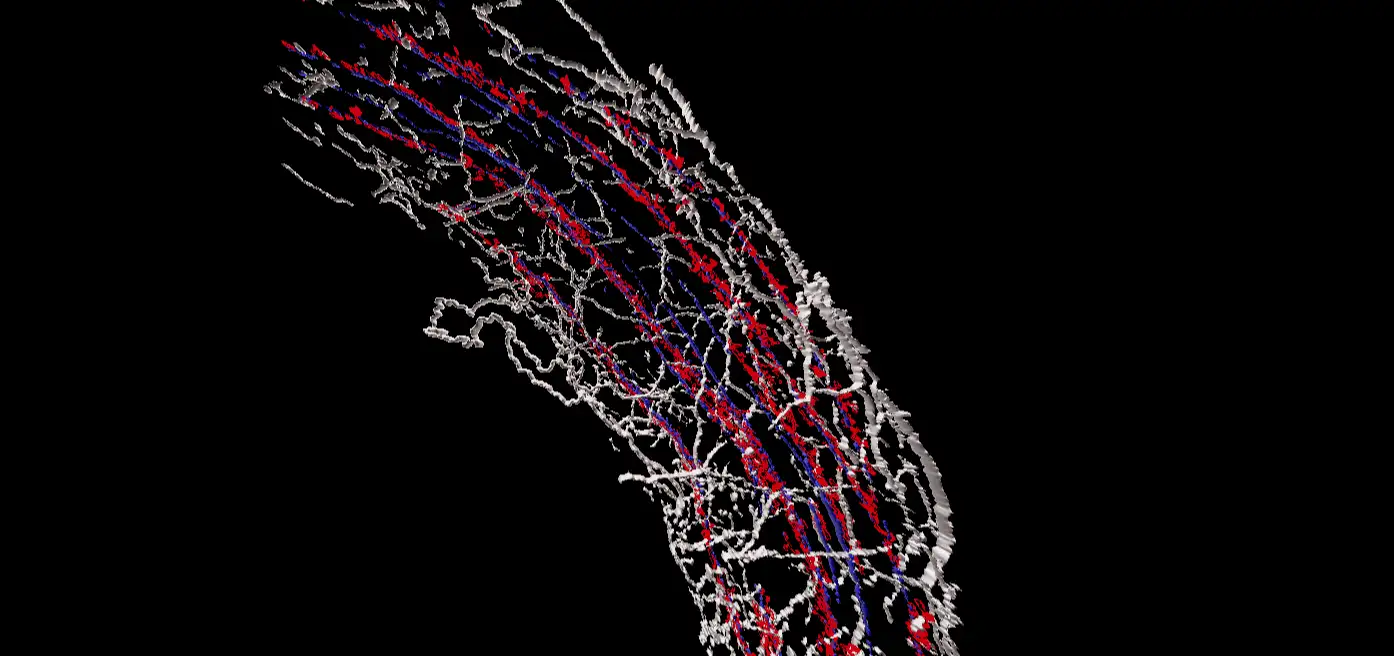
From a distance, two landscapes may look alike. Map them and you see the ridges, valleys, peaks, and distances that make each one different. Language has that kind of structure. The words matter, and so do the relationships among them. Those relationships give the landscape its shape.
Our methods map that structure mathematically so we can compare shapes across individuals and cultures. We can also measure what happens to the shape when AI interprets someone’s language: does it keep the relationships that make a person’s experience distinct, or smooth them away?
To our knowledge, this is the first time geometric methods like these have been used to quantitatively measure cultural differences in the language of people experiencing mental illness.
When AI Makes People Look Alike
We tested this with language from 150 people in crisis, some of whose crises ended in suicide, asking an AI model to generate an explanation of each person’s language. Before we adapted the model, 62% of those people received the same explanation. Nearly two-thirds of them, each with a different history, culture, and way of expressing distress, were essentially interpreted in the same way.
In mental health care, that is a serious problem. The model was flattening the thought markers that distinguish one person’s experience from another’s, and with them, information that matters for that person’s care.
Correcting the Flattening
Using Decode’s methods, we identified where meaningful differences were being lost and adapted the AI to retain them. After adaptation, the model distinguished the English-, French-, and Chinese-speaking groups while also keeping the differences among individuals within each group.
Culture gives context for understanding a person, but it must not become another way of sorting people into categories. Cultural adaptation is valuable only if it also preserves the individual.
What This Could Mean for Patient Care
This work has important implications for children and families, both at specialized centers like Cincinnati Children’s and in underserved communities, where specialized mental health care may be limited or absent.
At centers like ours, these tools can help clinicians see differences among children that might otherwise go unnoticed. In underserved communities, AI could extend clinical expertise where little exists, but we must be careful about what we extend. A system that overlooks cultural and individual differences would deliver generic care at scale.
Decode aims to build tools that help clinicians recognize how a particular child expresses distress. What matters is whether technology helps a clinician understand the child in front of them.
Seeing the Person Beyond the Data
I usually leave meetings thinking about the science and the next experiment. In Rome, I also found myself thinking about the Pope’s message.
Technological progress should serve human dignity, and those of us building AI have a responsibility to the people who depend on it. When a system interprets different children’s experiences in essentially the same way, it may overlook differences that matter to their care. A child is more than a diagnostic category or a point in a mathematical space. Each has a history, a culture, and a way of experiencing the world.
I came home thinking about the people whose language we studied. Each described their pain in their own words. If AI is going to serve the common good in mental health care, we must build it so those differences are preserved, not erased.
This work was carried out by the Decode team at Cincinnati Children’s, a group of clinicians, scientists, and engineers, with collaborators at national laboratories.
If you or someone you know is in crisis, call or text 988 to reach the 988 Suicide & Crisis Lifeline.
Don’t Miss a Post:
- Subscribe to the Research Horizons Newsletter
- Follow Cincinnati Children’s Research Foundation on Bluesky, X and LinkedIn
Research By

At the Decoding Mental Health Center, we use advanced artificial intelligence (AI) to help those who care for patients with mental health challenges. Our focus is the person, and then the machine. Our mission is to provide clinically useful precision information to families and caregivers.
Latest Posts

About this blog
The Research Horizons blog features news and insights about the latest discoveries and innovations developed by the scientists of Cincinnati Children's. This blog does not provide medical advice, diagnosis, or treatment. Email researchnews@cchmc.org with questions or ideas.
Subscribe to Our Newsletter