

Gene Therapy Brings Hearing to Children with Inherited Deafness
Research By: John Greinwald Jr., MD
Post Date: October 6, 2026 | Publish Date: Oct. 12, 2025

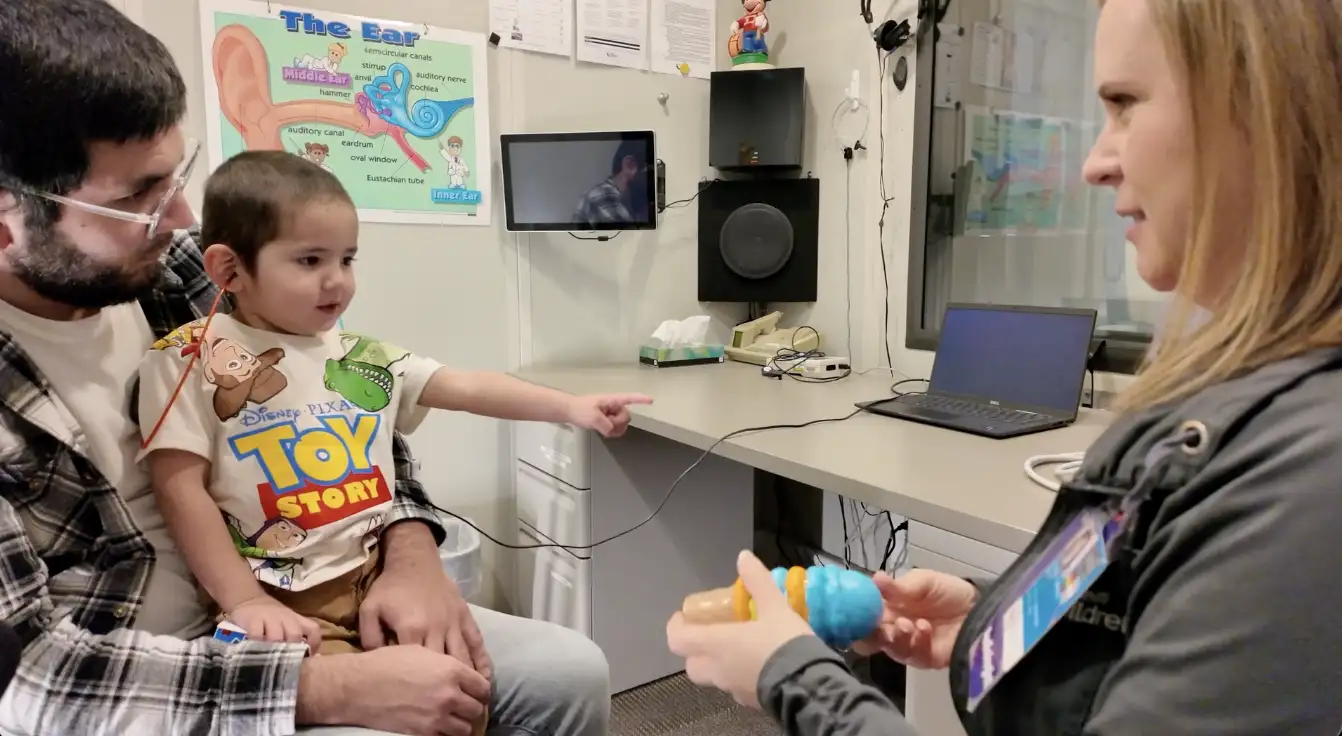
As part of a breakthrough clinical trial, experts at Cincinnati Children’s have provided a treatment called Otarmeni (lunsotogene parvec-cwha) that has restored natural acoustic hearing to a pair of siblings
Key Takeaways
- In a clinical trial, a one-time gene therapy restored meaningful hearing in 9 of 12 children with profound deafness caused by inherited variants in OTOF.
- The treatment delivers a working copy of the otoferlin gene directly into the cochlea using a dual AAV1 vector.
- The NEJM study reporting these findings was co-authored by John Greinwald Jr., MD, Division of Otolaryngology
- Two children, a brother and sister, have been treated at Cincinnati Children’s in the second group of clinical trial participants.
To see a 3-year-old boy who was born with profound deafness simply smile and point to the sounds coming from a nearby speaker felt like nothing short of a medical miracle to everyone in the room.
“For us, it was a moment of real amazement, because it’s something that we would have never really expected to happen in our career, for kids to be able to hear without the need of devices,” says John Greinwald Jr., MD, a clinician-scientist with the Division of Otolaryngology at Cincinnati Children’s.
In April 2025, Greinwald provided the boy with a treatment called Otarmeni (lunsotogene parvec-cwha), a novel gene therapy developed by Regeneron. The treatment was made for pediatric and adult patients with severe-to-profound and profound sensorineural hearing loss (any frequency >90 decibel hearing level) associated with molecularly confirmed biallelic variants in the OTOF gene, preserved outer hair cell function, and no prior cochlear implant in the same ear.
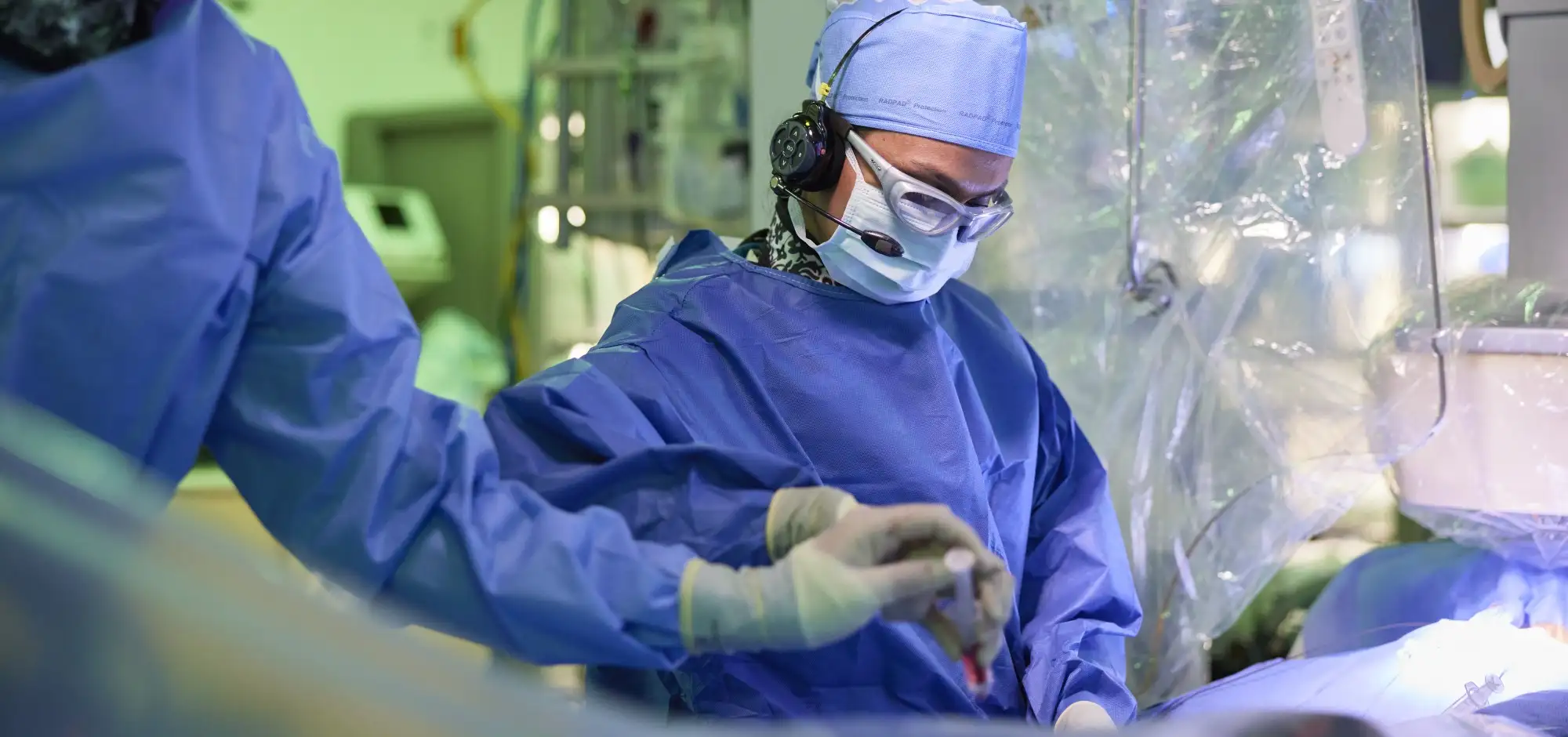
The approach for administering the drug is similar to cochlear implant surgery, but the delivery of the drug is technically challenging. The surgical team directly infused Otarmeni into the cochlear fluid space at a controlled rate while the boy was under general anesthesia.
The outcome was profound. Once inside the inner ear, the “dual AAV1 vector system” began entering sensory hair cells, augmenting the cell with a normal OTOF gene that produces otoferlin, a protein that helps pass signals from hair cells to the auditory nerve. Over time, these healthy cells were expected to multiply and transform the boy’s ability to hear. Within several weeks, follow-up examinations revealed dramatic improvement.
“I think this is going to be the dawn of a new age of molecular intra-cochlear therapy,” Greinwald says.
What type of deafness can be treated this way?
This therapy addresses a specific form of OTOF-related congenital deafness. This occurs when a child is born with malfunctioning variants in both copies of the OTOF gene. Overall, an estimated 1% of congenital deafness cases involve biallelic OTOF variants.
These children cannot hear noises as loud as a running lawnmower a few feet away. And without devices like cochlear implants, their hearing never gets better. Although implanted devices can provide functional levels of hearing, the auditory information is somewhat limited and notably different from natural human hearing.
How Much Improvement Has Occurred?
By 24 weeks, nine of the first 12 study participants were able to hear down to at least 70 decibels or less, a level that generally avoids the need for cochlear implantation, according to research published in The New England Journal of Medicine. Four patients gained normal to near-normal hearing and four patients had only mild to moderate hearing loss, which allowed them to hear normally with standard hearing aids. Meanwhile, one child did not respond at all to Otarmeni, for reasons that remain unclear.
Since the first 12 patients treated, two children have received this therapy at Cincinnati Children’s—a brother and sister both born with extreme loss of hearing.
The boy, Abdu, was treated in 2025 at age 3. He went from hearing nearly virtually no sounds at all to detecting sounds within four weeks. Now, he is hearing in the normal range and had begun developing speech.
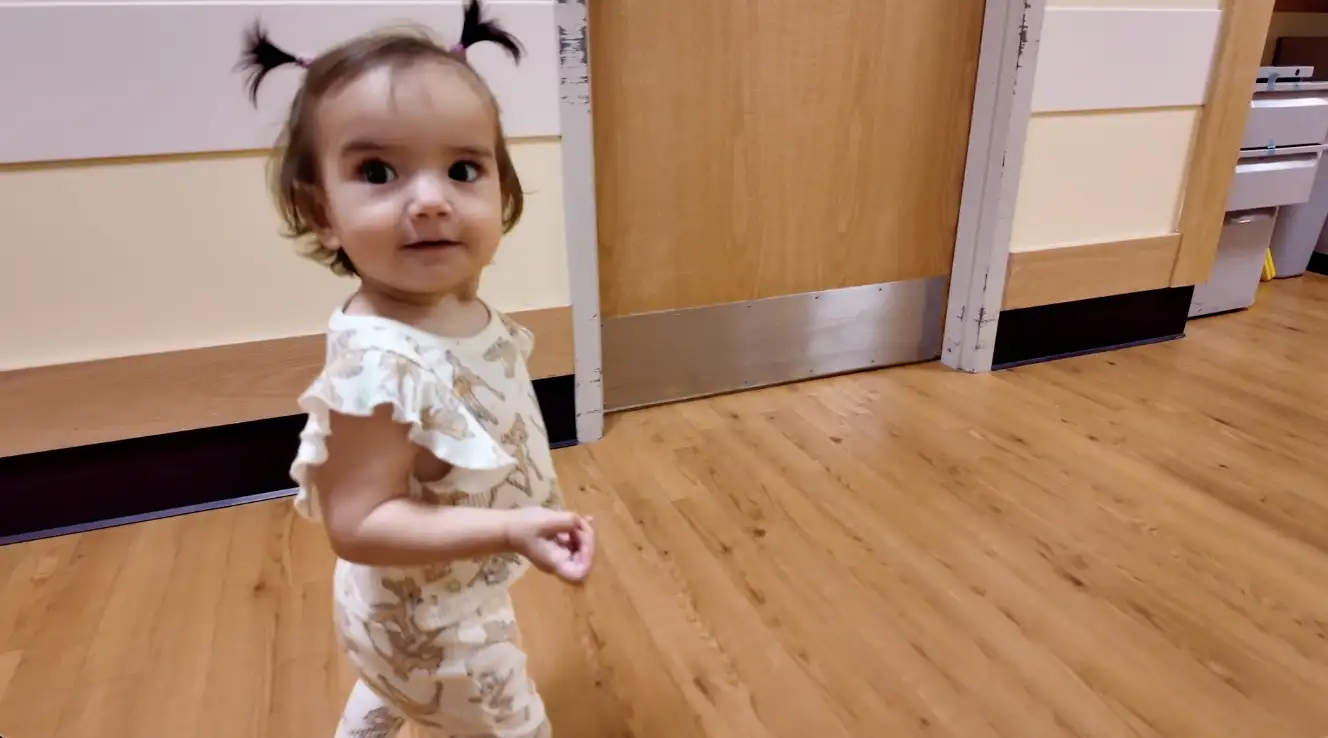
His successful-so-far outcome then led to his 1-year-old sister, Sumaya, receiving the treatment. She also has experienced dramatically improved hearing.
Researchers are still tracking specific details about these and other newer cases. More results are expected to be presented in October 2026 and included in a future medical journal publication.
For more information about the family’s journey, watch this video
Potential for wider application?
Up to 50% of childhood deafness traces back to genetic causes. However, because gene therapies act upon specific gene variants, this type of treatment will require modification to address hearing loss related to various gene malfunctions. Further development of customized treatments will be needed.
Impressively, however, the initial study of Otarmeni showed hearing improvement even when participants were up to 16 years old. While early treatment remains ideal, previously it had been assumed that gene therapy for deafness could be successful only if provided during infancy.
In many cases globally, the specific cause of deafness may not be diagnosed until later in childhood, if at all. Meanwhile, developing treatments to target other deafness gene variants will take time. So, the potential to apply treatments beyond infancy offers more families hope.
“This clinical trial might help broaden thinking about which patients may benefit,” Greinwald says. “Although larger and longer studies will be needed to better define the optimal treatment window.”
About the study
This clinical trial was funded by Regeneron. The results were published on behalf of the CHORD Study Group. Regeneron scientists Jonathon Whitton and Vassili Valayannopoulos served as corresponding authors.
About the Cincinnati Ear and Hearing Center
- 2001: Center founded by Drs. Dan Choo and John Greinwald.
- 2001-2009: Developed the current and accepted algorithms for the medical work up for sensorineural hearing loss in children.
- 2002-2014: NIH funded laboratories in the fields of developmental biology of the ear, molecular genetics of deafness and CMV related hearing loss.
- 2004-2006: Developed one of the first gene arrays (Otoseq) for detecting the genetic cause of deafness in children.
- 2005-2008: Developed the “Cincinnati Protocol” for determining the size and pathogenicity of the vestibular aqueduct in the inner ear.
- 2005-2007: Published one of the first papers on cochlear implants in patients with auditory neuropathy.
- 2007: Published one of the first articles about minimal access surgery in cochlear implants which is now the standard in pediatric patients.
- 2018-2021: Collaborated with Otonomy Corporation doing pre-clinical work on gene therapy.
- 2024- present: Collaborating with the Regeneron and Eli Lilly corporations on the first in human gene therapy trials, one of only two places in the world performing simultaneous trials at the same location.
- October 2026: An update about the total cohort of 39 ears treated with Regeneron’s gene therapy will be presented by Greinwald at the American Academy of Otolaryngology–Head and Neck Surgery conference.
Don’t Miss a Post:
- Subscribe to the Research Horizons Newsletter
- Follow Cincinnati Children’s Research Foundation on Bluesky, X and LinkedIn
| Original title: | DB-OTO Gene Therapy for Inherited Deafness |
| Published in: | The New England Journal of Medicine |
| Publish date: | Oct. 12, 2025 |



Latest Posts
About this blog
The Research Horizons blog features news and insights about the latest discoveries and innovations developed by the scientists of Cincinnati Children's. This blog does not provide medical advice, diagnosis, or treatment. Email researchnews@cchmc.org with questions or ideas.
Subscribe to Our Newsletter