

Study Points to Immune Cell That Limits Asthma Severity
Research By: Ian P. Lewkowich, PhD | Angela Cannata, PhD
Post Date: June 25, 2026 | Publish Date: May 7, 2026

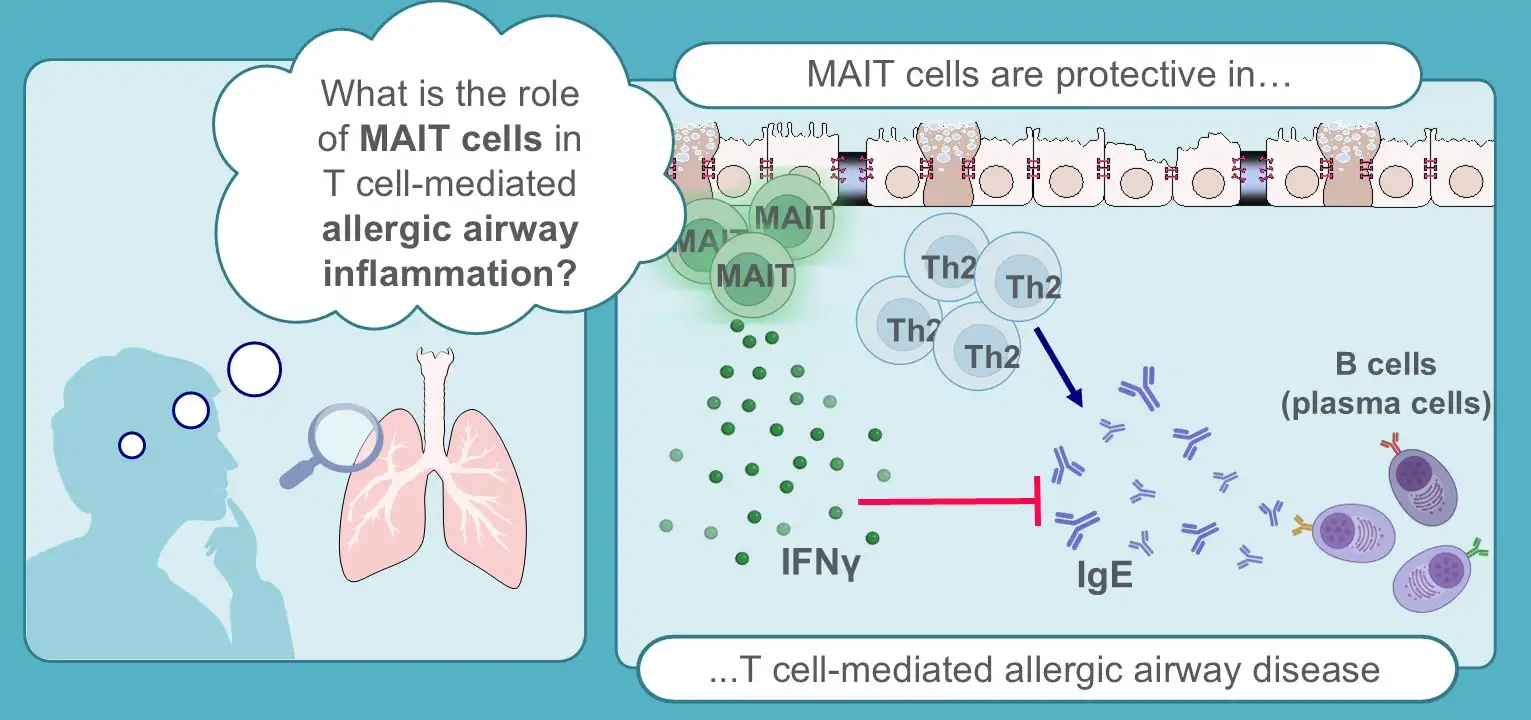
Cincinnati Children’s researchers identify MAIT cells as regulators of IgE antibody responses that drive allergic asthma, offering new insight into disease severity
Why some asthma responses are more severe than others is a key question researchers have been working to answer. Identifying the early signals that shape these differences remains a major gap in the field.
A type of immune cell in the lungs may play a role in that process. New research suggests that mucosal‑associated invariant T (MAIT) cells influence how allergic responses develop and can be regulated.
A study published in May 2026 in Allergy examines how MAIT cells influence allergic asthma using a preclinical model. The researchers found that these cells help limit disease severity by suppressing antibody responses that contribute to airway symptoms.
“These findings highlight a previously unrecognized role for MAIT cells in allergic asthma,” says corresponding author Ian Lewkowich, PhD, Division of Immunobiology. “Understanding how these cells regulate antibody responses helps explain why some reactions to allergens become more severe.”
Immune Roles in Asthma
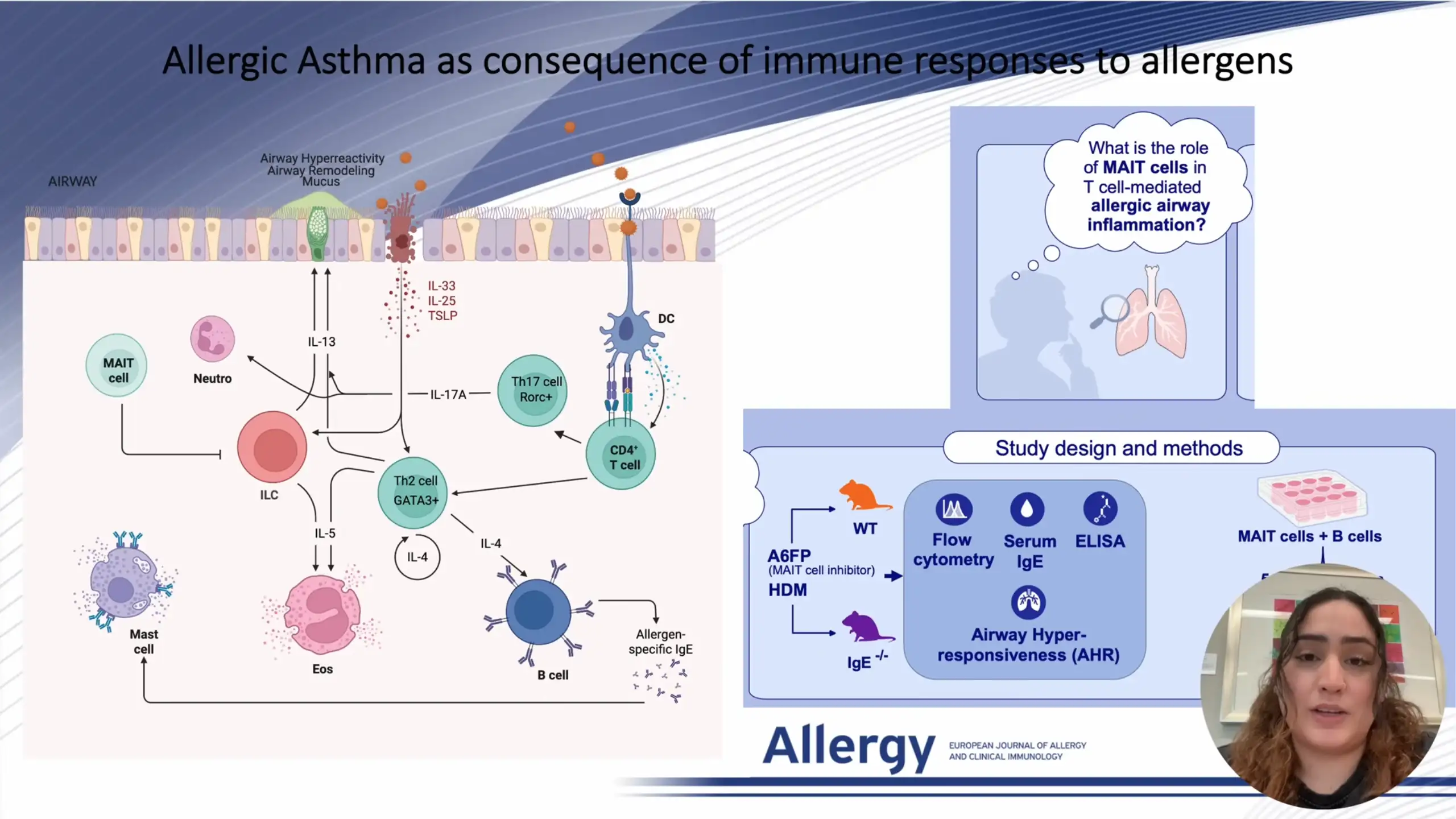
Asthma is a chronic disease that affects the airways and can make breathing more difficult. In allergic asthma, the immune system reacts to common triggers such as house dust mite. This response depends on how different immune cells interact and send signals to one another.
Among these cells, B cells play an important role by producing antibodies. One type of antibody, immunoglobulin E (IgE), is a key driver of allergic disease. When IgE recognizes an allergen, it triggers additional immune activity that contributes to airway symptoms and makes responses more severe.
Much of asthma research has focused on inflammation in the lungs. Signals such as type 2 and type 17 cytokines are known to contribute to these effects. However, these pathways do not fully explain how the immune system determines how strong the response will be in the first place.
This has shifted attention toward earlier stages of the immune response. MAIT cells are part of this early network and are found in lung tissue. They respond quickly to environmental signals and produce molecules such as interferon gamma (IFNγ), which can influence how other immune cells behave.
“We know that MAIT cells can influence early immune responses, but their role in allergic disease isn’t well defined,” says Angela Cannata, PhD, first author of the study. “Because they’re present in the lung and interact with other immune cells, they were a natural place to look for mechanisms that shape asthma severity.”
How MAIT cells limit asthma severity
Researchers used a mouse model of allergic asthma to examine how MAIT cell activity affects asthma severity. When MAIT cell activity was reduced, airway hyperresponsiveness increased, meaning the airways narrowed more easily in response to triggers.
Importantly, this change occurred without increases in inflammation. Cytokine levels, inflammatory cell counts, and mucus production remained unchanged, suggesting that MAIT cells influence asthma through a pathway distinct from the typical inflammatory response.
Instead, the effect was linked to antibody activity. Reduced MAIT cell function led to higher levels of immunoglobulin E (IgE), and this increase was necessary for the worsening of airway responses. Additional experiments showed that MAIT cells suppress IgE production by B cells, in part through their release of interferon gamma, a cytokine known to inhibit IgE production.
Together, these findings identify a mechanism in which MAIT cells help control asthma severity by limiting antibody-driven responses.
Looking Ahead
This study identifies a pathway that regulates asthma severity at an earlier stage than many current treatments target. Instead of focusing only on inflammation in the lungs, it highlights how immune cell interactions can shape the response before those symptoms develop.
“This work points to MAIT cells as a potential way to influence the immune pathways that drive asthma severity,” says Lewkowich. “Early evidence in humans also suggests that IFNγ‑producing MAIT cells are linked to lower IgE levels in allergic disease.”
At the same time, several questions remain. The study was conducted in animal models, and additional research will be needed to understand how this work can be translated to patients. Future work may also examine where these interactions occur in the body and how MAIT cells behave at different stages of disease.
By identifying a previously underrecognized pathway that links MAIT cells, B cells, and antibody production, this research provides a more complete picture of how allergic asthma develops—and where new approaches to intervention may emerge.
About the Study
Cincinnati Children’s co-authors of the study include members of the Division of Immunobiology and the Center for Inflammation and Tolerance.
Additional co-authors include experts from the Texas Biomedical Research Institute.
Funding for the study was supported by the National Institutes of Health (R21AI178517, R21AI139829, and 1F31HL167596).
Watch the video below to learn more about these research findings:
Don’t Miss a Post:
- Subscribe to the Research Horizons Newsletter
- Follow Cincinnati Children’s Research Foundation on Bluesky, X and LinkedIn
| Original title: | MAIT Cells Suppress IgE-Mediated Asthma via IFNγ-Dependent B Cell Regulation |
| Published in: | Allergy |
| Publish date: | May 7, 2026 |
Research By



Latest Posts


About this blog
The Research Horizons blog features news and insights about the latest discoveries and innovations developed by the scientists of Cincinnati Children's. This blog does not provide medical advice, diagnosis, or treatment. Email researchnews@cchmc.org with questions or ideas.
Subscribe to Our Newsletter