

Study Finds Common Physical Exam Findings Unreliable for Diagnosing Pneumonia in Children
Research By: Richard M. Ruddy, MD | Samir S. Shah, MD, MSCE, MHM
Post Date: August 21, 2026 | Publish Date: Aug. 20, 2026

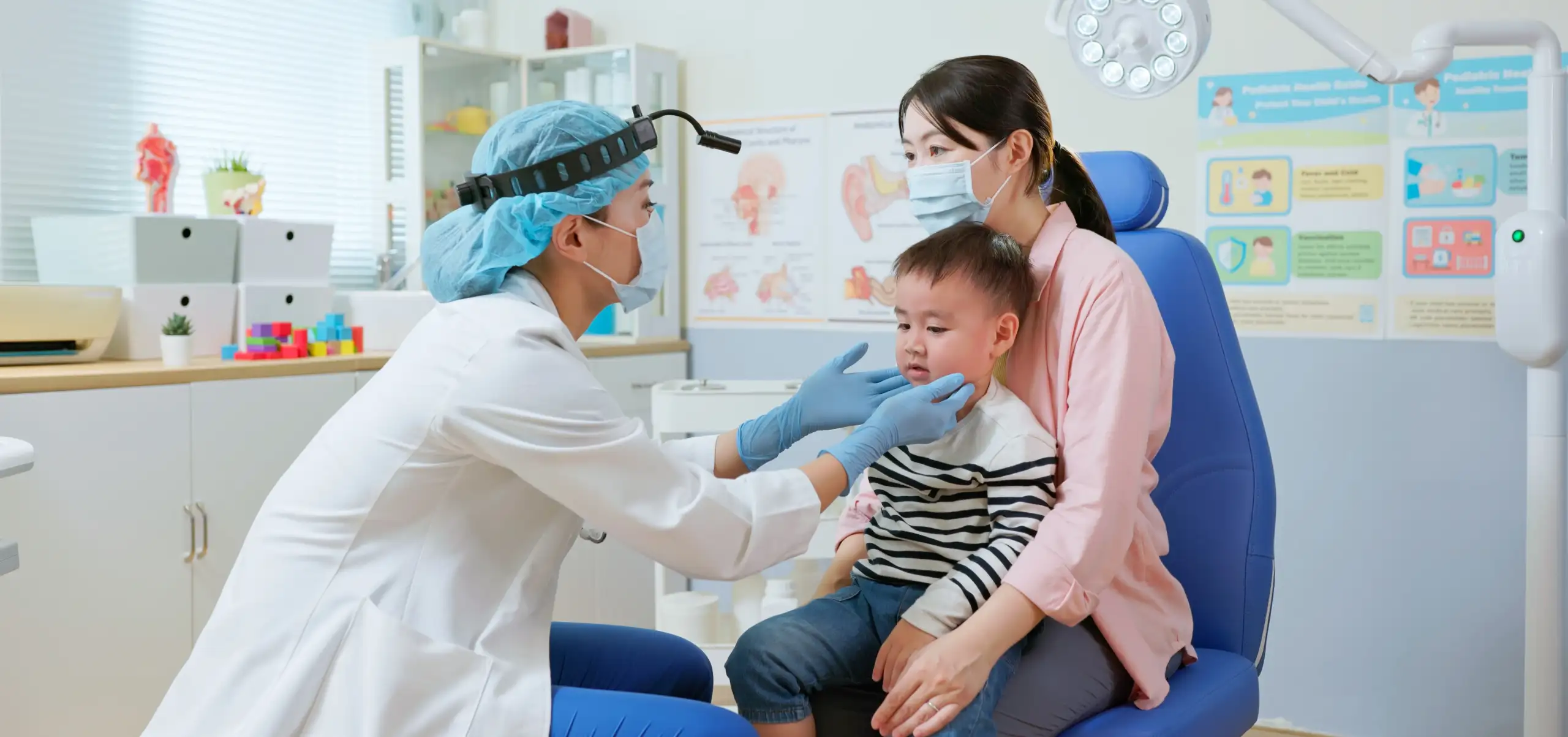
PECARN study involving seven U.S. pediatric emergency departments finds that clinicians often disagree on common examination findings used to diagnose pneumonia.
Every year, community-acquired pneumonia accounts for up to 2 million outpatient visits and 375,000 emergency department visits among children across the United States. Clinicians must determine which children with acute respiratory illnesses have potentially serious community-acquired pneumonia (CAP) rather than other common conditions.
Current guidelines from the Pediatric Infectious Diseases Society and Infectious Diseases Society of America recommend diagnosing community-acquired pneumonia clinically, without routine chest X-rays, in otherwise healthy children who can be treated as outpatients. However, new findings from a large Pediatric Emergency Care Applied Research Network (PECARN) study show that clinicians often disagree when assessing several physical examination findings commonly used to make that diagnosis. Details were published Aug. 20, 2026, in JAMA Open Network.
“The results showed that several findings traditionally considered important—such as decreased breath sounds and crackles—were identified inconsistently between emergency department providers,” says study co-investigator Richard Ruddy, MD, Chief of Staff for Cincinnati Children’s Liberty Campus.
Double exams showed inconsistencies
The researchers analyzed exams performed on 252 children ages 3 months to 17 years who were treated at one of seven academic pediatric emergency departments in the United States. Each child had signs or symptoms consistent with a lower respiratory tract infection, a fever within 48 hours of presentation, and findings suggestive of pneumonia on chest X-ray, if imaging was performed.
Two clinicians examined the same child within 60 minutes of each other and independently recorded their findings. No individual physical examination finding met the study’s predefined threshold for acceptable interrater reliability.
Wheezing and retractions had the highest reliability, while findings such as decreased breath sounds, crackles and rhonchi were identified less consistently between clinicians. Meanwhile, less common findings such as grunting and altered mental status were uncommon in the study, making it difficult to reliably assess agreement between clinicians. However, the presence of either finding should still prompt heightened clinical concern and further evaluation.
The multi-institutional analysis was led by first author Shubhada Hooli, MD, MPH, of Texas Children’s Hospital and senior author Todd Florin, MD, MSCE, of Ann & Robert H. Lurie Children’s Hospital of Chicago. Cincinnati Children’s investigators Richard Ruddy, MD, and Samir Shah, MD, MSCE, MHM, were co-authors.
The study was organized through the federally funded PECARN network, which was founded in 2001 to share data across institutions to evaluate and disseminate best practices for pediatric emergency medicine. Cincinnati Children’s has played a major contributing role in PECARN for years.
Why high accuracy matters
Inconsistent physical examination findings can contribute to some children being overtreated while others may be undertreated, study authors say.
Improving diagnostic accuracy could also help reduce unnecessary antibiotic use. About two-thirds of children with community-acquired pneumonia experience antibiotic-associated adverse events, underscoring the potential benefit of more reliable diagnostic approaches for both patients and clinicians.
Current guidelines discourage routine chest X-rays for otherwise healthy children with suspected pneumonia who can be treated as outpatients. The new findings do not suggest that every child needs imaging, but they highlight the limitations of relying on individual physical examination findings alone and the need for more objective, reproducible approaches to diagnosis.
Potential strategies for further study include electronic stethoscopes, machine-learning tools that interpret breath sounds, appropriate imaging approaches, and biomarker tests that may help distinguish pneumonia from other respiratory illnesses.
View announcement from Lurie Children’s Hospital
About the study
Funding for this project was supported by the National Heart, Lung, and Blood Institute (R01HL163692) and PECARN, which is supported by the Health Resources and Services Administration of the U.S. Department of Health and Human Services.
Related cooperative agreements include the EMSC Data Center-University of Utah (UJ5MC30824), GLACiER-Nationwide Children’s Hospital (U03MC28844), HOMERUN-Cincinnati Children’s Hospital Medical Center (U03MC22684), PEMNEWS-Columbia University Medical Center (U03MC00007), PRIME-University of California at Davis Medical Center, (U03MC00001), CHaMP node- State University of New York at Buffalo (U03MC33154), STELAR – Seattle Children’s Hospital (U03MC33156), and SPARC node – Emory University School of Medicine (U03MC49671).
Don’t Miss a Post:
- Subscribe to the Research Horizons Newsletter
- Follow Cincinnati Children’s Research Foundation on Bluesky, X and LinkedIn
| Original title: | Reliability of Physical Examination Findings in Youths Diagnosed With Pneumonia |
| Published in: | JAMA Network Open |
| Publish date: | Aug. 20, 2026 |
Research By


I’m a board certified pediatric hospital medicine and pediatric infectious disease physician. My research focuses on improving the efficiency and quality of care of children — particularly those hospitalized with common, serious infections such as pneumonia and meningitis.
Latest Posts

About this blog
The Research Horizons blog features news and insights about the latest discoveries and innovations developed by the scientists of Cincinnati Children's. This blog does not provide medical advice, diagnosis, or treatment. Email researchnews@cchmc.org with questions or ideas.
Subscribe to Our Newsletter