

Road to Researcher: Kyle McCracken, MD, PhD
Research By: Kyle McCracken, MD, PhD
Post Date: June 16, 2026 | Publish Date:
How curiosity and collaboration shaped a career in kidney research
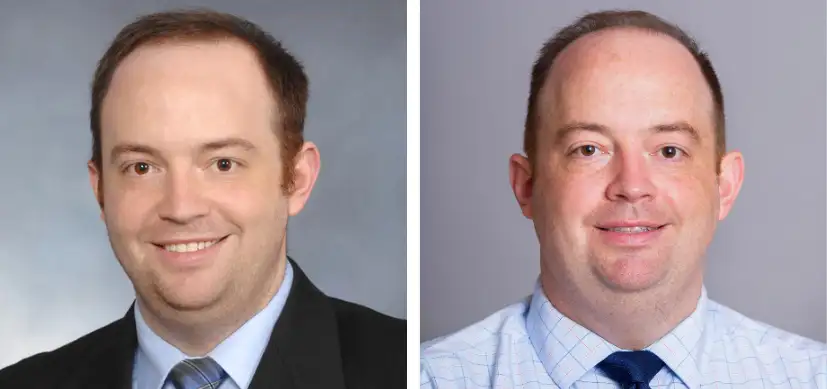
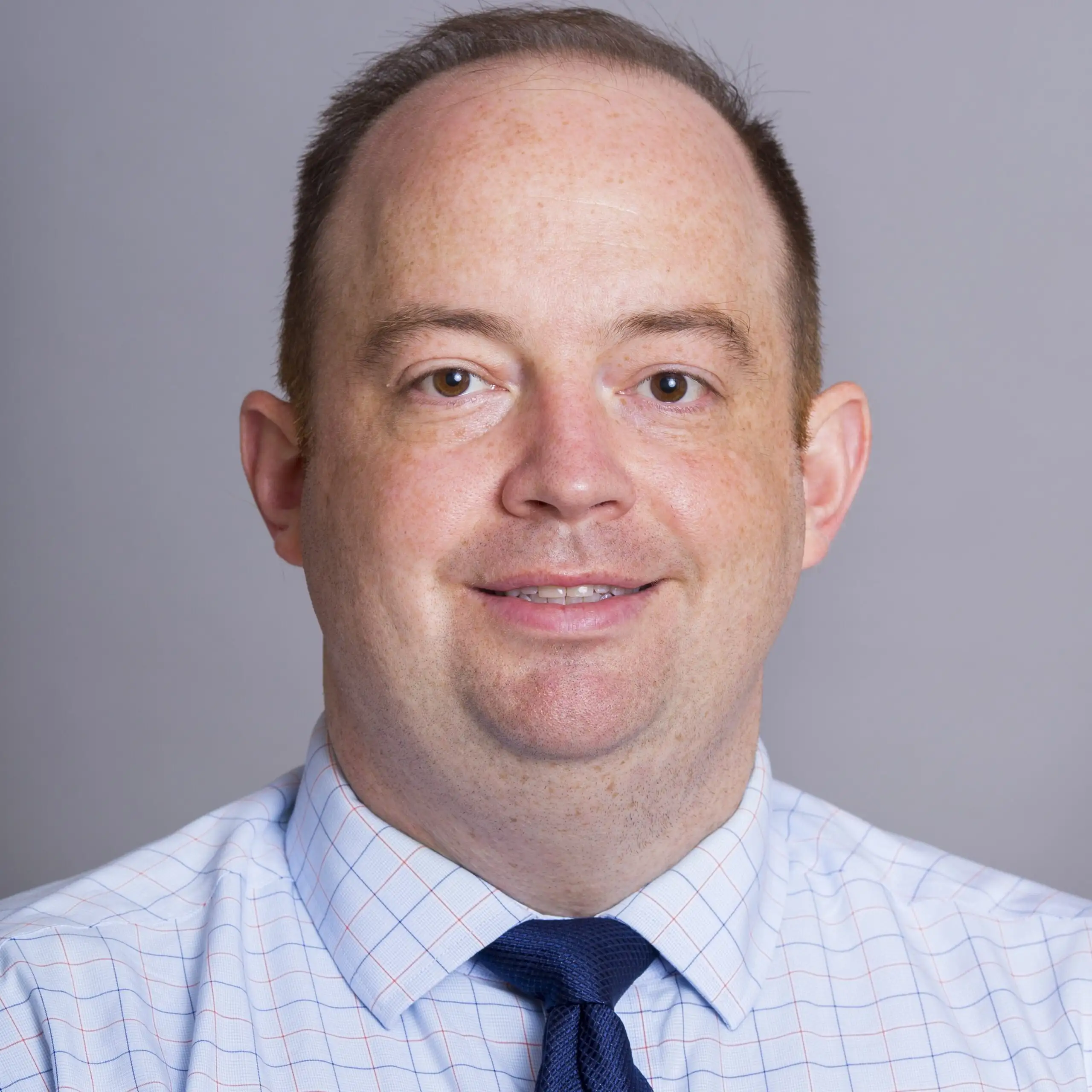
For Kyle McCracken, MD, PhD, the fascination began with the kidney itself—its complexity, its precision and the countless ways it keeps the body in balance. What started as an interest during medical school evolved into a passion for developmental biology, regenerative medicine and organoid research that would ultimately shape his career as a physician-scientist at Cincinnati Children’s.
Today, McCracken is an associate professor in the Division of Nephrology and Hypertension and member of the Center for Stem Cell and Organoid Medicine (CuSTOM). He leads a lab focused on kidney regenerative medicine, combining developmental biology principles with tissue engineering to better understand disease and advance potential therapies. Along the way, he has helped pioneer approaches to kidney organoid generation while contributing to the collaborative scientific culture that first inspired him as a trainee.
McCracken recently reflected on the defining moments that led him back to Cincinnati Children’s, the mentorship and teamwork that continue to shape his work, and the persistence required to navigate a career in research. He also shared insights into the evolving field of regenerative medicine, the transition to leading an independent lab and the experiences that continue to fuel his curiosity as a scientist.
Describe your path to Cincinnati Children’s. What drew you here, and what stands out about the journey?
A major point to highlight is my experience here as a PhD student at Cincinnati Children’s. When I was in the University of Cincinnati MD-PhD program, it was a formative experience for me and my career as a scientist. It’s when I developed a strong passion, or even an obsession, with doing the type of research I do. I became very interested in the science itself. Getting a PhD in Molecular and Developmental Biology is when I developed a love for studying how the kidney functions.
The environment I was in was a big part of that. We were doing hard work on challenging, complicated problems, but it was such a fun and motivating environment where people were working together with colleagues and collaborators. For me, it was an ideal experience to learn to be a scientist. The ideas were freely flowing between members of my lab, other labs and collaborators. It was intellectually stimulating. It’s an environment that promotes a bit of competitiveness where you just want to be better. This is where I learned what I wanted to do for a major part of my career.
I left and did a pediatrics residency at Boston Children’s Hospital in Massachusetts, followed by a fellowship in pediatric nephrology at the same hospital. I took what I learned as a PhD student at Cincinnati Children’s and started moving into studying the kidney and applying the same sort of principles and ideas and approaches. I had some success doing that, but the environment didn’t match what I had experienced here. I wanted that competitiveness where the rising tide lifts all ships. Here, people push you to be better, and there’s a high demand of excellence. There is a community effort to help everybody achieve success, and that makes it more fun and exciting to do what we’re doing. I missed being in that type of collaborative environment. When I was looking for a place to start my career as an independent scientist, I couldn’t resist the urge to come back.
Your career path is uniquely your own. What were some defining moments—twists, pivots or challenges—you’ve experienced along the way?
I got into the field as a PhD student here. That’s my defining moment. What we do is take basic developmental biology principles and try to understand them and then directly translate them to try to generate human tissues and organoids. That is my niche and I started doing that at Cincinnati Children’s and that’s still what I love to do.
Another defining moment can be traced back to when I was a first-year medical student. I was enamored and fascinated by the things the kidney does and spent my PhD studies focusing on the gastrointestinal system. When I left, I transitioned into working solely with the kidney.
Now that you’re back and leading your own lab, has there been anything unexpected about working as an independent scientist?
No matter where you are, it’s a change and transition to lead your own lab. You must learn to be more of a manager than just doing the experiments. The mentoring attitude and environment here are genuinely strong. The collaborative nature extends beyond scientific collaboration. Mentors here help you without self-interested motivation. I’ve had people more interested in helping me adapt to the management role than even the scientific role.
When I came here, our former division chief, Raphael Kopan [PhD], was approaching retirement. When he stepped down, he had an unexpected amount of free time and all this wisdom to impart, and I was a willing sponge trying to absorb all that guidance.
Is there a particular project, collaboration or discovery at Cincinnati Children’s that you’re especially proud of?
Going back to when I was a student, we were building this paradigm of how we use development and combine it with tissue engineering and organoid generation. We were doing that when I was a PhD student here before the whole field was formalized.
That work led to Cincinnati Children’s creating the Center for Stem Cell and Organoid Medicine [CuSTOM] and investing in this type of work. It’s been fruitful and enabled me to come back and work at a center designed for exactly what I’m interested in doing. Our group here is really a world leader in promoting this type of work and doing it well.
What’s something you’ve learned that’s helped you navigate the challenges of a research career?
It’s not super profound or unexpected, but it’s learning that doing scientific research is challenging and requires a lot of patience. Everybody tells you this, but it really manifests itself very frequently and requires persistence. Remember that if you have good ideas and you’re designing good experiments—even if they’re frustrating—it will eventually pay off and you’ll get there.
If you could go back and tell your younger self one thing, what would it be?
Learn more math and computer science as a younger student.
Outside of the lab, what do you enjoy doing, or what helps you recharge?
I’m a big sports fan. I love watching and going to sporting events, especially college football. I’m an Ohio State Buckeyes fan. I should say, though, that I have an almost 8-month-old son and he takes up most of the time now. We take walks, go to the zoo and visit my office every weekend.
Is there something about your background or personal journey that people might not expect but has shaped who you are as a scientist?
I went to Xavier University as an undergraduate student, a smaller, local university. While I was there, I got a random opportunity to work part-time in a Cincinnati Children’s lab because it’s so close. I think it was serendipitous because it was a major experience for me. Before then, I didn’t have any aspirations or knowledge of what it meant to be a scientist. There was a lot of luck involved.
Research By
Latest Posts
About this blog
The Research Horizons blog features news and insights about the latest discoveries and innovations developed by the scientists of Cincinnati Children's. This blog does not provide medical advice, diagnosis, or treatment. Email researchnews@cchmc.org with questions or ideas.
Subscribe to Our Newsletter