

FAST-02 Clinical Trial Shows Pain Relief After Treating Bone Metastases in Chest
Research By: Emily Daugherty, MD | Anthony Mascia, PhD | John Perentesis, MD
Post Date: July 15, 2026 | Publish Date: June 24, 2026

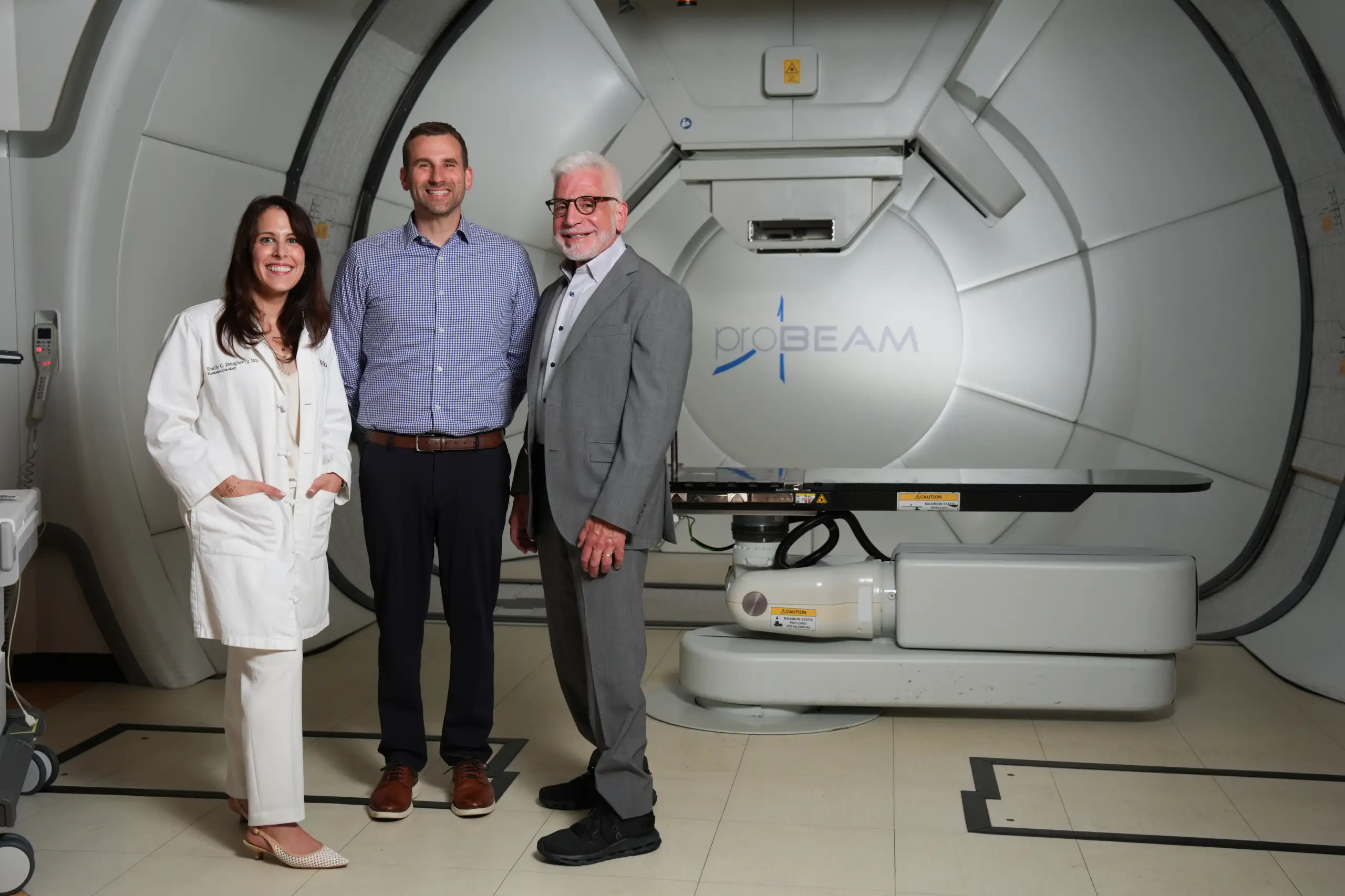
Quick delivery method for proton therapy shows promise in second set of human studies led by experts at Cincinnati Children’s, University of Cincinnati and Varian
FLASH proton therapy, a newer and potentially safer method of delivering radiotherapy to tumors located close to critical healthy organs and tissues, has shown positive results in its second human clinical trial.
Researchers published their findings online on June 24, 2026, in the journal Radiotherapy and Oncology detailing results from 10 patients treated as part of the FAST-02 study. The results also were shared in May in Sweden at the European Society for Radiotherapy & Oncology (ESTRO) annual scientific meeting. The study was funded by the device manufacturer, Varian, the cancer-care business of Siemens Healthineers.
“The FAST-02 results are exciting because they show that FLASH proton therapy can deliver meaningful pain relief for patients whose cancers have spread to bones in the chest, while producing no serious treatment-related side effects in this small study,” says study principal investigator John Perentesis, MD, director, Division of Oncology and executive co-director of the Cancer & Blood Diseases Institute at Cincinnati Children’s. “This trial builds on the promise we saw in FAST-01 and helps establish a foundation for future studies aimed at making radiation therapy faster, safer and more precise for patients with cancer.”
A potentially safer form of pain relief
The study included 10 adult patients whose lung, prostate, or kidney cancers had spread to painful locations in their ribs, sternums or shoulder blades. Each patient received a single 8 Gy fraction at a dose rate greater than 40 Gy/second. Treatment-related adverse effects were evaluated, and efficacy was assessed by using participants’ reported one- to three-month pain relief scores.
Of the eight participants with three-month pain scores, six participants (75%) reported complete pain relief, and two (25%) had a partial reduction in pain. Of those with one-month pain scores, one reported stabilized pain, while the other reported a partial pain response.
“The significance of FAST-02 lies in our treatment sites being bone metastases within the thorax, meaning proximity to the lungs, heart and spinal cord,” says radiation oncologist and study lead author Emily Daugherty, MD. “Assessing critical organ side effects is essential for any future implementation of FLASH in deep-seated tumors. Importantly, the results continue to show that Flash effectively controls pain with minimal side effects, and there were no serious adverse events related to the treatment. Despite participants being treated for thoracic metastases, no cardiac or pulmonary toxicities were observed.”
Daugherty, a member of the University of Cincinnati Cancer Center, first presented the FAST-02 findings at ESTRO conference.
What is FLASH proton therapy?
Since opening a shared Proton Therapy Center at the Cincinnati Children’s Liberty campus in 2016, experts at Cincinnati Children’s and UC have treated more than 1,900 patients, including nearly 1,100 pediatric patients. They also have been working with Varian for years to study ways to evaluate and improve proton therapy.
FLASH is an investigational mode of proton therapy that delivers a full therapeutic dose to a patient in just a fraction of 1 second. The ultra-fast dose rate creates a “FLASH effect” that both reduces toxic risks and time spent receiving treatment.
Currently, receiving standard proton therapy can require as few as five sessions or as many as 35 depending on the location of the tumors. But FLASH therapy can require as few as one to five visits.
What’s next?
“Together, FAST-01 and FAST-02 move FLASH proton therapy beyond a scientific concept and toward a treatment approach supported by growing clinical evidence,” says Anthony Mascia, PhD, associate professor of clinical radiation oncology and corresponding author for the FAST-02 study. “These studies show that FLASH can be delivered safely and consistently in patients while generating the clinical and technical evidence needed to drive continued technological innovation and expand this approach into increasingly complex treatment settings.”
Looking forward, Cincinnati Children’s are interested in studying FLASH therapy in aggressive pediatric brain tumors and sarcomas.
About the study
Co-authors from Cincinnati Children’s and UC also included Yongbin Zhang, MS, Zhiyan Xiao, PhD, Lori Backus, BA, Julie McDonald, Beth Stockman, RN, and John Breneman, MD. Co-authors from Varian included Jennifer Woo, HHBSc, Claire McCann, PhD, Ken Russell, MD, Ricky Sharma, MD, PhD, and Dee Khuntia, MD. Contributors also included researchers with University of Pennsylvania, the New York Proton Center, and OSF Healthcare in Peoria, IL. Funding for this study was provided by Varian.
Learn More
View Varian’s Announcement About the FAST-02 Clinical Trial
Read more about the Proton Therapy Center shared by UC and Cincinnati Children’s
‘Physics World’ Cites FLASH Proton Therapy as a Top 10 Breakthrough of 2022
FAST-01: World’s 1st FLASH Proton Therapy Clinical Trial Shows Promise
Don’t Miss a Post:
- Subscribe to the Research Horizons Newsletter
- Follow Cincinnati Children’s Research Foundation on Bluesky, X and LinkedIn
| Original title: | FAST-02: Results from the second in-human prospective evaluation of single-fraction proton FLASH for symptomatic thoracic bone metastases |
| Published in: | Radiotherapy and Oncology |
| Publish date: | June 24, 2026 |
Research By
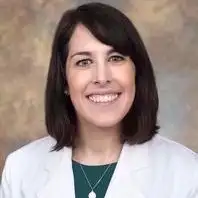


Dr. Perentesis leads an active laboratory research program in the molecular etiology and pharmacogenetics of childhood leukemia and other cancers, with a focus on Down syndrome-related leukemias.
Latest Posts
About this blog
The Research Horizons blog features news and insights about the latest discoveries and innovations developed by the scientists of Cincinnati Children's. This blog does not provide medical advice, diagnosis, or treatment. Email researchnews@cchmc.org with questions or ideas.
Subscribe to Our Newsletter