

Could Thymic Reimplantation Help Children Stay Healthier After Heart Surgery?
Research By: Carolina G. Moore, PhD, MBA | David L.S. Morales, MD
Post Date: May 6, 2026 | Publish Date: October 27, 2025

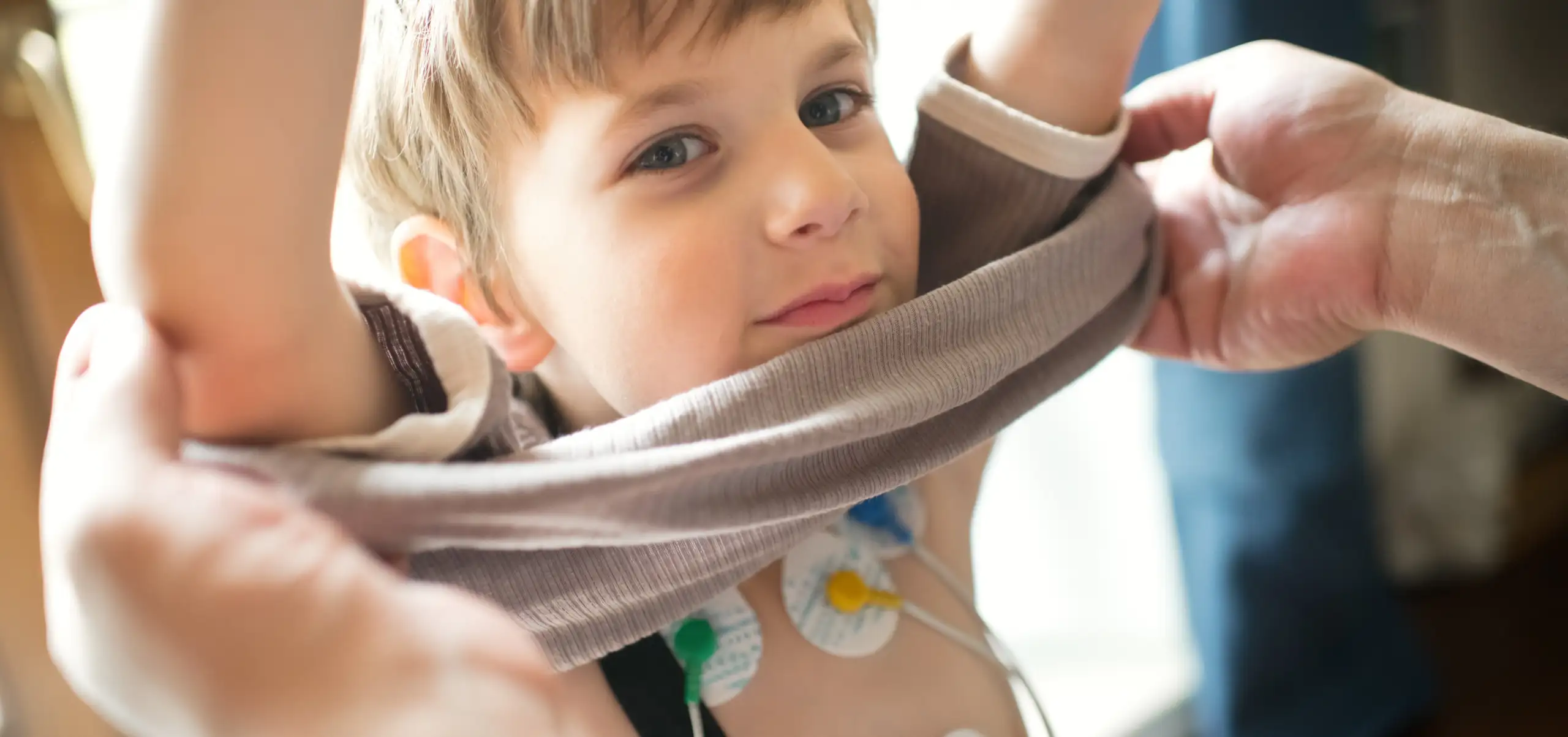
Researchers at Cincinnati Children’s set out to ensure children who undergo heart surgery have the opportunity to live healthier lives
Pediatric congenital heart surgery is essential for treating children with heart complications. Yet the thymus—an often-overlooked organ, whose removal is common during surgery—is also essential for preventing infections throughout the patient’s lifetime.
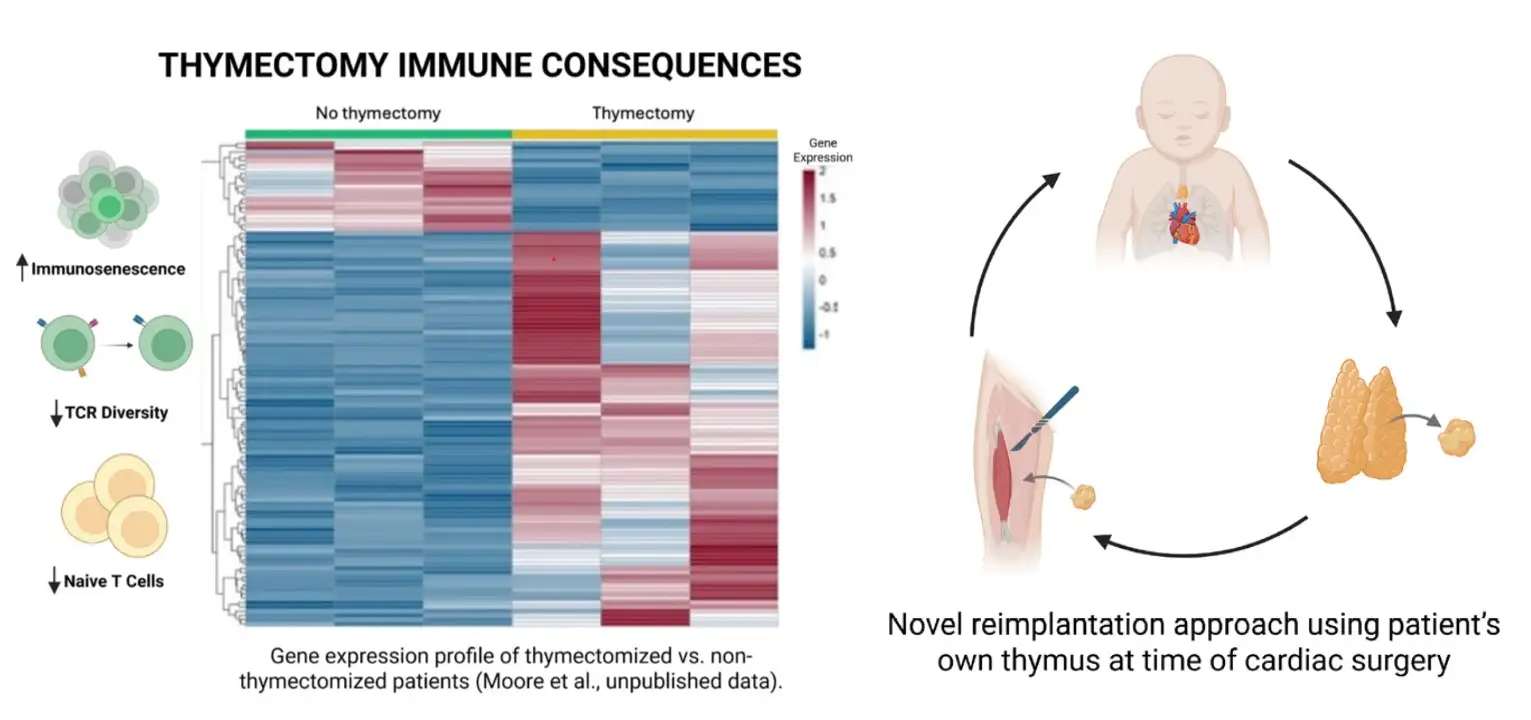
Researchers at Cincinnati Children’s are looking to make a change in the practice of removing the thymus during heart surgery by studying whether reimplanting a child’s own thymic tissue can preserve immune function. This study, Autologous Thymus transplant in CHD Patients with No Congenital Athymia – A PILOT STUDY, will be the first U.S. trial of its kind and could reshape how heart surgeries are performed.
“This study is important because it aims to protect and restore the immune system of babies undergoing life-saving heart surgery,” says Carolina Moore, PhD, director of the Cardiothoracic Research Lab. “Today, these infants often lose their thymus—a vital organ for building a healthy, lifelong immune system.”
Thymus—What’s the big deal?
Some of the most influential cells of the immune system—T cells—develop in the thymus. T cells are part of the adaptive immune response and can provide long‑term protection after infections or vaccinations.
Each T cell has a unique receptor, creating a large pool of cells capable of responding to many pathogens. Before they can circulate in the body, T cells must pass two evaluation steps inside the thymus:
- Positive selection: testing whether T cells can recognize major histocompatibility complex (MHC) proteins, an essential part of their function.
- Negative selection: removing T cells that react strongly to the body’s own tissues to prevent autoimmune damage.
The loss of a thymus means losing the environment where these steps occur. Children whose thymus is removed during heart surgery may have reduced T cell diversity, fewer naïve T cells and lower capacity for immunological memory.
Reimplantation Strategies
Because the thymus sits above the heart, thymic tissue is often removed during congenital heart surgery to improve visibility. The tissue is usually discarded, and currently no guidelines exist to help surgeons determine how much thymus should be removed or preserved. Families are starting to become more curious of how thymus removal might affect immune health, and immunologic follow-up is uncommon.
Early data from pilot studies have shown benefit in implanting thymic grafts into a well-vascularized tissue bed—such as the quadricep. This led to the Food and Drug Administration approval of Rethymic®, the first thymus-based tissue therapy.
Researchers at Cincinnati Children’s are now building upon this work by testing autologous thymic reimplantation, in which a child’s own thymic tissue is reimplanted at the time of their heart surgery.
Looking Ahead
The pilot study will help determine whether autologous thymic reimplantation is feasible and whether it supports healthy immune development after surgery. Results from this study will help guide future research and may eventually inform new standards of care.
Once researchers complete the pilot study, they are planning to expand enrollment in future phases. They also hope this approach can be adopted at additional centers.
Beyond the research itself, the work highlights the importance of understanding how thymus removal during heart surgery may affect long‑term immune health. Similar concerns have been raised in adult cardiac surgery, where studies suggest that thymus removal may be associated with lasting changes in immune function.
“Because thymus removal is common during congenital heart surgery and may have long‑term immune implications, increasing awareness can help families engage in more informed conversations with their child’s care team,” says Moore.
For questions about this research or related work at Cincinnati Children’s, contact the Cardiothoracic Research Team.
Don’t Miss a Post:
- Subscribe to the Research Horizons Newsletter
- Follow Cincinnati Children’s Research Foundation on Bluesky, X and LinkedIn
| Original title: | Collateral Damage From Congenital Heart Surgery: Can Thymic Reimplantation Restore Immune Competence? |
| Published in: | Circulation |
| Publish date: | October 27, 2025 |
Research By


Latest Posts
About this blog
The Research Horizons blog features news and insights about the latest discoveries and innovations developed by the scientists of Cincinnati Children's. This blog does not provide medical advice, diagnosis, or treatment. Email researchnews@cchmc.org with questions or ideas.
Subscribe to Our Newsletter