

Parents Benefit from NICU Mental Health Support
Research By: Claire Milligan, PhD
Post Date: July 22, 2026 | Publish Date: July 6, 2026

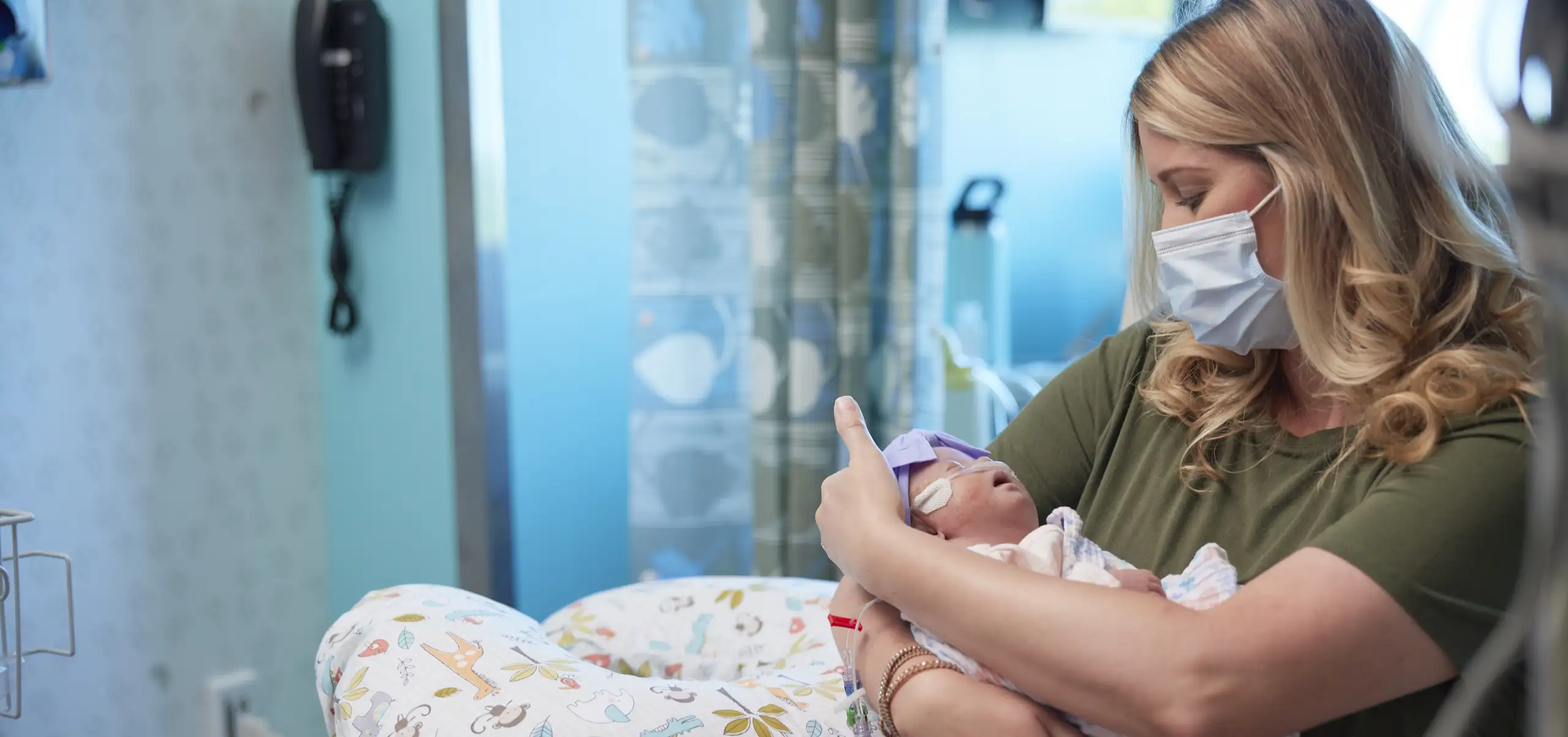
Study led by experts at Cincinnati Children’s suggests embedded mental health services should become a standard part of neonatal intensive care
For many parents, a newborn’s stay in the neonatal intensive care unit (NICU) can bring fear, exhaustion and uncertainty at a time when families had expected to be bonding, feeding and settling into life with their baby.
A growing body of research shows that the anxiety, depression, stress and trauma that parents experience during a NICU admission can lead to long-term health risks for both parents and infants. Now, a systematic review and meta-analysis published July 6, 2026, in JAMA Pediatrics offers some of the strongest evidence to date that hospital-based mental health interventions can help.
The study reviewed 160 studies involving 16,639 parents and found that several types of NICU-based supports helped reduce symptoms of anxiety, stress and depression. Psychotherapy and emotional support showed especially strong effects, with significant reductions in parent anxiety, stress and depression.
“The data are catching up to what many NICU clinicians and psychologists have seen for years: supporting parents is supporting babies,” says Claire Milligan, PhD, a pediatric psychologist with the Heart and Mind Wellbeing Center at Cincinnati Children’s and lead author of the study. “When families receive specialized support at the bedside, we have an opportunity to reduce distress during a pivotal period and promote healthier parent-infant relationships.”
Why NICU Mental Health Care Matters
NICU admissions can separate families from the traditional rhythms of early parenting. Parents can endure prolonged uncertainty while being asked to make high-stakes medical decisions – all while recovering from the pregnancy and delivery themselves. Unsurprisingly, anxiety, depression, and traumatic stress symptoms can be common. And previous research shows that child health and development can be strongly affected by the mental health of their parents.
Over the past two decades, a number of hospitals have responded by embedding psychologists, social workers and other mental health professionals into NICU care teams. This analysis helps clarify which approaches have been studied, which outcomes have improved, and where more rigorous research is still needed.
Psychotherapy and Emotional Support Show Impact
The research team reviewed studies published from January 2010 through December 2024 that tested interventions delivered to NICU parents. The interventions included psychotherapy and emotional support, family-centered care and education, bonding interventions, meditation and holistic interventions, and expressive or artistic therapies.
Psychotherapy and emotional support were associated with large reductions in anxiety, stress and depression. Family-centered care and education were associated with reductions in anxiety and stress. Bonding interventions also were associated with reduced anxiety. At lesser levels, meditation and holistic interventions also were associated with reduced stress, while artistic therapies were associated with some reduced depression.
One common thread: providing consistent and integrated support throughout NICU admission was important – as opposed to referring families to support in the community that could vary widely based on public or private insurance coverage.
From Optional Support to Standard of Care
The study emerges as many children’s hospitals work to integrate mental health services for families of children with complex medical conditions. The Heart and Mind Wellbeing Center at Cincinnati Children’s serves as a model program for supporting families of infants, children, and adults affected by congenital heart disease.
For NICU families, whose children face a mix of serious conditions, the study authors say making parent mental health care easier to access during hospitalization makes a difference. Outcomes may not be as successful if care is provided only after distress becomes severe or after families leave the hospital.
“These findings suggest that universal implementation of hospital-based interventions for parent mental health in the NICU should be considered part of high-quality neonatal care,” Milligan says. “Families should not have to seek out this support on their own during one of the most stressful periods of their lives.”
Looking Ahead
The authors note that continued research is needed to compare specific intervention models, determine which families benefit most from which types of support, and measure longer-term outcomes. Future studies also may help hospitals understand how to build sustainable staffing models and develop programs that support families with different languages, cultures, diagnoses and lengths of stay.
About the Study
Cincinnati Children’s co-authors for this study included Sarah Bills, PhD, also with the Heart and Mind Wellbeing Center. Additional co-authors were from Norton Children’s Hospital and University of Louisville School of Medicine; University of Wisconsin Hospitals and Clinics; George Mason University; and the Hospital for Sick Children and University of Toronto.
Don’t Miss a Post:
- Subscribe to the Research Horizons Newsletter
- Follow Cincinnati Children’s Research Foundation on Bluesky, X and LinkedIn
| Original title: | Parent Mental Health Interventions in the NICU: A Systematic Review and Meta-Analysis |
| Published in: | JAMA Pediatrics |
| Publish date: | July 6, 2026 |
Research By



Latest Posts

About this blog
The Research Horizons blog features news and insights about the latest discoveries and innovations developed by the scientists of Cincinnati Children's. This blog does not provide medical advice, diagnosis, or treatment. Email researchnews@cchmc.org with questions or ideas.
Subscribe to Our Newsletter