

Missed Visits May Signal Dropout in Home-Based Depression Therapy for Mothers
Research By: Robert Ammerman, PhD
Post Date: June 6, 2026 | Publish Date: June 6, 2026

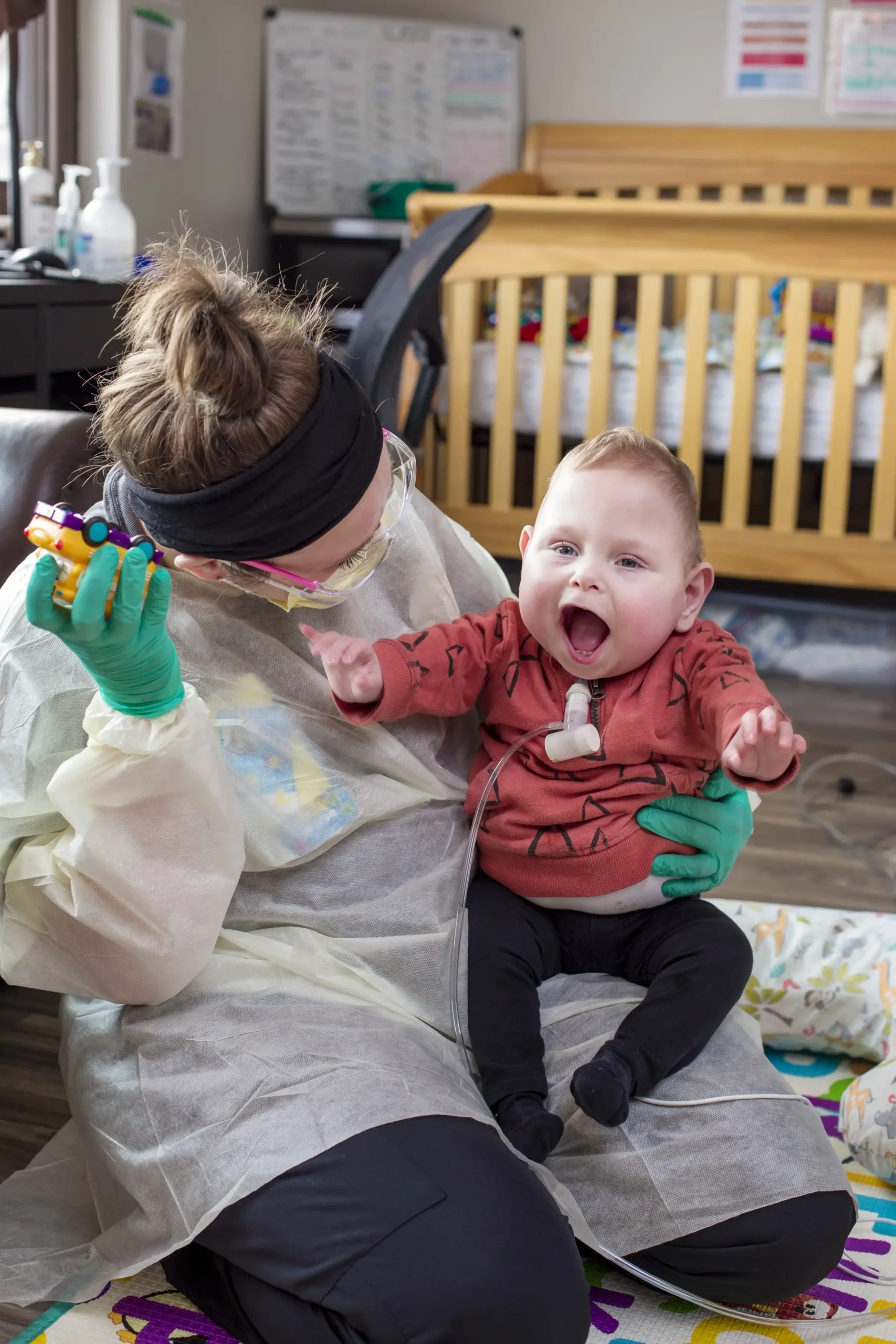
In a real-world study of mothers with low incomes, early no-shows and cancellations stood out as warning signs that someone may not finish in-home therapy for perinatal depression
Key Takeaways
- Of 353 mothers with low incomes and major depression who entered In-Home Cognitive Behavioral Therapy (IH-CBT), 96 completed treatment, 194 completed part of it, and 63 dropped out after the initial assessment.
- 50% of mothers who attended at least one session reached an asymptomatic level of depression during treatment.
- Fewer service disruptions, such as no-shows, were linked to completing treatment and improving, so early disruptions may be a warning sign worth acting upon.
Perinatal depression is common, affecting an estimated one in four mothers worldwide, and posing a range of risks to both maternal and child health. Yet getting support to those most in need remains a challenge.
Now a recent study reports how In-Home Cognitive Behavioral Therapy (IH-CBT) – an intervention developed by Every Child Succeeds at Cincinnati Children’s to serve this population – functions in real-world settings. Details were published June 6, 2026, in Cognitive Therapy and Research.
Clinical trials have shown that IH-CBT works. This program provides Master’s-level therapists to deliver 15 weekly sessions in the home of mothers with children 3 years and younger, coordinating closely with home visitors from Every Child Succeeds already working with each family.
Who Stayed in Treatment
The research team followed 353 mothers enrolled in Every Child Succeeds who had a diagnosis of major depressive disorder. About 82% of mothers who completed the assessment went on to begin therapy. Of those who started, 33.1% completed all sessions. That is lower than the 48.9% completion rate in the earlier IH-CBT clinical trial, which underscores how outcomes in everyday settings can differ from tightly controlled studies.
Mothers who left after the assessment had lower baseline depression scores than those who continued, suggesting that milder symptoms may reduce motivation to begin therapy. Completion was also associated with older maternal age and fewer service disruptions.
Who Got Better, and How Fast
Reaching an asymptomatic level was more likely for mothers with lower baseline depression, higher social support, fewer disruptions to therapy, and those who were married. Black or mixed-race mothers were also more likely to reach that point than White mothers, even though White mothers were more likely to complete treatment. Mothers who were younger, had experienced fewer traumatic events, or had lower baseline depression got there sooner.
Parenting stress, one of the factors the team examined, was not related to completion or improvement. The authors suggest this may be because parenting stress is often elevated across mothers in home visiting programs, leaving little variation to detect.
Why Disruptions Matter
Cancellations and no-shows are time-consuming for therapists, and they are especially costly when treatment happens in the home and requires travel. The study suggests they may also be an early signal of families in need of more or different kinds of support. Disruptions were tied to non-completion and to a lower likelihood of symptom relief. The data did not show why visits were missed, but the authors point to the unpredictable demands of poverty, family crises, or ambivalence about treatment.
“Early disruptions warrant more intensive efforts to engage clients to encourage completion of treatment,” says corresponding author Robert Ammerman, PhD.
Next Steps
The study’s real-world setting, relatively large sample, and range of home visiting models strengthen its relevance for other programs. However, the findings also reflect the limits of a single-arm design with no comparison group.
The authors recommend that future work should focus on better meeting the needs of mothers with more severe trauma histories and depression, and on finding more effective ways to engage younger mothers with less severe symptoms in the early stages of treatment.
About the Study
Cincinnati Children’s co-authors on this study included Erica Messer, Constance Mara, Cynthia Zion, Alonzo Folger, and Jennifer Frey.
| Original title: | Service Parameters in Treatment of Perinatal Depression in Mothers with Low Incomes |
| Published in: | Cognitive Therapy and Research |
| Publish date: | June 6, 2026 |
Research By

The Ammerman Lab focuses on early prevention programs for at-risk children and their families.


Latest Posts


About this blog
The Research Horizons blog features news and insights about the latest discoveries and innovations developed by the scientists of Cincinnati Children's. This blog does not provide medical advice, diagnosis, or treatment. Email researchnews@cchmc.org with questions or ideas.
Subscribe to Our Newsletter