

Urine Test May Help Predict Kidney Inflammation
Research By: Shannon O’Connor, MD, PhD | Hermine Brunner, MD, MSc, MBA
Post Date: March 2, 2026 | Publish Date: March 1, 2026

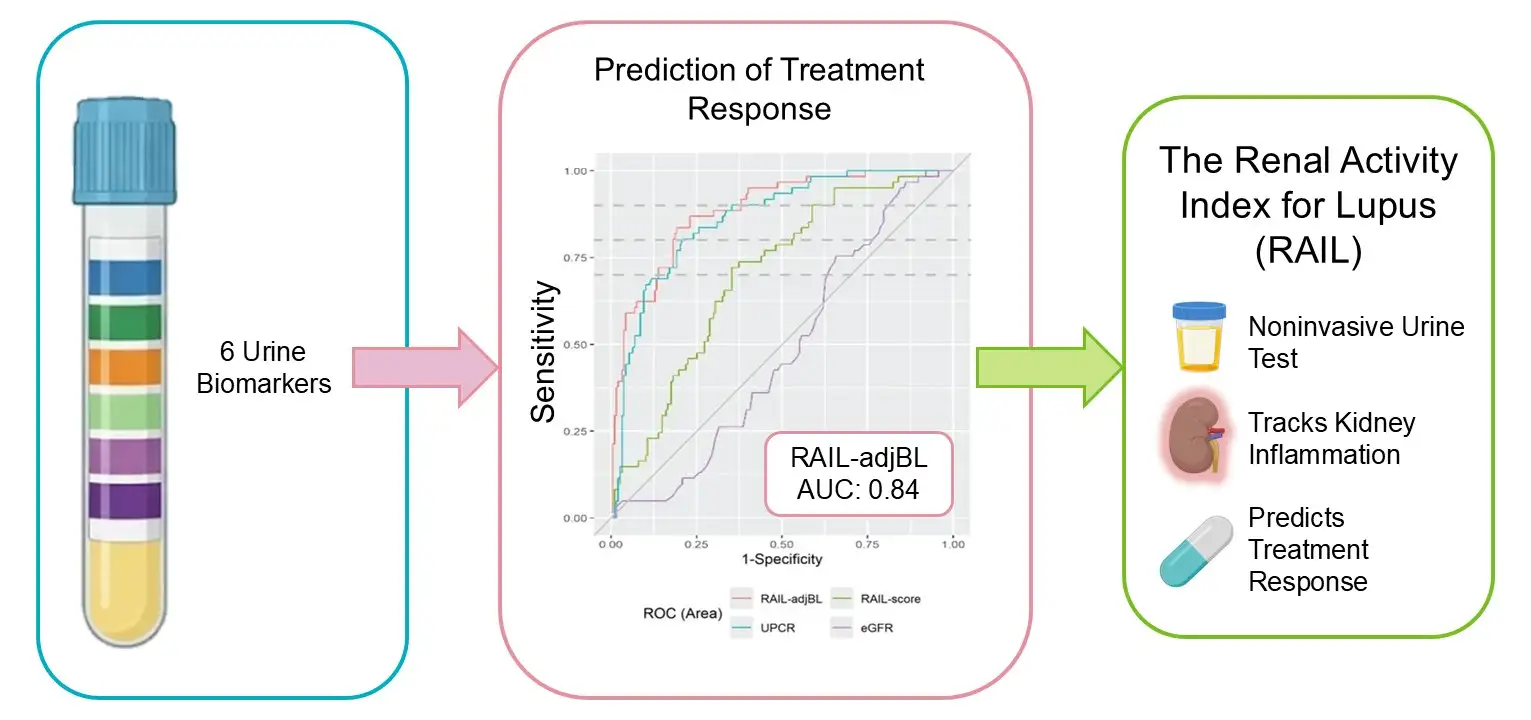
A Cincinnati Children’s study suggests a urine biomarker score can help track kidney inflammation and predict treatment response in people with lupus nephritis
For people living with lupus nephritis, determining whether treatment is effectively controlling kidney inflammation can be difficult. Traditional monitoring tools, including urine protein levels and kidney function tests, often cannot distinguish active inflammation from permanent kidney damage.
First developed by researchers at Cincinnati Children’s the Renal Activity Index for Lupus (RAIL) combines six urine proteins associated with kidney inflammation. A study published in The Journal of Rheumatology suggests the urine-based biomarker score may provide a more precise, noninvasive way to monitor kidney inflammation and predict treatment response.
“One of the biggest challenges in lupus nephritis is distinguishing ongoing inflammation from lasting kidney damage,” says Shannon O’Connor, MD, PhD, first author of the study. “Our findings suggest that RAIL may help clinicians better understand what is happening in the kidney and identify patients who may need closer monitoring or adjustments to treatment.”
Researchers analyzed 599 urine samples from 240 people with biopsy-confirmed lupus nephritis enrolled in a multicenter clinical trial. Patients who achieved a complete renal response consistently had lower RAIL scores than those who did not respond to treatment, and scores generally declined as kidney disease improved.
The study also showed that RAIL could predict future treatment response, outperforming estimated glomerular filtration rate (eGFR), a standard measure of kidney function.
“What makes these findings particularly encouraging is that the biomarker score was not only associated with current disease activity, but also with what happened at a patient’s next visit,” says Hermie Brunner, MD, MSc, MBA, director of the Division of Rheumatology and corresponding author of the study. “That raises the possibility of identifying patients at risk for ongoing inflammation earlier in the course of treatment.”
Additional studies are needed to further evaluate how RAIL can be incorporated into routine clinical care. Researchers will continue studying how the score can complement existing monitoring tools and help clinicians better track kidney inflammation over time.
About the study
The RAIL was co-invented with Prasad Devarajan, MD.
Cincinnati Children’s co-authors included researchers in the divisions of Rheumatology, Nephrology and Hypertension, and Biostatistics and Epidemiology. Cincinnati Children’s Research Flow Cytometry Facility was also essential in the conduct of the study.
Additional co-authors included experts from Bristol Myers Squibb.
Funding was supported by Pfizer Inc, the Center for Clinical and Translational Science and Training at the University of Cincinnati, the National Institutes of Health Clinical and Translational Science Award (CTSA) program, the National Institutes of Arthritis and Musculoskeletal Skin Diseases, as well as a Transformational Research Award from the Marianne and Ralph Falk Medical Research award.
| Original title: | The Renal Activity Index for Lupus: Validation for Prediction of Kidney Inflammation in Adult Patients With Lupus Nephritis |
| Published in: | The Journal of Rheumatology |
| Publish date: | March 1, 2026 |
Research By


I lead the Division of Rheumatology where we integrate clinical and translational research into daily care. My research work is made even more meaningful by interactions with the children and families I meet and serve in clinic, at our Lupus Center and within our lupus support groups.

Latest Posts

About this blog
The Research Horizons blog features news and insights about the latest discoveries and innovations developed by the scientists of Cincinnati Children's. This blog does not provide medical advice, diagnosis, or treatment. Email researchnews@cchmc.org with questions or ideas.
Subscribe to Our Newsletter