

Two Early Risk Factors Point to Higher Autism Risk in Very Preterm Infants
Research By: Allison Blackburn, PhD | Meg Stone-Heaberlin, PsyD
Post Date: September 28, 2026 | Publish Date: Aug. 12, 2026

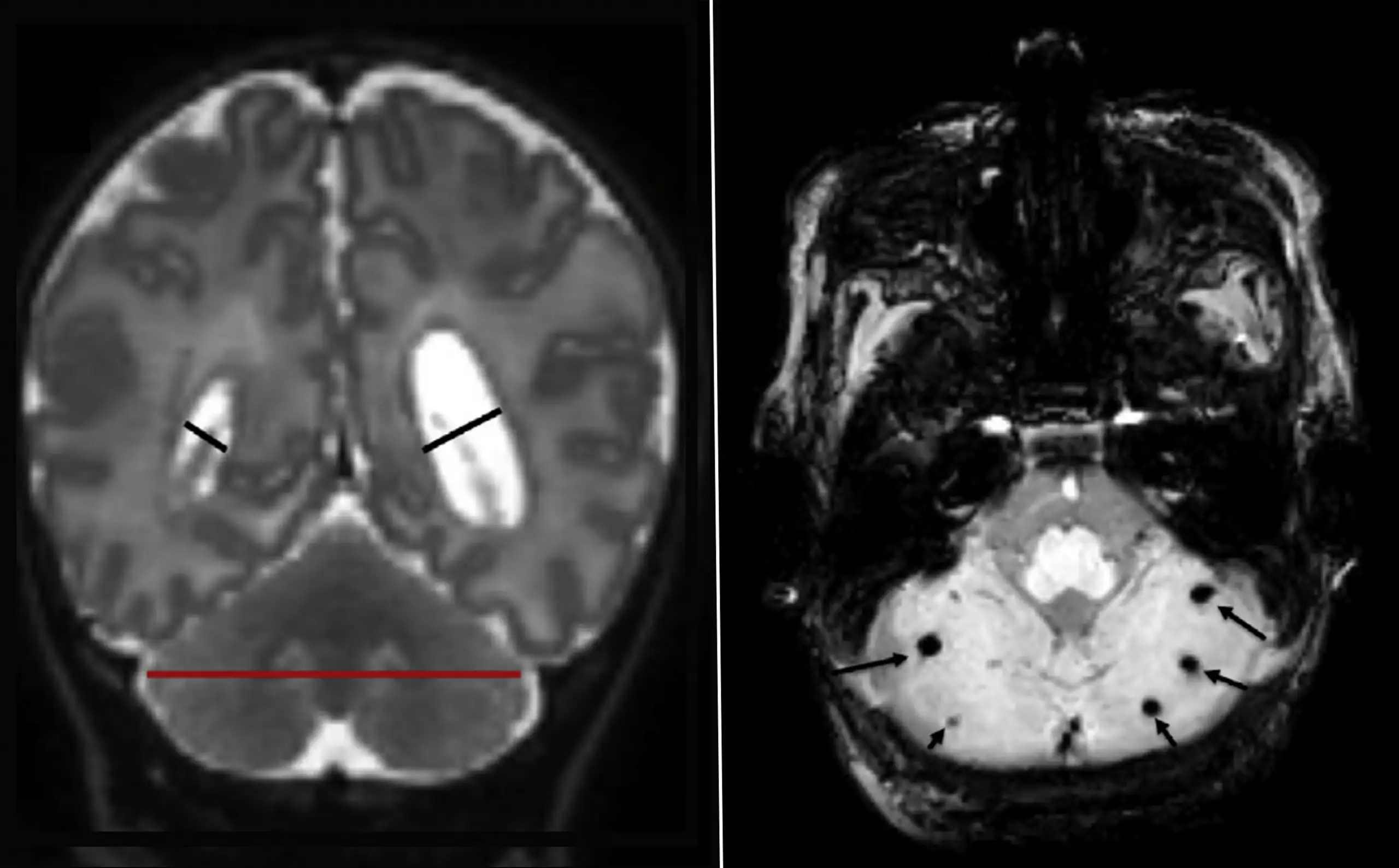
Cincinnati Children’s researchers found that moderate-to-severe chorioamnionitis and cerebellar abnormalities were independently associated with higher autism risk in infants born before 32 weeks’ gestation—findings that can help clinicians decide which infants may benefit from earlier screening.
Key Takeaways
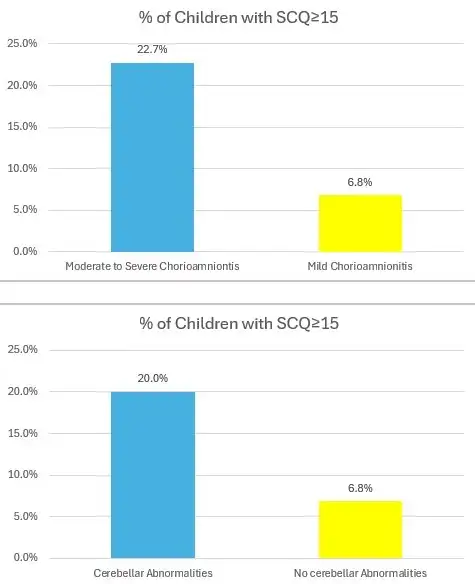
- Very preterm infants with moderate-to-severe chorioamnionitis or cerebellar abnormalities were about three times as likely to screen positive for autism as those without (22.7% and 20% vs. 6.8%).
- Both factors stood out as independent risk factors when researchers examined multiple maternal and infant conditions in the same model.
- These findings may guide when clinicians begin autism screening in very preterm infants, ideally during early development when neuroplasticity is greatest.
Preterm birth raises the risk of autism. In fact, studies estimate that 7% to 28% of preterm infants are later diagnosed. And now, a new study from pediatric researchers at Cincinnati Children’s, published Aug. 12, 2026, in the Journal of Perinatology, identifies two early risk factors that may help clinicians pinpoint which very preterm (VPT) infants need closer monitoring.
This research examines the association between autism and various maternal and infant conditions. It compares the presence of these conditions to each infant’s score on the Social Communication Questionnaire (SCQ), a proven screening tool for autism.
“We extend the [existing] research by examining several of the infant and maternal risk factors of very preterm birth in the same model to investigate which are most strongly associated with a higher risk for autism,” says lead study authors Meg Stone-Heaberlin, PsyD and Allison Blackburn, PhD, clinical pediatric psychologists at Cincinnati Children’s. “This study gleans information about potential etiology of autism as a whole, with additional research needed to pinpoint subtypes or phenotypes of autism.”
Clinical Characteristics Factor into Autism Risk
To explore the relationship between autism and these risk factors, the team examined characteristics from two cohorts of children. First, between September 2016 and November 2019, the study team enrolled 315 VPT infants with no known chromosomal or congenital anomalies. Additionally, between October 2022 and July 2025, the study team enrolled 172 5-year-old children born full-term to serve as a comparison group.
When the children were age 5, caregivers completed the 40-question SCQ, detailing each child’s autism characteristics. Nearly 9% of VPT children screened positive for autism defined as a score of 15 or above. Approximately 3% of full-term children reached the same score. Caregivers also completed evaluations that measure a child’s adaptive functioning, behaviors, cognitive flexibility, working memory and inhibitory control, and children were administered cognitive assessments.
To explore the potential link between autism and possible risk factors, the team analyzed:
- Apgar scores
- Brain abnormalities
- Breastfeeding status
- Bronchopulmonary dysplasia
- Chorioamnionitis
- Hypertensive disorders of pregnancy
- Pregestational and gestational diabetes
- Retinopathy of prematurity
- Sepsis
Additionally, they captured advanced MRI images of all infants at 41 weeks to measure any brain abnormalities, evaluating cerebral white and gray matter and cerebellar regions separately.
Two Independent Risk Factors Emerge
Prior research has established that autism is more common in boys and in children with greater social risk, which was also found in the current study. The team’s analysis identified two additional factors that were independently associated with autism risk in VPT children.
“We learned that moderate-to-severe chorioamnionitis and cerebellar abnormalities stood out as independent, significant risk factors,” Stone-Heaberlin says.
Cerebellar abnormalities include hemorrhages or lesions occurring soon after birth. Meanwhile, chorioamnionitis triggers pro-inflammatory cytokines that can cross the placenta, negatively impacting the fetal brain.
Of the 44 infants with moderate-to-severe chorioamnionitis, 10 (22.7%) screened positive for autism, compared to 18 of 266 (6.8%) infants with mild chorioamnionitis. Of the 50 infants with cerebellar abnormalities, 10 (20%) screened positive for autism, compared to 18 of 263 (6.8%) infants with no such abnormalities.
A Call for Earlier Screening
The authors stressed that these study findings should not change how clinicians manage or treat children with autism. But they should influence when a provider begins evaluating VPT children, particularly during early growth stages when a child’s neuroplasticity is optimal. Early intervention is important for enhancing outcomes.
“The study provides new context for clinicians to be aware of when they’re monitoring the development of preterm children and what might lead to earlier screening when these factors are present,” Blackburn says, noting that researchers should continue to explore the relationship between maternal/fetal inflammation and autism risk.
These results also underscore the importance of neuroimaging for preterm infants when exploring a child’s risk of autism. Providers should take a personalized approach to incorporating these scans into screening and monitoring efforts.
“The standard of care includes recommended cranial ultrasound for infants born at a gestational age of less than or equal to 30 weeks and selected infants with a gestational age of greater than 30 weeks who are believed to be at increased risk of brain differences,” the authors add. “But the neonatal care and imaging received should be based on individualized factors. Families should discuss these topics with their pediatrician or neonatologist.”
About the Study
Cincinnati Children’s co-authors included corresponding author Leanne Tamm, and co-authors Armin Allahverdy, Beth Kline-Fath, and Nehal Parikh. The authors also thank the Cincinnati Infant Neurodevelopment Early Prediction Study (CINEPS) team who assisted with the study.
Funding sources included the National Institutes of Health (R01-NS094200) and the National Institute of Neurological Disorders and Stroke (R01-NS096037).
| Original title: | Early autism risk factors: a cohort study of children born very preterm at 5-years |
| Published in: | Journal of Perinatology |
| Publish date: | Aug. 12, 2026 |
Research By



Latest Posts
About this blog
The Research Horizons blog features news and insights about the latest discoveries and innovations developed by the scientists of Cincinnati Children's. This blog does not provide medical advice, diagnosis, or treatment. Email researchnews@cchmc.org with questions or ideas.
Subscribe to Our Newsletter