

Study Reveals Nerves Help Drive Inflammation and Pain in EoE
Research By: Kendall Kellerman, BS | Mark Rochman, PhD | Michael Jankowski, PhD | Marc Rothenberg, MD, PhD
Post Date: October 19, 2026 | Publish Date: October 16, 2026

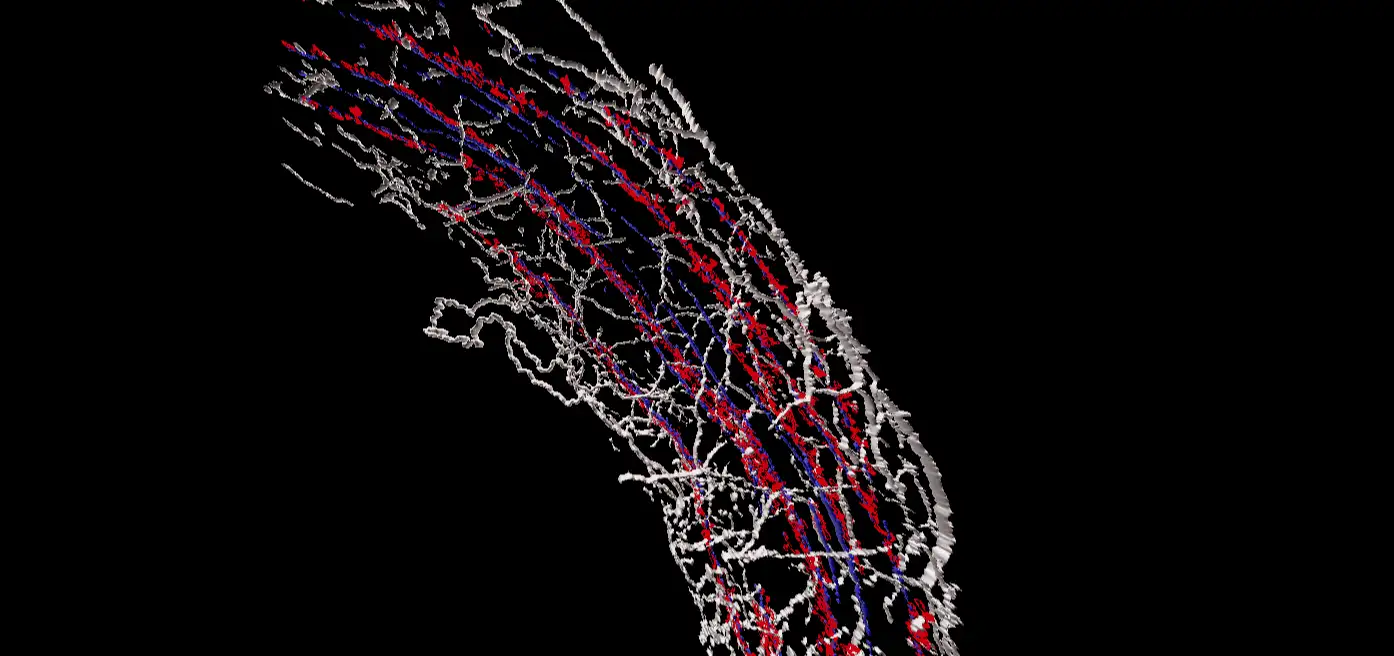
Cincinnati Children’s researchers discovered that sensory nerves actively regulate allergic inflammation in the esophagus, offering new insight into persistent pain and symptoms in eosinophilic esophagitis
Key Takeaways
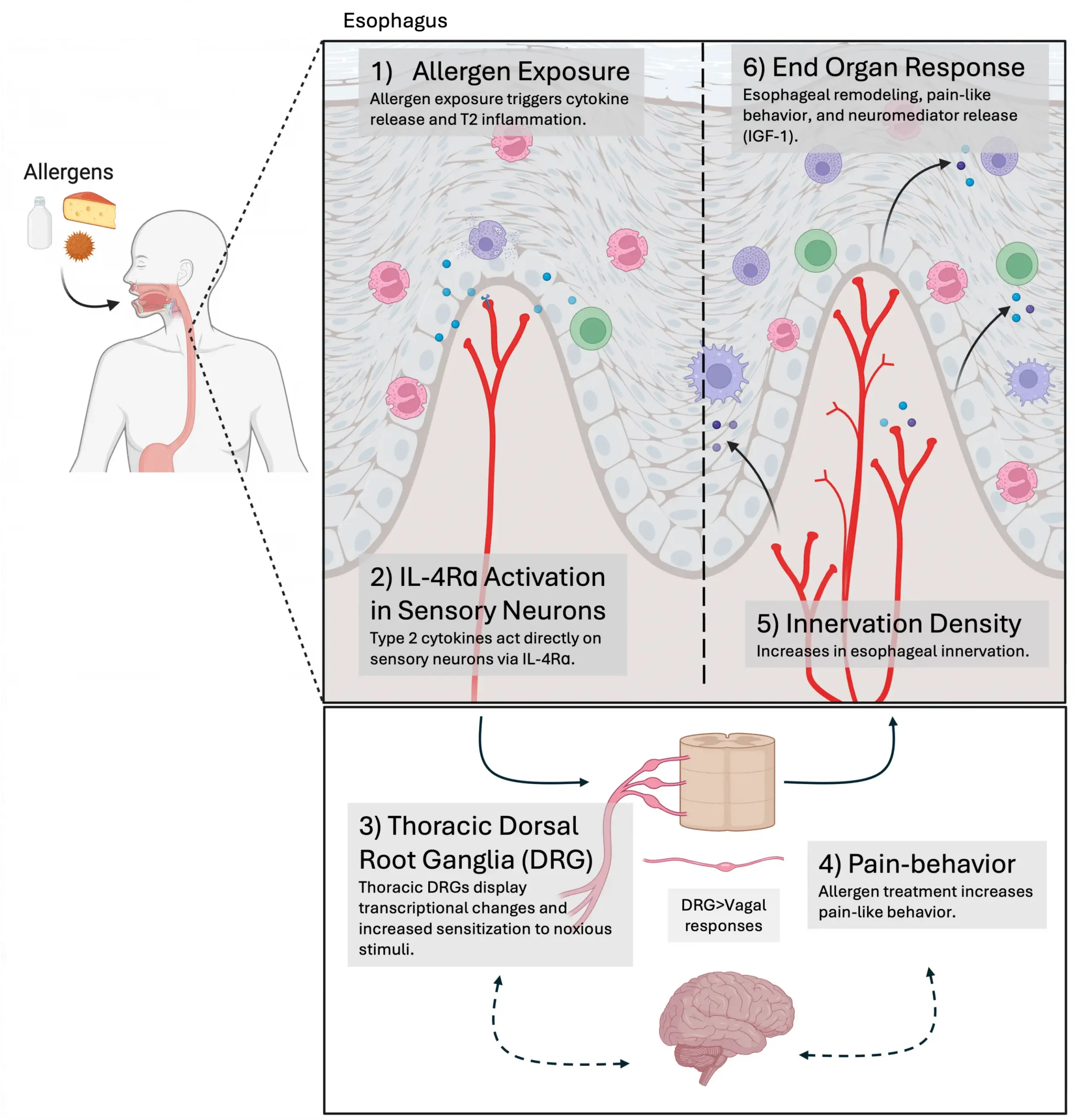
- Researchers identified a neuroimmune circuit in the esophagus in which sensory neurons respond directly to type 2 inflammatory signals and help regulate allergic inflammation.
- High-resolution imaging revealed a surprisingly dense network of nerves throughout mouse and human esophageal tissue.
- Allergic inflammation increased esophageal nerve density in mice and was associated with greater innervation in patients with EoE, particularly those with persistent pain.
- Removing IL-4Rα signaling on sensory neurons reduced esophageal hyperinnervation, inflammation and pain-like behavior in mice, while patients treated with dupilumab showed decreased esophageal innervation.
Eosinophilic esophagitis (EoE) is a chronic allergic disease that causes inflammation of the esophagus, leading to symptoms such as difficulty swallowing, food impaction and pain. While treatments can reduce inflammation, symptoms do not always improve, raising questions about what else may be driving disease activity.
A new study, published on October 16, 2026 in Nature Communications, reveals an important contributor: the nervous system. The researchers found that sensory nerves in the esophagus do more than detect inflammation. They can actively shape it.
“Our findings shed important information into the mechanisms of difficult-to-treat EoE, focused on pain,” says Marc Rothenberg, MD, PhD, director of the Division of Allergy and Immunology and co-corresponding author of the study. “Our results lay the framework for understanding how the immune and nervous systems collaborate in the development of EoE.”
A Window Into The Esophagus
Scientists have learned a great deal about the immune pathways involved in EoE, but far less about the role of nerves in the esophagus. To better understand that relationship, the team began by creating detailed maps of esophageal nerves in mice and humans.
Using advanced imaging, researchers created one of the most detailed views yet of nerves in the esophagus. The images revealed a surprisingly dense network of sensory nerves stretching throughout the tissue.
“I was most amazed at the level of innervation of the esophagus,” says Mark Rochman, PhD, an Institutional Investigator in the Rothenberg laboratory and second author of the study. In a world of -omics research, it is refreshing to see something with your own eyes.”
The researchers also found that allergic inflammation increased nerve density in the esophagus of mice. Similar changes were seen in tissue samples from patients with EoE, where nerve density was higher than in people without the disease. Patients with persistent pain showed particularly high levels of innervation.
Locating A Key Connection
For years, nerves in the esophagus were largely thought of as sensors that detect pain, irritation, and changes in the surrounding tissue. This study suggests they have a much broader role.
The team found that sensory neurons respond directly to type 2 inflammatory signals, including IL-4 and IL-13, two cytokines that are known to have a central role in EoE. In mouse models, blocking a key receptor for those signals on sensory neurons reduced nerve growth, pain-like behaviors and several features of allergic inflammation.
“Our study demonstrates that sensory neurons not only detect inflammation but also actively regulate it in the esophagus, an often-overlooked organ in the field of neuroimmunology,” says Kendall Kellerman, first author of the study.
The findings identify what researchers describe as a neuroimmune circuit in the esophagus, with ongoing communication between nerves, immune cells and the surrounding tissue helping shape disease activity. Researchers also found evidence that this signaling contributes to pain, one of the most difficult symptoms to address in EoE.
“This is the first example of neurons controlling inflammation in the esophagus and this report also shows a novel role for type 2 inflammation regulating pain,” says Michael Jankowski, PhD, vice chief of research for the Department of Anesthesia and co-corresponding author.
From Bench To Bedside
One of the study’s most notable findings came from its translation to human disease.
In mice, selectively deleting IL-4Rα signaling on sensory neurons reduced abnormal esophageal hyperinnervation and pain-like behavior. The researchers then looked at patients treated with dupilumab, an approved EoE therapy that blocks the same receptor. They found that esophageal innervation was lower after treatment.
“It is not all of the time when your results in the lab directly translate to human disease,” says Kellerman. “We found that patients treated with Dupilumab also had a decrease in esophageal innervation, and additional studies show its promise in relieving symptoms.”
Together, the results suggest that communication between nerves and immune cells have an important role in EoE. While additional studies are needed to fully define the pathway and its therapeutic potential, the work provides new insight into how allergic inflammation and pain develop in the esophagus and may help guide future research focused on symptom relief.
About the Study
This study reflects a collaborative effort between Cincinnati Children’s Divisions of Allergy and Immunology and Pain Management, as well as the Pediatric Pain Research Center.
The study was supported by the National Institutes of Health (F30 AI194437, R01 AI045898, R01 AI124355, P30 DK078392, R01 NS105715, R01 NS113965), the Campaign Urging Research for Eosinophilic Disease (CURED), and the Sunshine Charitable Foundation and its supporters.
Don’t Miss a Post:
- Subscribe to the Research Horizons Newsletter
- Follow Cincinnati Children’s Research Foundation on Bluesky, X and LinkedIn
| Original title: | A Mouse Neuroimmune Circuit that Regulates Allergic Inflammation in the Esophagus |
| Published in: | Nature Communications |
| Publish date: | October 16, 2026 |
Research By



Our lab is interested in the mechanisms of sensory neuron sensitization with a particular emphasis on nociceptive processing.

The Rothenberg CURED Research Laboratory, supported by the Campaign Urging Research for Eosinophilic Diseases (CURED), is focused on elucidating the mechanisms of allergic responses, especially in mucosal tissues such as the gastrointestinal tract and lung.

Latest Posts


About this blog
The Research Horizons blog features news and insights about the latest discoveries and innovations developed by the scientists of Cincinnati Children's. This blog does not provide medical advice, diagnosis, or treatment. Email researchnews@cchmc.org with questions or ideas.
Subscribe to Our Newsletter