

In Memoriam: William “Bill” Scott, DVM, PhD, 1938 – 2025
Post Date: September 29, 2025 | Publish Date:

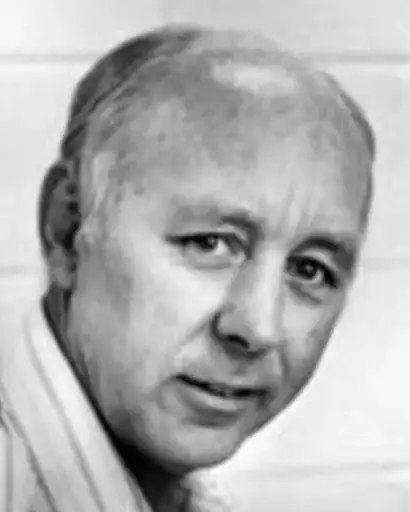
It is with heartfelt sadness that we mourn the passing of William “Bill” Scott, DVM, PhD, a pioneering scientist in the field of teratology and developmental biology who dedicated nearly four decades to Cincinnati Children’s.
He passed away at the age of 87 from Alzheimer’s disease, leaving behind a legacy of scientific discovery, mentorship, and compassion that has shaped both our institution and the broader field of developmental biology.
Born in Georgia, Scott earned his Doctor of Veterinary Medicine degree from the University of Georgia in 1961, followed by a PhD from George Washington University in 1969. That same year, he came to Cincinnati Children’s as a postdoctoral fellow with James G. Wilson, PhD, and Josef Warkany, MD. His fellowship marked the beginning of a long and distinguished career with the hospital’s Research Foundation, where he remained a dedicated professor and researcher until his retirement in 2006.
A LEADER IN UNDERSTANDING BIRTH DEFECTS
Scott’s early research contributed to groundbreaking studies showing that the drug Thalidomide caused severe limb defects, work that helped prevent further birth defects worldwide by halting its use in pregnancy.
As a faculty member, he focused on the mechanisms of teratogenic agents such as retinoic acid, valproic acid, cadmium, and acetazolamide, especially during early limb development. His work revealed that gradients of retinoic acid exist naturally across the mouse and chick limb buds, and that disrupting these gradients could cause malformations. He also showed how teratogens affect development by altering intracellular pH, Shh signaling, and the maintenance of the apical ectodermal ridge.
Over the course of his career, Scott authored more than 100 publications, served as an expert witness and consultant, and received numerous honors, including the Frank Blood Award and the Scientific and Technological Achievement Award. He was elected President of the Teratology Society and contributed to NIH review panels. Alongside colleague Stanley “Steve” Potter, PhD, who passed in July 2024, he played a central role in transforming the Teratology division into what is now the Division of Developmental Biology at Cincinnati Children’s.
MENTOR, EDUCATOR AND DIVISION BUILDER
In addition to his scientific achievements, Scott made lasting contributions as an educator and mentor. He led the Molecular and Developmental Biology (MDB) graduate program in the 1990s, where his lab was often the most sought-after placement for students. Among his trainees was Tim Weaver, PhD, an emeritus professor in the Division of Pulmonary Biology at Cincinnati Children’s.
“When I was recruited to the MDB program, Bill’s lab was the most popular lab in the program—I was one of six graduate students when I joined his lab,” Weaver recalls. “Bill was my mentor and became a valued colleague when I eventually joined the faculty. It has been said that the greatest compliment you can pay someone is to call them a friend: Bill was my friend, and he is greatly missed.”
Colleagues remember Scott as both a rigorous scientist and a compassionate presence in the division.
“Although I only overlapped with Bill for about 5–6 years, he remained one of my most cherished Developmental Biology faculty colleagues,” says Kenny Campbell, PhD, Robert and Sarah McLaurin Chair and professor, Division of Pediatric Neurosurgery.
“Bill was my first meeting during my interview here,” adds Sam Brugmann, PhD, associate director, Division of Developmental Biology, and director, Molecular and Developmental Biology Graduate Program. “He was so kind to me and settled my nerves before my seminar.”
“Bill was incredibly kind, warm, and—most importantly—a deeply supportive mentor,” says Ron Waclaw, PhD, associate professor, Division of Experimental Hematology & Cancer Biology.
“Bill was not only a science enthusiast but also a warm, caring fatherly figure to the students and postdocs within his lab and the division,” remembers Sheila Bell, institutional investigator, Jeffrey Whitsett Laboratory, Division of Pulmonary Biology. “Up until his passing, he was still questioning the action of thalidomide and had just recently published a manuscript with his former postdoc Dr. Michael Collins, now at UCLA.”
FUELED BY HIS PASSION FOR DISCOVERY AND DEDICATION TO FAMILY
Even after decades of contributions, Scott never lost his passion for hands-on science. He continued working at the bench daily until his retirement, embodying his belief that the thrill of discovery came through active experimentation.
“Bill loved the bench, and he loved the science,” Weaver says. “His example inspired so many of us to pursue our own discoveries.”
Scott was more than a researcher and professor—he was a proud, generous and devoted father, grandfather, husband, mentor and friend. Known for his humility, he would often downplay his many achievements, saying at his retirement that a mountain was being made out of a molehill. Yet those who knew him well saw the profound impact he had on the scientific community and the countless lives he touched personally.
Scott’s scientific contributions, mentorship and kindness will continue to ripple through the work of his colleagues and former trainees for generations.
Memorial Information
A memorial service took place on Sept. 27 at Spring Grove Cemetery, Cincinnati, OH.
Latest Posts
About this blog
The Research Horizons blog features news and insights about the latest discoveries and innovations developed by the scientists of Cincinnati Children's. This blog does not provide medical advice, diagnosis, or treatment. Email researchnews@cchmc.org with questions or ideas.
Subscribe to Our Newsletter