

Road to Researcher: Anne-Karina Perl, MS, PhD
Research By: Anne-Karina Perl, MS, PhD
Post Date: December 19, 2025 | Publish Date:

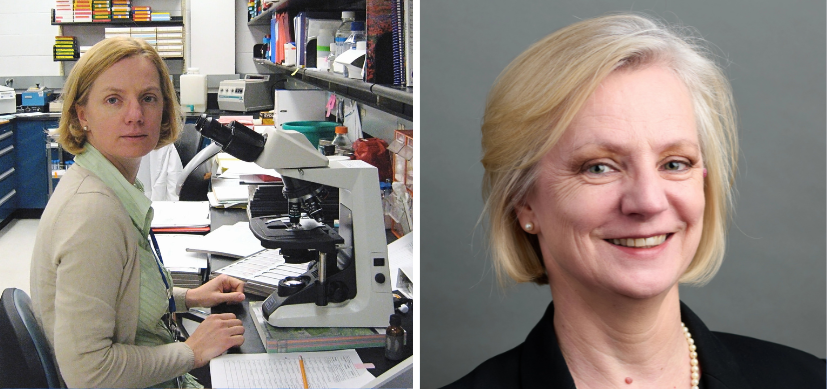
Learn about the journey that brought her from a small village school to our world-class research organization and the experiences that continue to shape her as a scientist.
From a childhood spent asking endless questions with only an encyclopedia for answers, to international recognition for discoveries that define how we understand and treat lung disease, Anne-Karina Perl, MS, PhD, has followed a winding, determined path to biomedical science. For the research professor, developmental biologist and mentor at Cincinnati Children’s, it has been a blend of intellectual curiosity, determination and the collaborative support she found after leaving her home in Vienna to pursue scientific discovery.
A trailblazer in understanding how lung fibroblast cells work, Perl has built her career exploring the inner workings that help lungs grow, heal and adapt. Today, she leads several NIH R01–funded projects delving into how transcriptional and epigenetic signals shape fibroblast behavior and alveolar development. Her research spans everything from how matrix fibroblasts take shape to the intricate conversations these cells have with epithelial cells during disease. It’s no surprise that her lab, which has enjoyed uninterrupted NIH support since 2005, is widely recognized as a leader in revealing how fibroblasts drive lung injury, repair and regeneration.
Outside of her team, Perl has helped shape the international landscape of fibroblast biology. She founded and leads an international fibroblast task force that is now setting field-wide standards for nomenclature and defining fibroblast subsets. Her leadership within the NIH LungMAP consortia—integrating cellular, molecular and morphologic datasets—has contributed to foundational atlases of lung development and disease.
Perl’s scientific influence extends well beyond her lab. As director of the Biomedical Research Technologies Graduate Program and a research professor in the Divisions of Pulmonary Biology and Developmental Biology, she is deeply invested in training and guiding the next generation of scientists. Her leadership and scholarship have earned national recognition, including one of the American Thoracic Society’s highest honors, the Distinguished Achievement Award. This accolade is one of only four major honors the Society awards each year and is rarely given to PhD investigators, particularly those based at pediatric institutions. Her selection reflects decades of scientific leadership, mentorship and service to the field.
Mentorship has been a defining thread, and Perl is widely recognized across the pulmonary and developmental biology communities as a committed mentor and sponsor. Trainees in her lab—from undergraduates to PhD students and postdocs—have gone on to earn competitive fellowships, national research awards and authorship on high-impact publications. She attributes her own mentoring philosophy to the example set by strong female Cincinnati Children’s leaders, including Katherine Yutzey, PhD, Sandra Degen, PhD, Neeru Hershey, MD, PhD, and Lori Stark, PhD, who modeled how to build supportive, rigorous scientific environments where young scientists can thrive.
She recently shared more about the journey that brought her from a small village school to our world-class research organization and the experiences that continue to shape her as a scientist.
What inspired you to pursue a career in research?
I was always curious about how things work and why they become what they are. However, I also credit having a wonderful high school biology teacher, who was knowledgeable about genetics even in the late 1980s. Immediately fascinated by looking inside cells, I knew that getting a start in biology was right for me.
When I was looking to pursue my master’s and PhD, there was a new institute in Vienna—the Institute for Molecular Pathology—with cutting-edge scientists studying diseases. When I came across a person who’d made transgenic mice, I thought, “I can put genes into a mouse, and then see what that gene does?” From that point on, I was hooked.
I approach science with a belief that the most important insights come from understanding how cells communicate and change their identity. My work is driven by the idea that fibroblasts, once considered supporting actors, hold the key to the lung’s capacity to develop, repair and regenerate.
What drew you to Cincinnati Children’s?
One thing I was missing in Austria was the connection between basic research and the hospital. In Austria, they are two separate powerhouses, and it’s very difficult to get a connection with the patients.
Meanwhile, I discovered Jeffrey Whitsett [MD], one of the first to use inducible mice [where you can switch genes on and off in an organ-specific manner]. That’s how I ended up here for my fellowship. And I’m still here, 26 years later.
What keeps you here?
Cincinnati Children’s has always been an early adopter of leading technologies and has stayed continually committed to research. They push limits and learn new things—and that makes this the right place for me.
They also foster a collaborative environment that allows scientists to be embedded within specific divisions. It’s unique to be able to see real patients with real problems you want to study.
I kept looking for opportunities to go back to Europe or Austria but didn’t have a mentor there to support me or the funding I would need. Every time I thought about making a change, I realized everything I needed already exists here: I’m aligned with developmental biology; the program has grown significantly over the last 15 years; and the scientific diversity and intellectual wealth foster interactions with others outside my field who can help me unwind things and develop new ideas.
And Cincinnati has its own appeal—great arts, great sports and a growing food scene.
What makes Cincinnati Children’s stand out as a place to build a research career?
I had a good opportunity in 2005 to go back to Europe, but I’d just had my first child. And I had no idea how I’d juggle that in Europe, where daycare doesn’t exist, and I didn’t have family to help. Another strong reason for staying was that, in America, going back to work after 12 weeks is not only accepted—it’s common. In Austria, back then, I wouldn’t have been allowed to even enter a lab because it was considered too dangerous for me and my baby. I just felt I couldn’t be a parent and scientist there.
The daycare here at Cincinnati Children’s is amazing. My kids were in daycare with my colleagues’ kids. They became friends and are now reconnecting in college.
Many of the people I worked with during my PhD went on to accept positions on the east or west coast. But they’ve struggled with cutthroat environments and unhealthy competition. I don’t see that here at Cincinnati Children’s. I’ve only ever experienced a healthy collaboration.
As a woman in science, it’s also been helpful to see other women struggling with similar problems and overcoming those obstacles. The message is, “You aren’t alone.” Having a whole group of strong, supportive female leaders like Katherine, Sandra, Neeru and Lori made all the difference for me.
What has surprised you most about being at Cincinnati Children’s?
Although I was sold on taking my first position at Cincinnati Children’s, I really wasn’t aware of the health system’s success. For instance, I didn’t know the oral polio vaccine was developed here or that the research considered vital to surfactant replacement therapy happened here. I think that’s why I love going back into the Pratt Research Library. It’s a good place to sit down and think things through because of all the history I feel there.
What advice would you give to someone just starting their research career?
First, I’d say to have a clear path forward. If you’re considering a five-year postdoctoral position, for example, take some time to also consider where you want to go afterwards. That’s one thing I didn’t have in mind. I just planned to return to Austria and thought all I needed was a couple of good publications. But I was very wrong.
Next, it’s essential to surround yourself with mentors who possess diverse skills to help you overcome roadblocks—and to stay open-minded about who their mentors may be—because they aren’t just our teachers or superiors. They are often our peers and, sometimes, even our students.
Outside of your work, what do you enjoy doing? What helps you recharge?
I’m a black belt in Taekwondo, which has been beneficial for me both physically and mentally, increasing my flexibility and allowing me to be more present in my body rather than in my head. It also teaches you respect for yourself and others. I’m training with 10-year-olds. They jump higher. They run faster. It’s humbling and helps you realize that everyone has superpowers.
Is there something about your background or personal journey that people might not know or expect, but that has shaped you as a scientist?
My parents grew up during World War II and didn’t have the opportunity to even finish high school. I’m sure it was frustrating to have a child so full of questions, especially with only an encyclopedia to consult for answers in our apartment, and a small village school without a library—both for them and for me. However, my first experiences in Vienna revealed a whole new world of possibilities. I’ll never forget walking into a space full of scientific journals, thinking, “I can just pick one out and start reading?” Suddenly, I had access to all the information I’d craved for so long.
Really, I think that’s what shaped me. That, and the very grounded people who’ve supported me for my entire career.
Don’t Miss a Post:
- Subscribe to the Research Horizons Newsletter
- Follow Cincinnati Children’s Research Foundation on Bluesky, X and LinkedIn
Research By
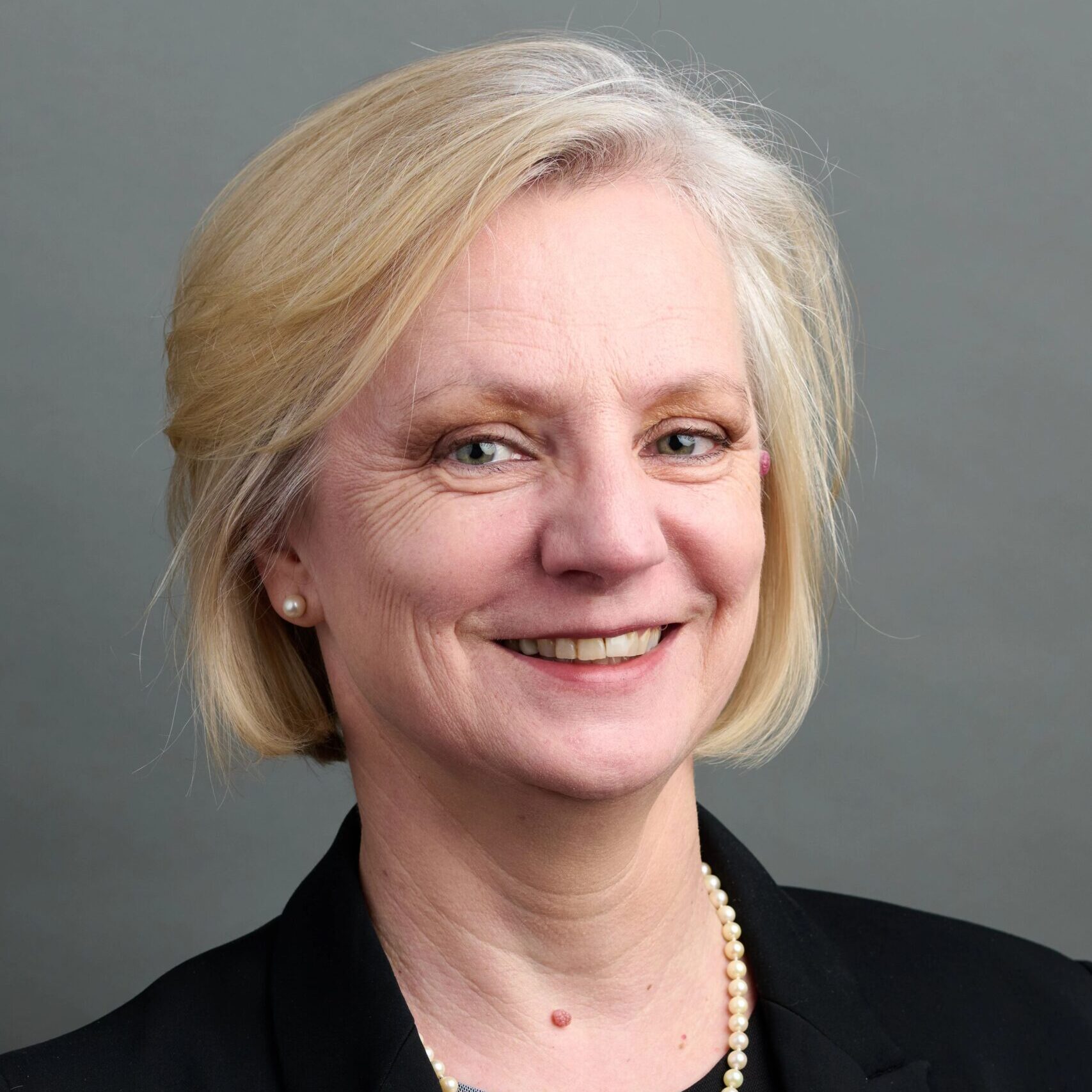
My research is dedicated to uncovering the molecular and cellular mechanisms behind lung development, repair and regeneration, with the ultimate goal of developing novel therapies for chronic lung diseases.
Latest Posts
About this blog
The Research Horizons blog features news and insights about the latest discoveries and innovations developed by the scientists of Cincinnati Children's. This blog does not provide medical advice, diagnosis, or treatment. Email researchnews@cchmc.org with questions or ideas.
Subscribe to Our Newsletter