

‘Quad Squad’ Group Therapy Boosts Pediatric ACL Rehab Outcomes
Research By: Christy Zwolski, PT, DPT, PhD
Post Date: December 5, 2025 | Publish Date:

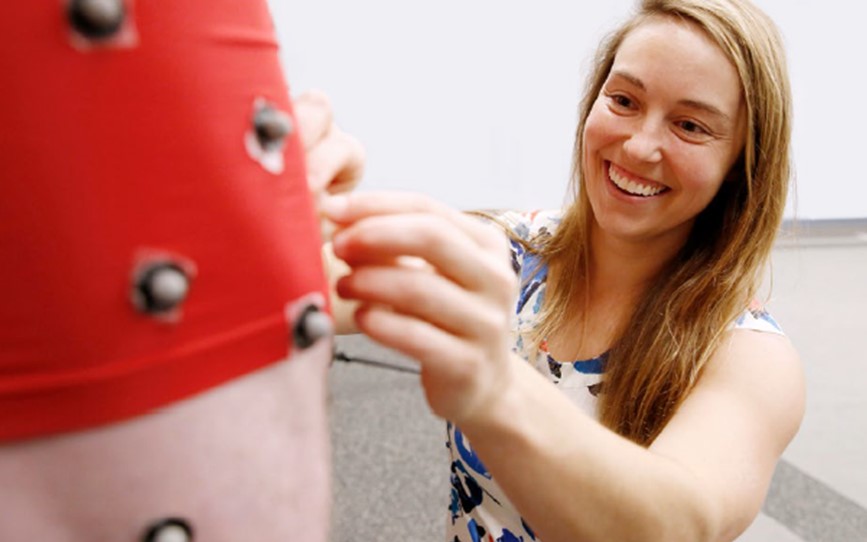
What if traditional pediatric ACL rehab meets only half the need? Strength and mobility improve after ACL reconstruction, but many young patients still feel lonely and isolated.
That’s where a new group therapy intervention, the Quad Squad, comes in. Grounded in Self-Determination Theory, which emphasizes autonomy, competence, and relatedness, the Quad Squad doesn’t replace rehab; it enhances it.
Patients in the Quad Squad cohorts (intervention group) showed 49.9% greater improvement in knee extension strength compared to those in traditional rehab (control group). The gains go beyond physical metrics. Patients are moving from isolation to connection, and their stories reflect a more empowered recovery journey.
Improvement in Action
During her dissertation, Christy Zwolski, PT, DPT, PhD, spent time listening closely to young patients recovering from major knee surgery. She noticed a gap in care: patients need emotional and social support alongside physical rehabilitation. This insight sparked the pediatric rehab team’s commitment to improving quality of care by addressing the whole patient experience.
Recognizing that many kids undergo rehab simultaneously, the team envisioned a group therapy model to improve access to richer, more connected care during the mid-phase of recovery, a time often marked by boredom and isolation. Major knee surgery and rehab can take up to 12 months, causing young athletes to miss out on a year of social interaction during a critical developmental phase.
One patient, who began in traditional rehab before transitioning to the Quad Squad, reflected on the emotional toll of early recovery:
“I would say the hardest part [of the rehab experience] is really just kind of keeping my head up, because a lot of people around me are in athletics… so I’m kind of just set behind, and I feel kind of like an outsider.” – ACL Traditional Rehab Patient
With support and buy-in from hospital leadership, the team launched their pilot program in 2022, emphasizing continuous learning through data collection and voice-of-the-customer feedback. Early results showed that patients regained strength, improved self-reported outcomes, and experienced greater joy and social connectedness. The pilot’s success validated the group therapy model’s impact and helped the improvement team secure Place Outcomes Research Award funding allowing them to expand the program to four cohorts over two years.
Patients and families participating in the Quad Squad describe a more connected and empowering journey:
“I just knew that Quad Squad was something that could help my recovery speed up and obviously not rush it, but it could definitely be an impact in my recovery, and it was!” – Quad Squad Participant
“For her, it involved the team concept; it’s made her fall in love with weightlifting, and it’s building her mental confidence. For us, it’s been a home run.” – Father of a Quad Squad Participant
These voices underscore the impact of the Quad Squad beyond physical metrics. The program is not only improving strength outcomes but also transforming the rehab experience into one of connection and confidence.
What’s Next?
The team is transitioning the program from research into a clinical standard, mindful that sustainable quality care requires careful operational planning (staffing, billing, recruitment, marketing, and fostering collaboration between patients, surgeons, and clinicians).
With three OT/PT clinical sites preparing to launch this winter, the team is eager to spread their learnings and continue evolving the model through ongoing improvement efforts. These sites will expand inclusion criteria to include patients with all types of lower extremity injuries that would benefit from the group therapy model.
Interested in learning more about this ongoing work? Contact: Christin.Zwolski@cchmc.org
Don’t Miss a Post:
- Subscribe to the Research Horizons Newsletter
- Follow Cincinnati Children’s Research Foundation on Bluesky, X and LinkedIn
Latest Posts

About this blog
The Research Horizons blog features news and insights about the latest discoveries and innovations developed by the scientists of Cincinnati Children's. This blog does not provide medical advice, diagnosis, or treatment. Email researchnews@cchmc.org with questions or ideas.
Subscribe to Our Newsletter