

Spinal Cord Injury Alters Neuron Gene Expression
Research By: Steven Crone, PhD
Post Date: October 21, 2025 | Publish Date: Oct. 21, 2025

Findings Provide New Clues for Recovery Research
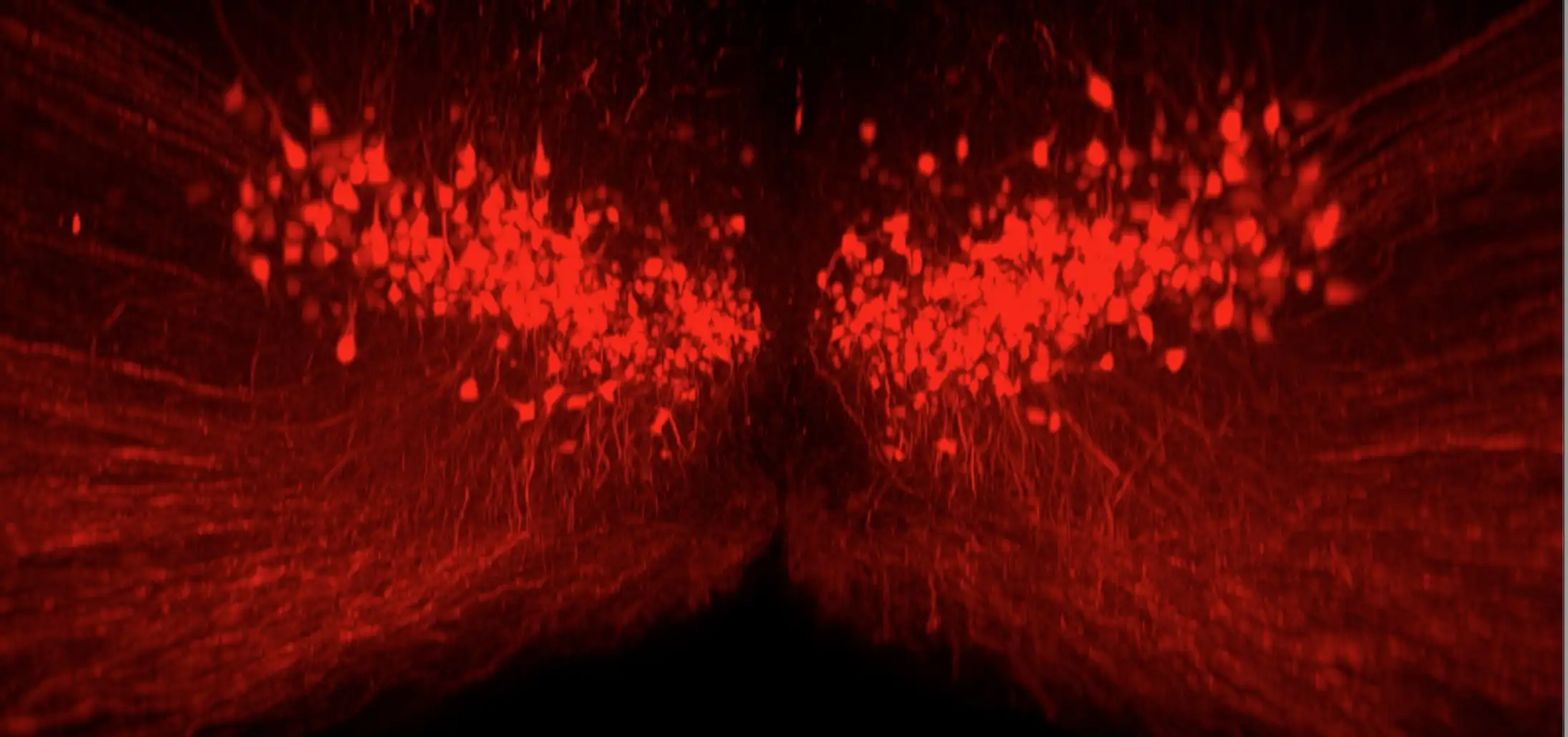
Using advanced techniques to map gene expression changes at the single-cell level, new research led by experts at Cincinnati Children’s has identified a set of neurons that may be valuable in promoting recovery of function after spinal cord injury.
The study, published Oct. 21, in the Journal of Neuroscience, was led by Steven Crone, PhD, a scientist in the Division of Neurosurgery, and included several co-authors from Cincinnati Children’s and the University of Cincinnati.
“These findings underscore the importance of examining gene expression at the single neuron level,” Crone says. “By understanding how neurons change after injury and which neurons are most vulnerable to change, we can better target therapies to promote recovery after spinal cord injury.”
Cervical (neck) injuries comprise 60-75% of traumatic spinal cord injuries in children and can severely impact the ability to breathe without assistance. In adults, 90% of traumatic cervical injuries require intubation and up to 40% remain ventilator dependent.
“Our goal is to restore the ability to breathe and prevent ventilator dependence,” Crone says.
The study focuses on the V2a class of propriospinal neurons—cells considered critical for functional recovery after traumatic injury. It describes a complex relationship between adult and developmental V2a subtypes, which in turn reveals new cellular targets for promoting neuron regeneration.
Key findings include:
- Loss and transformation of neuron subsets: Injury triggers both the loss of specific subsets of neurons below the injury site, and a notable upregulation of RNA splicing factors among surviving cell clusters.
- Adult vs. neonatal neuron diversity: The study reveals that adult V2a neurons retain some developmental markers but also undergo significant changes in “Z-group” cell clusters. These insights are helping define which neuron subtypes are vital to controlling breathing and motor behaviors and pinpointing their locations.
- Gene Regulation After Injury: The researchers found widespread downregulation of genes in V2a neurons post-injury, which appear to influence synaptic plasticity, axon guidance, and neuron function.
Six-year project bears fruit
This study was started 6 years ago, with first author Christina Thapa, PhD, a member of the Crone lab and the Systems Biology and Physiology Program at UC, carrying out many of the experiments.
This was a challenging project, Thapa says, because it required genetically labeling, isolating and sorting the neurons of interest, which make up less than 5% of all spinal cord cells. Then the team performed single-cell nuclear sequencing and other validation steps to document the roles played by the various cells and clusters.
Next steps
“Several of these findings offer new targets for therapeutic intervention,” Crone says. “This dataset will serve as a resource for the scientific community to identify and test different pathways, depending on which neurons might be most important for the circuits they are trying to repair.”
In addition to breathing, the co-authors note that some of the V2a neurons in this study also play important roles for reaching, grasping, walking, and control of autonomic functions.
More research will be needed to determine if interventions targeting V2a neurons can accelerate damage repair.
About the study
Other Cincinnati Children’s co-authors included Praneet Chaturvedi, MS, Sarah Baumgartner, BS, Matthew Fleming, BS, Jacek Biesiada, PhD, and Nathan Salomonis, PhD. Co-authors also included Ian Walling, PhD, a member of the Medical Scientist Training Program at UC. This work also was supported by the Flow Cytometry and Gene Expression Cores at Cincinnati Children’s.
Funding sources included the National Institutes of Health (R01NS112255), the Craig H. Neilsen Foundation and the L.B. Research and Education Foundation.
Don’t Miss a Post:
- Subscribe to the Research Horizons Newsletter
- Follow Cincinnati Children’s Research Foundation on Bluesky, X and LinkedIn
| Original title: | Diverse transcriptional alterations in V2a propriospinal neurons following spinal cord injury |
| Published in: | Journal of Neuroscience |
| Publish date: | Oct. 21, 2025 |

Latest Posts

About this blog
The Research Horizons blog features news and insights about the latest discoveries and innovations developed by the scientists of Cincinnati Children's. This blog does not provide medical advice, diagnosis, or treatment. Email researchnews@cchmc.org with questions or ideas.
Subscribe to Our Newsletter