
$1.48M State Grant Boosts ENGRAFT Learning Network
Post Date: December 5, 2025 | Publish Date:
Cincinnati Children’s leads a group of 13 centers sharing data and best practices to improve stem cell transplant outcomes
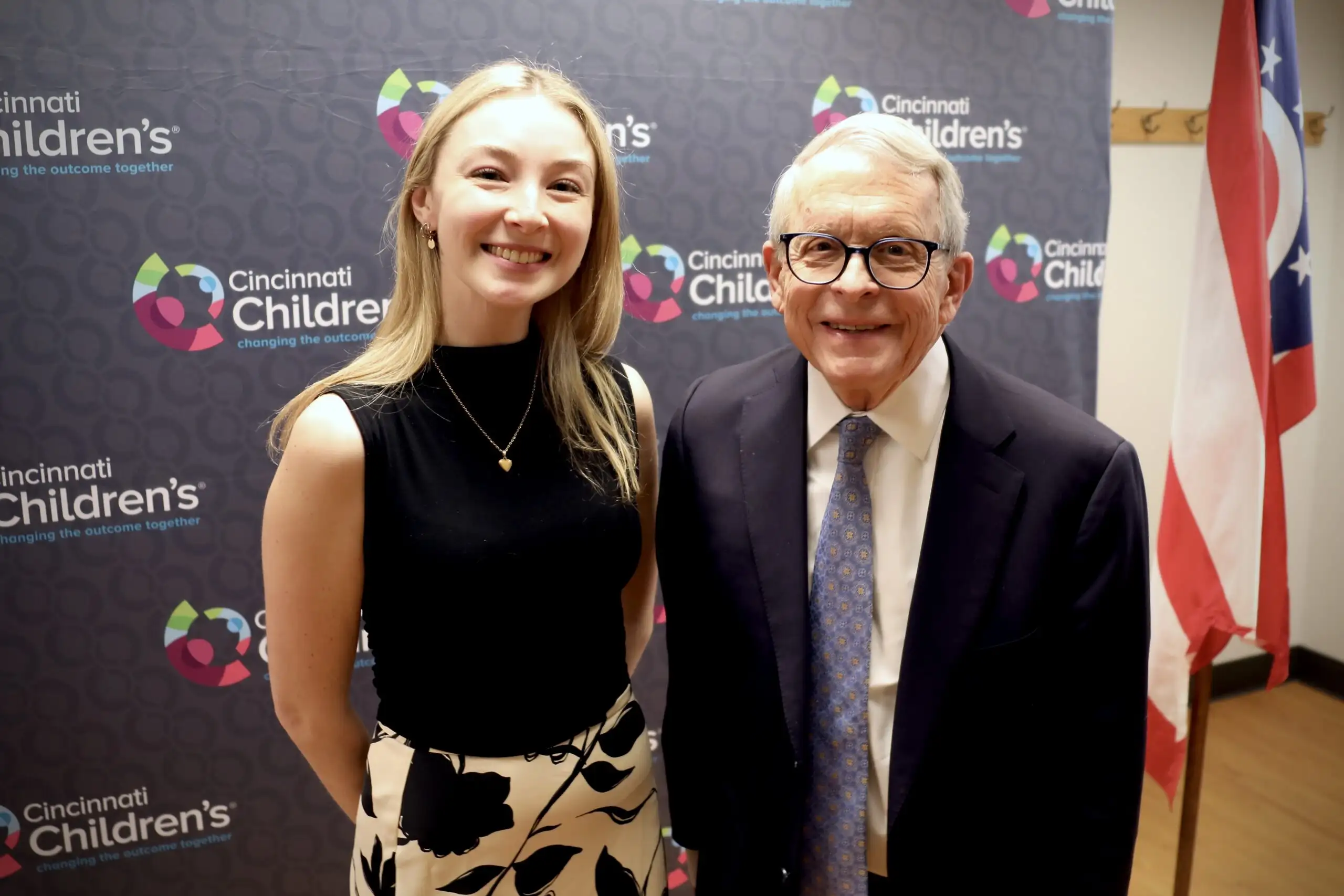
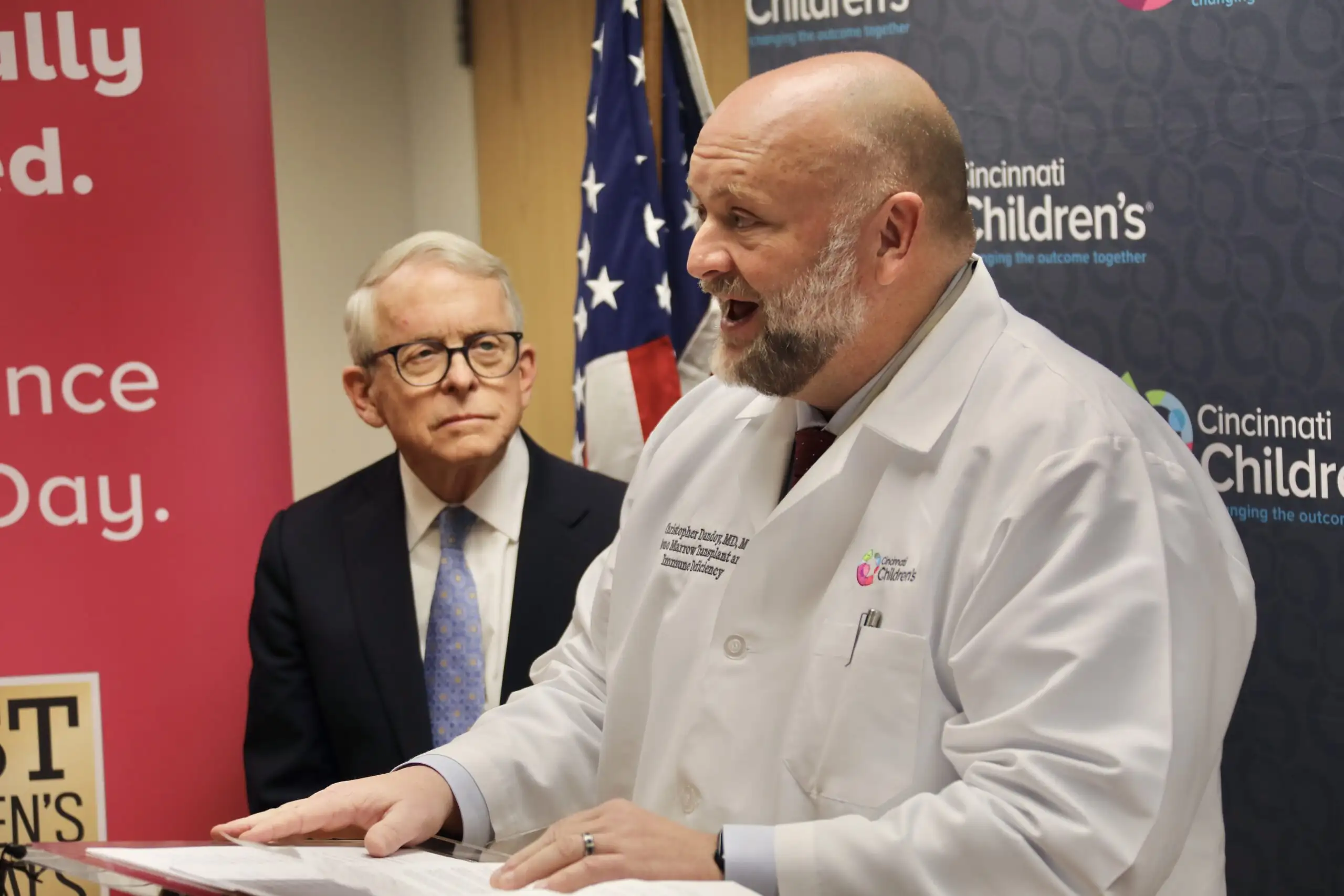
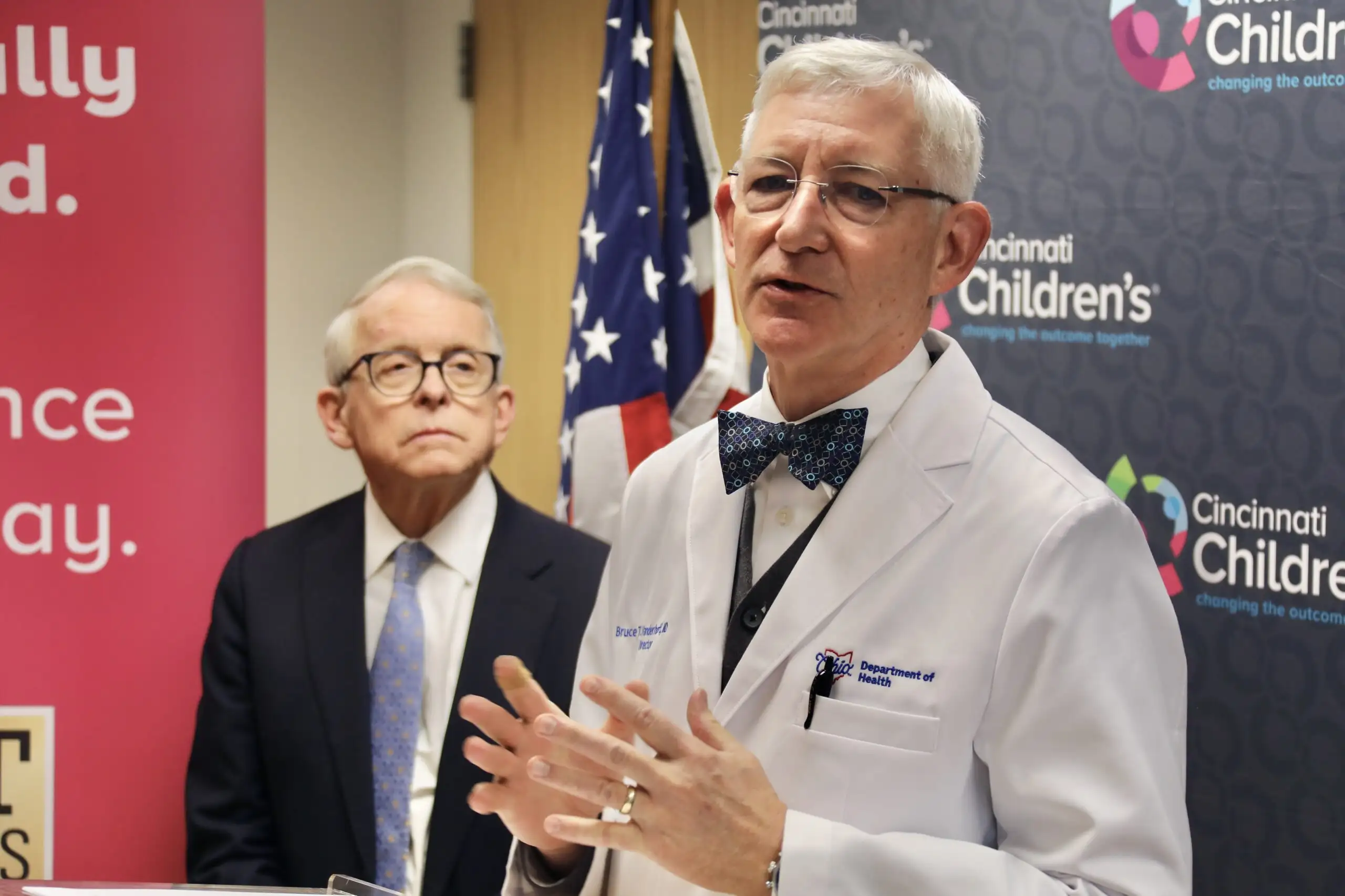
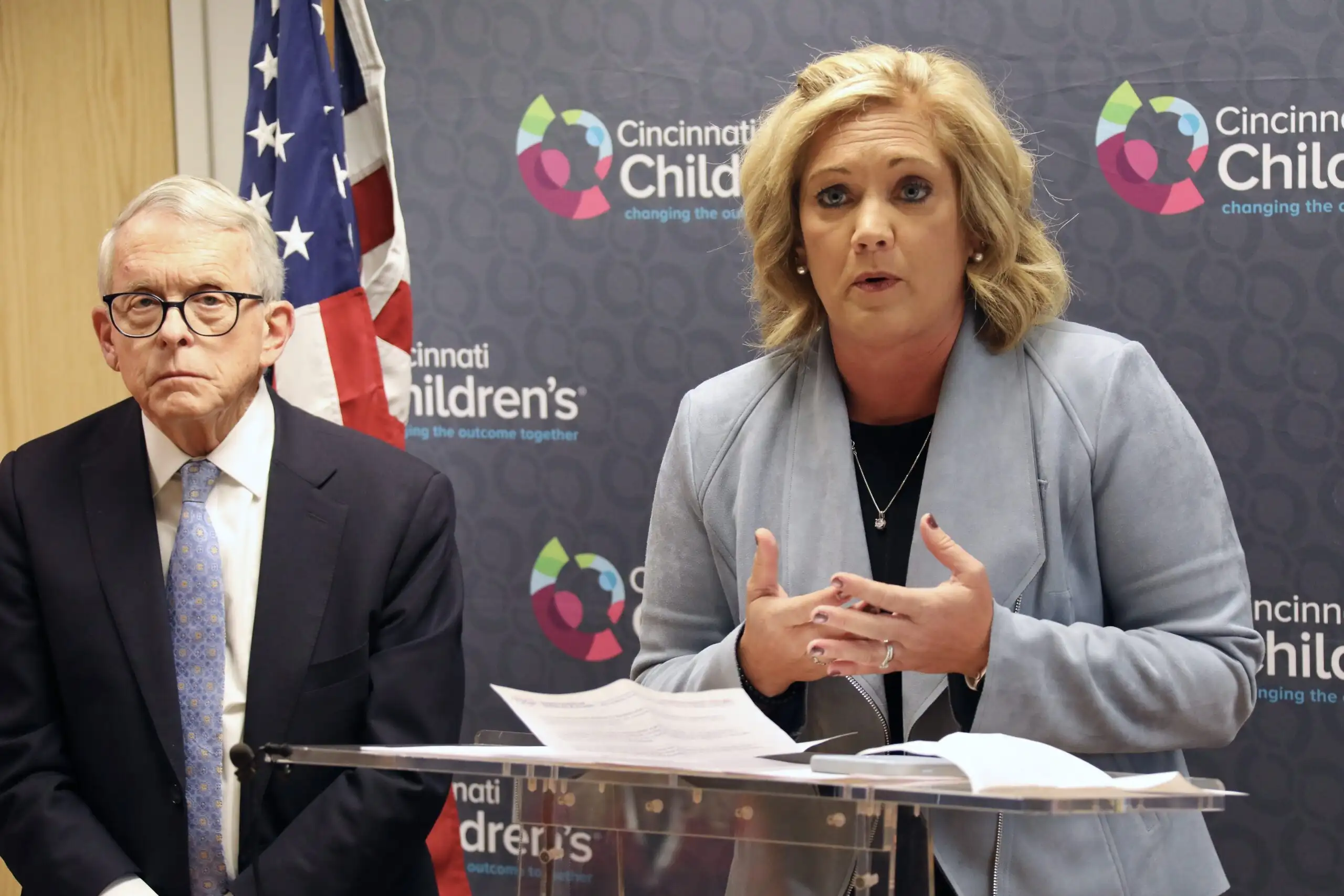
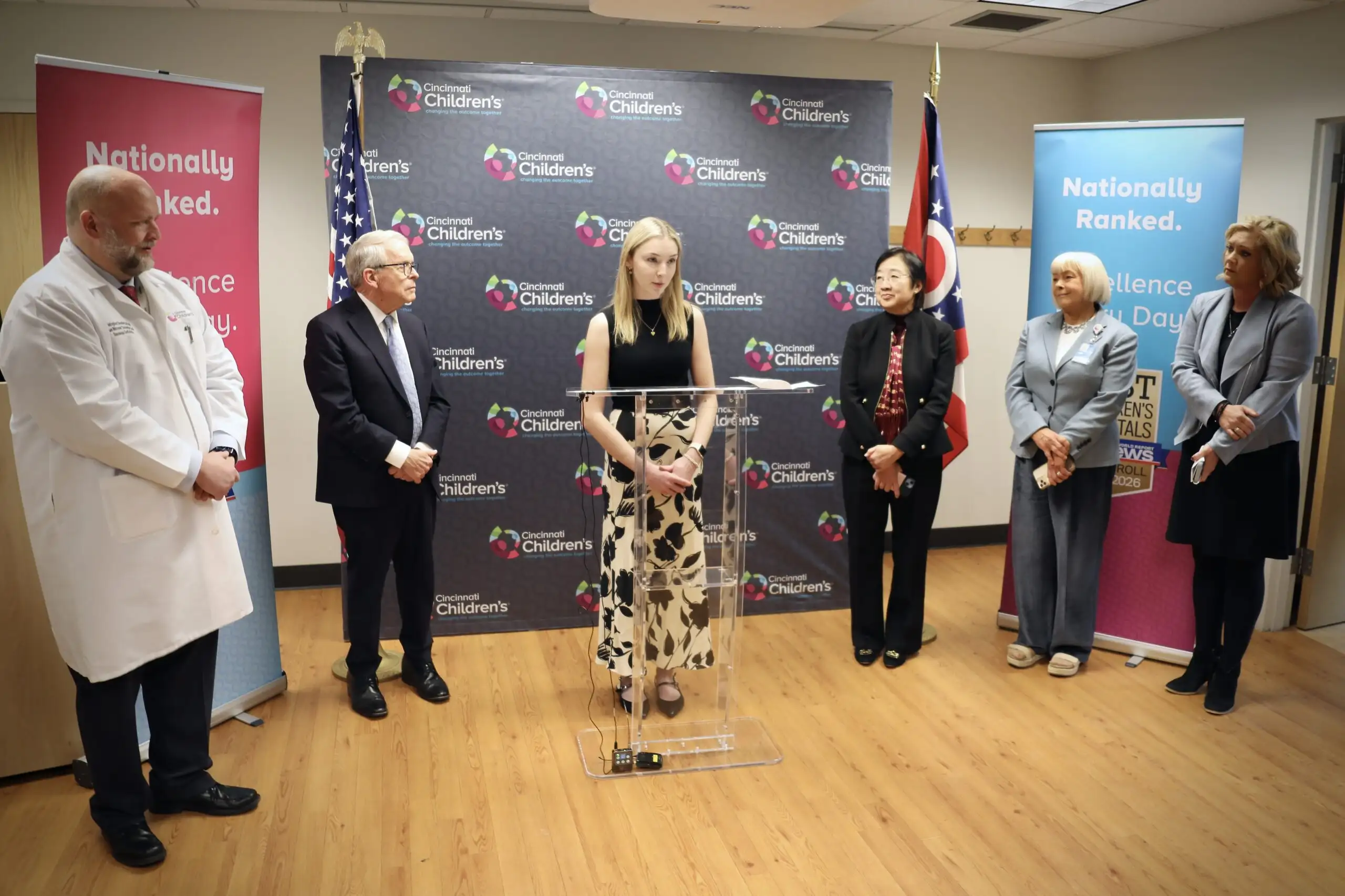
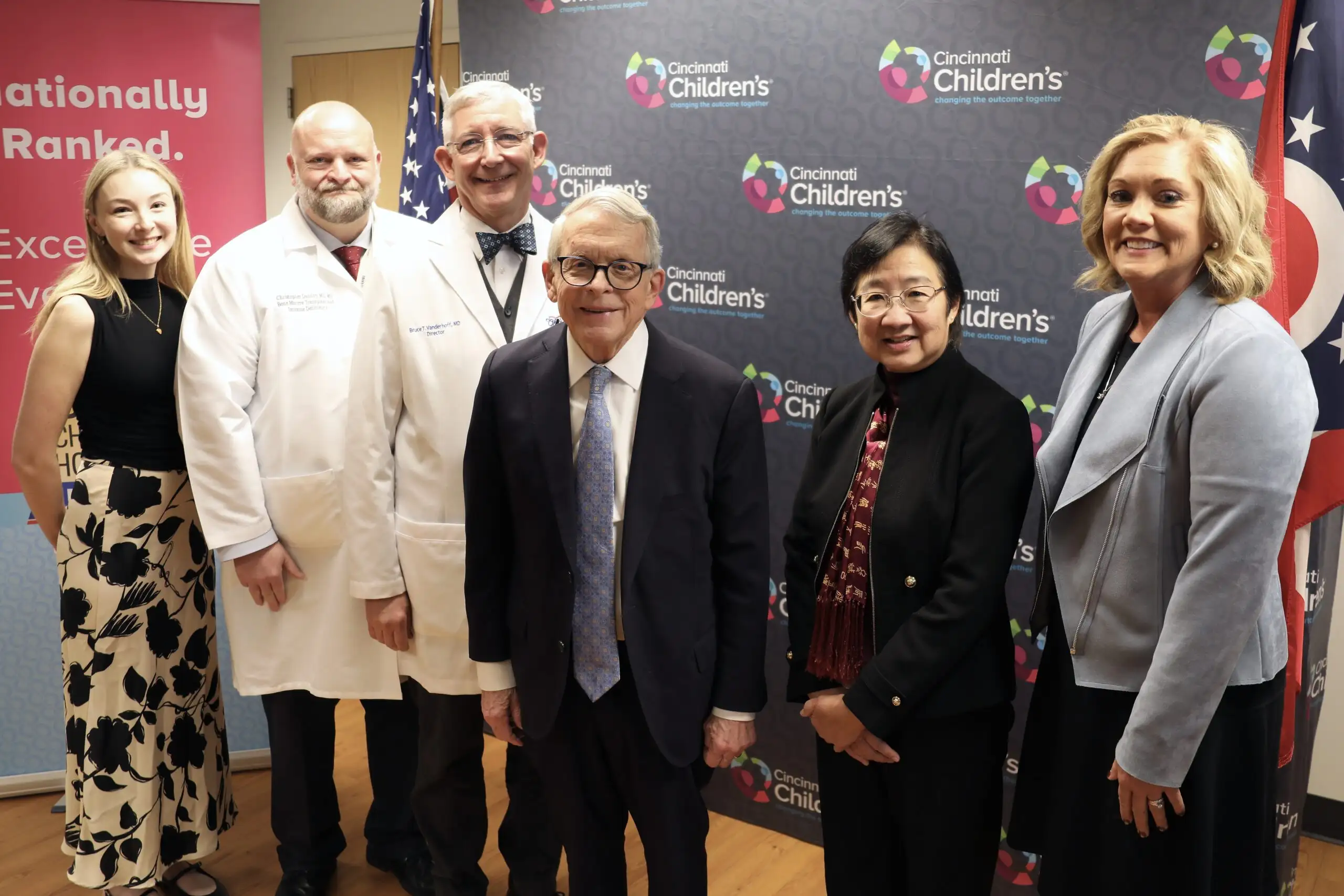
Ohio Gov. Mike DeWine visited Cincinnati Children’s Dec. 5, 2025, to award a significant grant to support the work of the ENGRAFT learning network—a collaboration of cancer centers, clinicians, researchers, families, industry and non-profit groups working to improve outcomes and quality of life for people who need stem cell transplants.
The $1.48 million grant was part of an overall $5 million awarded by DeWine to support pediatric cancer research in Ohio.
“Pediatric cancer research is vital to improve survival rates and understand the unique biology of childhood cancers,” DeWine says. “Funding research that is driven by Ohio’s best and brightest children’s hospitals and researchers demonstrates once again that Ohio is a leader in caring for, prioritizing, and supporting children and families.”
Other recipients included:
- Cleveland Clinic: $1.5 million to support development of a self-amplifying RNA vaccine for the rare cancers Ewing sarcoma and desmoplastic small round cell tumor (DSRCT).
- Research Institute at Nationwide Children’s Hospital: $1 million to help evaluate a blood-based “liquid biopsy” as potential way to detect and monitor pediatric cancers without relying as heavily on invasive procedures or frequent MRI/CT scans.
- Dayton Children’s Hospital: $589,000 to further study two types of brain tumors, diffuse midline glioma and high-grade neuroepithelial tumor with MN1 alteration (HGNET-MN1).
- Maple Tree Cancer Alliance: $386,000 to support exercise-based programs for children undergoing cancer treatment and recovery.
Read the grant announcement from Gov. DeWine’s office
What is the ENGRAFT learning network?
Launched in January 2024, ENGRAFT is one of 13 learning health networks initiated by Cincinnati Children’s. Those networks include ImproveCareNow (inflammatory bowel disease), Children’s Hospitals’ Solutions for Patient Safety (adverse event reduction), and ACTION (pediatric heart failure).
Christopher Dandoy, MD, MSc, a pediatric hematologist-oncologist with the Division of Bone Marrow Transplantation and Immune Deficiency at Cincinnati Children’s, serves as executive director of ENGRAFT.
“Learning health networks have transformed care in other fields like cystic fibrosis, inflammatory bowel disease, and congenital heart disease,” Dandoy says. “Engraft builds on that proven model which includes successes like Solutions for Patient Safety, which was also founded here in Ohio by the six Ohio children’s hospitals. ENGRAFT, however, is the first of its kind in both pediatric cancer and transplant and cellular therapy.”
Involving patients and families from the start
Since 2010, the James M. Anderson Center for Health Systems Excellence at Cincinnati Children’s has been a driving force in establishing learning networks to encourage systemic improvements in healthcare quality.
The concept underlying learning networks is to bring a wide range of interested people and organizations together to address concerns and drive quality improvement. In healthcare, the approach especially emphasizes patients and families sharing their lived experiences to inform hospitals, clinicians, researchers and others what study questions and day-to-day care practices most need addressing.
The deep involvement of patients in the improvement process was illustrated during DeWine’s visit by comments from Claire Blevins, RN, a childhood leukemia survivor who became a nurse working at Cincinnati Children’s.
“In November of 2017, just a week after I turned 16, I was diagnosed with Philadelphia-positive acute lymphoblastic leukemia (ALL),” Blevins says. “The next four months of my life became a blur of hospital stays and doctors’ appointments, chemotherapy, and handfuls of medications whose names I could barely pronounce.”
Despite an initial remission, the cancer returned. In 2020, she received a stem cell transplant in Cleveland. Then she spent four months in the hospital battling chronic graft versus host disease (cGvHD).
After recovering, she started her first year of training at the University of Cincinnati’s College of Nursing in 2021 while receiving frequent follow-up care at Cincinnati Children’s.
“It was here that I was introduced to ENGRAFT,” she says. “I joined ENGRAFT as a patient advocate because I believe deeply that patients and caregivers have an essential voice in designing better care. We are the ones who live the details and challenges that never make it into medical charts. ENGRAFT brings those voices to the table and creates real, tangible change.”
Now Blevins works on the Bone Marrow Transplant Unit at Cincinnati Children’s.
“This role has allowed me to gain a new appreciation for the complexity and coordination required for every transplant. I see firsthand the challenges families face, the small victories that keep everyone going, and the immense effort behind every moment of progress.
“Being part of ENGRAFT allows me to bring both perspectives together,” Blevins says. “ENGRAFT is creating what I hope every patient could have: a system where hospitals actively share knowledge, so patients and families can receive the best care no matter where they go.”
What’s next for ENGRAFT?
Since its launch, ENGRAFT has expanded into a national collaboration of 13 transplant and cellular therapy centers. Alongside Cincinnati Children’s, participating sites now include Akron Children’s Hospital, Atrium Wake Forest, Boston Children’s Hospital, Children’s Wisconsin, Cleveland Clinic Pediatrics, Emory Children’s Hospital, Nemours Children’s Health, the James Cancer Center at Ohio State, Sydney Children’s Hospital, Texas Children’s Hospital, the University of Alabama, and the University of Minnesota Medical Center.
Together, these centers are building a shared patient registry and data-sharing system designed to accelerate learning across institutions. Even in its early stages, the network has created a dashboard containing information on more than 1,000 transplant patients and has already begun publishing findings from this collective work.
The first network-wide initiative focused on reducing the number of days children remain on central venous catheters—an issue identified directly by patients and families.
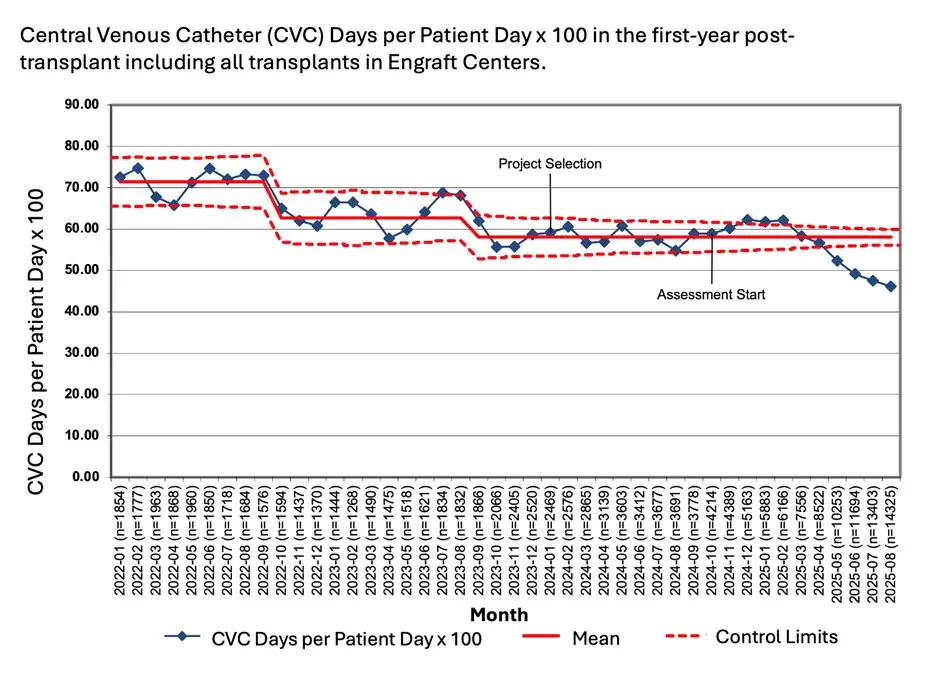
While central lines are essential for treatment, they can be uncomfortable, anxiety-provoking, and carry infection and clot risks. Early ENGRAFT data revealed that children often remained on central lines far longer than adults with similar conditions. By coordinating strategies across centers, ENGRAFT participants have already reduced central line days by roughly 20%, a major step toward the network’s 25% reduction goal.
With support from the State of Ohio, ENGRAFT will rapidly expand its data capabilities, enhance patient- and family-centered tools, and accelerate improvements in transplant and cellular therapy care. Over the next several years, ENGRAFT will strengthen its shared data infrastructure, including scaling up a multi-center registry and an advanced analytics platform to allow hospitals to learn from one another in real time.
The network’s next initiatives will focus on standardizing screening and early detection of chronic graft-versus-host disease and expanding multi-center research. ENGRAFT will also launch several new tools to improve communication and empower families, including a shared decision-making platform to support choices around central line removal, the ENGRAFT Journey Map to guide families through each stage of transplant, and a pilot study of AI-enabled education systems.
“These innovations will broaden how families engage in their care, increase transparency, and support more consistent, higher-quality experiences across centers,” Dandoy says. “This investment ensures that discoveries made at one center can benefit children and young adults everywhere.”
Learn more about the ENGRAFT learning network
Publications and presentations so far
ENGRAFT members have several manuscripts underway, and have published these findings:
- Engraft: A Collaborative Learning Health Network for Enhanced Transplant and Cellular Therapy Outcomes
- Variation in Central Venous Catheter Practices and Complications after Stem Cell Transplant: A Multi-Center Survey of the Engraft Learning Network
- Establishing a Quality Improvement Education Platform in the Engraft Learning Network
- Establishing the Engraft Multi-Center Tri-Use Registry
- Multicenter Study on Caregiver Experiences in Pediatric Hematopoietic Stem Cell Transplantation Part I: Integrative Analysis of Mental Health, Psychosocial Stressors, and Support Mechanisms
- Multicenter Study on Caregiver Experiences in Pediatric Hematopoietic Stem Cell Transplantation: Part II. Treatment Challenges, Communication Barriers, and Caregiver-Driven Approaches to Mitigation
View more photos from the Dec. 5 event
Don’t Miss a Post:
- Subscribe to the Research Horizons Newsletter
- Follow Cincinnati Children’s Research Foundation on Bluesky, X and LinkedIn
Latest Posts
About this blog
The Research Horizons blog features news and insights about the latest discoveries and innovations developed by the scientists of Cincinnati Children's. This blog does not provide medical advice, diagnosis, or treatment. Email researchnews@cchmc.org with questions or ideas.
Subscribe to Our Newsletter