

Philanthropy Supports Tomorrow’s Cures
Post Date: March 9, 2026 | Publish Date:


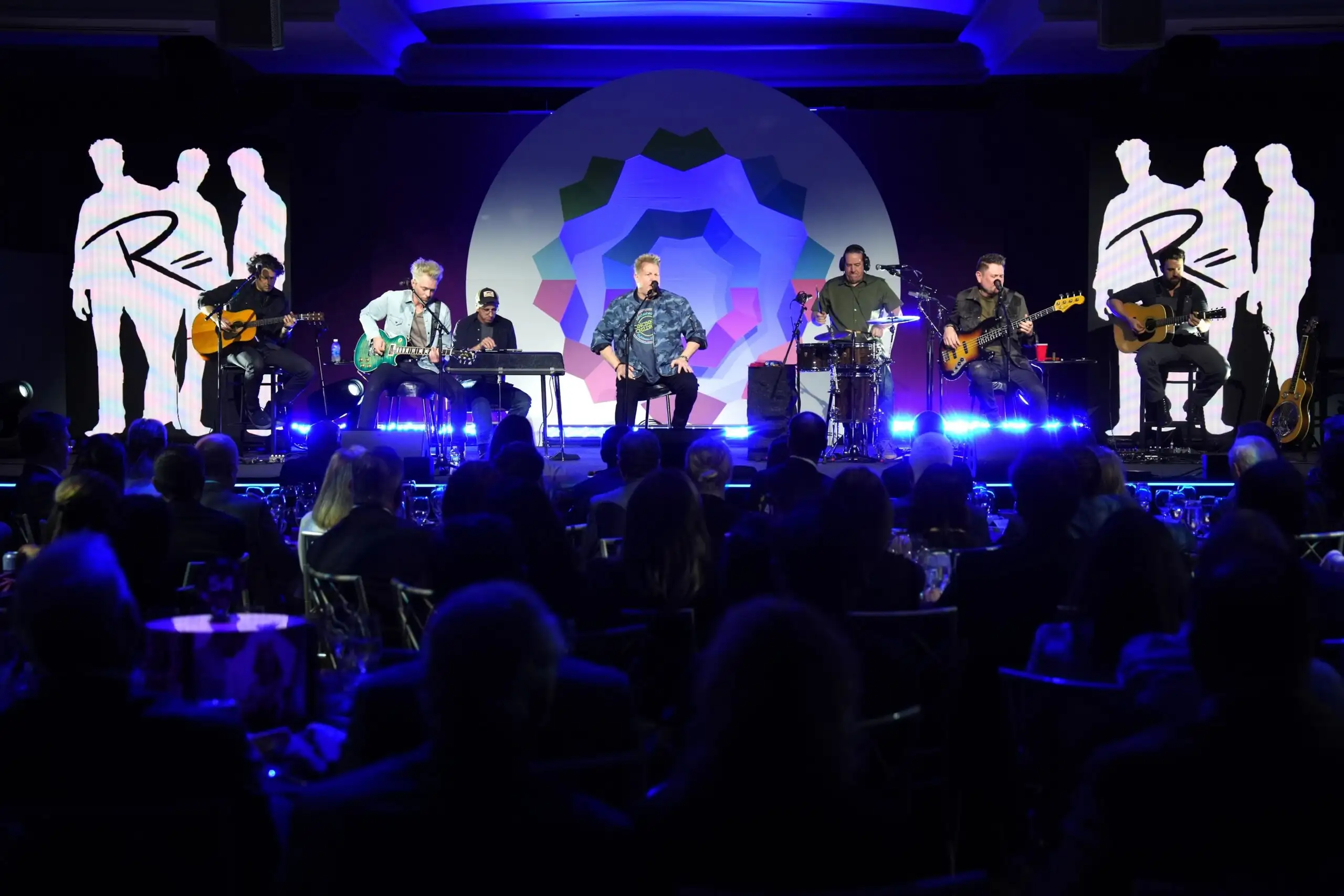


Annual Kaleidoscope event raises $2 million-plus to advance research innovation.
Cincinnati Children’s Research Foundation is one of the largest pediatric research programs in the nation, with more than 1,000 potential therapeutics, diagnostics, medical devices, software and research tools. We’re leading the way in scientific discovery and innovation.
While the National Institutes of Health provide our largest source of research financing, a variety of funding gaps persist. Philanthropy plays an essential role in advancing early-stage research and translating scientific discoveries into life-saving treatments.
Last year, our donors invested more than $26 million to advance research and discovery here.
Kaleidoscope, an annual fundraising event supporting the work of Cincinnati Children’s, is one piece of the philanthropy equation. Each year it helps build awareness about the important role donors play in advancing our mission. This year, all proceeds from the event benefited research to improve treatments and cures for childhood disease.
Presented by Fort Washington Investment Advisors and Western & Southern Financial Group, and co-hosted by Cris and Holly Collinsworth alongside a dedicated host committee, this year’s event brought supporters together in a powerful show of generosity. A record-breaking $2 million-plus was raised—an achievement made possible by the generosity of event sponsors and donors. Attendees were treated to an evening of food, fun and music with host Cris Collinsworth and special guest performers Rascal Flatts.
Learn about a sampling of Cincinnati Children’s discoveries made possible by philanthropic gifts.
Accelerating Organoid Medicine
With support from the Farmer Family Foundation, Cincinnati Children’s established the Center for Stem Cell and Organoid Medicine (CuSTOM) Accelerator Lab, a state-of-the-art facility with advanced robotics for rapid manufacturing and analysis of human organoids from patient stem cells.
“This accelerator is one great step to moving things forward, and honestly, the phenomenal help from the Farmer Foundation is one reason why this can happen and why we can accelerate those basic discoveries into medicine faster,” said Jim Wells, PhD, chief scientific officer of CuSTOM and director for Research, Division of Endocrinology.
“Without them, we would still be having these amazing discoveries in the research lab. We’d have these patients that we know could benefit from this technology, and we would have no way really of bringing this technology to those patients,” said Aaron Zorn, PhD, Perinatal Institute Endowed Research Chair; co-director of CuSTOM; director, Division of Developmental Biology; and associate director, Digestive Health Center.
“The role of philanthropy is huge,” said Michael Helmrath, MD, director, CuSTOM; director, Surgical Research; director, Center for Bariatric Research and Innovation; and pediatric surgeon. “Because philanthropy isn’t to fund all the work. It’s to fund the gaps and it’s to keep the mission based on the patients and safety.”
Tackling Mental Health
The Mental Health Trajectories project aims to predict the likelihood of a child developing serious mental illness over time and allow doctors, educators and parents to detect early signs of trouble and intervene before issues become crises. This long-term initiative involves more than 25 leading scientists in nine different research divisions as well as collaborators at the University of Cincinnati, the University of Colorado and Oak Ridge National Laboratory.
The project is currently in the works at our Decoding Mental Health Center, led by John Pestian, PhD, MBA, and Tracy Glauser, MD. The center was launched in 2022 with funding from Cincinnati Children’s.
In addition, funded by a generous gift in 2023 from The James J. and Joan A. Gardner Family Foundation, the Mental and Behavioral Health Institute was established to help Cincinnati Children’s accelerate and scale up work to address childhood mental health needs.
“We stand committed to addressing this country’s mental health challenges, from expanding access to care to conducting vital research that will improve outcomes,” said Steve Davis, MD, MMM, Cincinnati Children’s president and CEO. “The generous gift from the James J. and Joan A. Gardner Family Foundation provides critical resources for achieving this mission together.”
Operating From Pixel to Patient
David L.S. Morales, MD, co-executive director of Cincinnati Children’s Heart Institute and director of Cardiothoracic Surgery, and Ryan Moore, MD, MSc, director of Digital Health Innovation, specialize in cutting-edge technologies like 3D imaging to treat complex heart conditions. They developed one of the first true VR surgical planning tools that allows surgeons to place valves and medical devices on a 3D digital version of a patient’s heart.
“We can actually create an exact replica of the patient’s anatomy. And then the surgeons can go in there and plan out their best approach,” Moore said. “This pixel-to-patient aspect is really a unique fabric of Cincinnati Children’s.”
The The project also received financial and technical support from the Unity for Humanity Grant program, which includes funding from famed singer-songwriter Jewel.
Creating New Cancer Treatments for Kids
In 2025, CancerFree KIDS invested the most it has ever given to fund innovative and critical research at Cincinnati Children’s, reflecting its mission to find gentler, more effective treatments for childhood cancers.
Since 2002, the organization has invested in early-stage research projects, fueling 265 new ideas with the potential to change outcomes for children and families.
The grants supported New Idea Awards, designed to fund bold concepts in the earliest stages of discovery, and Accelerator Awards, which allow researchers to continue promising work that has already demonstrated success.
Learn about the 15 research projects that received this grant in 2025.
Treating Tuberous Sclerosis Complex
Darcy Krueger, MD, PhD, director of the Tuberous Sclerosis Clinic, focuses on a rare disease called tuberous sclerosis complex (TSC) in his clinical practice and research. This genetic condition involves benign tumors that affect multiple organs including the brain, kidneys, heart, lungs, eyes and skin, with symptoms including skin abnormalities, seizures, developmental delay, intellectual disability and renal failure. Philanthropic gifts have supported first and subsequent FDA-approved treatments for TSC as well as initiation of preventative clinical trials. A recent gift from the Clausen Family Foundation will further support this research.
“For rare diseases, it often can be hard to compete for research funding from federal agencies, industry and large foundations that have interests or responsibilities to address broader medical needs,” Krueger said. “Philanthropy allows me to be focused on a specific problem or disease that may otherwise be overlooked or outcompeted by other more prevalent conditions.
“I view every philanthropic gift as precious and am humbled by the trust that the donor has placed in us to use the gift wisely and effectively,” he said. “I feel a sincere obligation to make real and meaningful impact that this investment in my research team represents.”
How You Can Support the Next Generation of Discovery
View event photos and videos and give to support Kaleidoscope. Click here to give in support of the Kaleidoscope event.
Don’t Miss a Post:
- Subscribe to the Research Horizons Newsletter
- Follow Cincinnati Children’s Research Foundation on Bluesky, X and LinkedIn


Latest Posts

About this blog
The Research Horizons blog features news and insights about the latest discoveries and innovations developed by the scientists of Cincinnati Children's. This blog does not provide medical advice, diagnosis, or treatment. Email researchnews@cchmc.org with questions or ideas.
Subscribe to Our Newsletter