

Exploring the Future of Child Health: Magdalena Skipper, PhD
Post Date: October 10, 2025 | Publish Date:

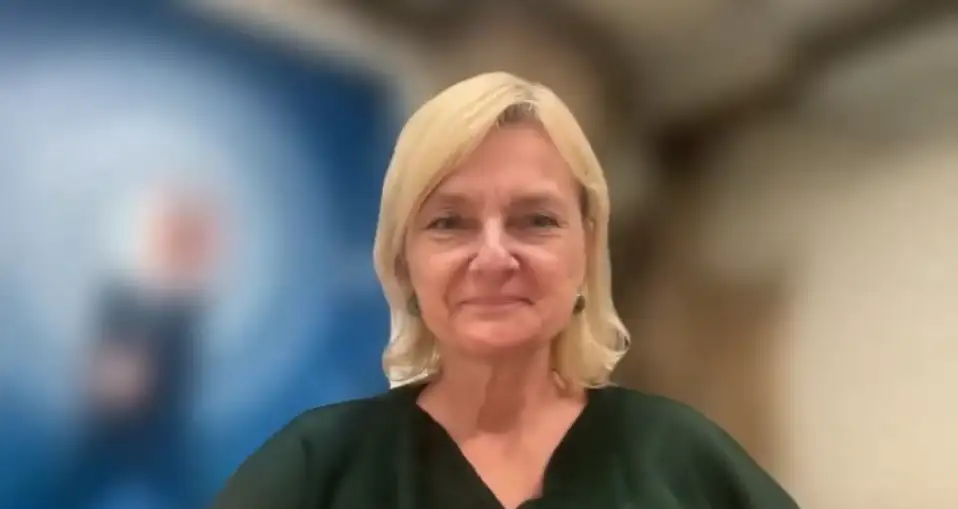
The Editor-in-Chief of Nature shared insights on the evolving role of scientific publishing, the importance of multidisciplinary research, and how global collaboration can drive progress in child health.
Magdalena Skipper, PhD, editor-in-chief of Nature and the first woman to lead the journal in its 155-year history, recently joined Cincinnati Children’s as part of the Envisioning Our Future for Children lecture series to share her unique dual perspective as both a distinguished researcher and the editorial leader of one of the world’s most prestigious scientific publications. Moderated by Tina Cheng, MD, MPH, chair of the Department of Pediatrics, director of the Cincinnati Children’s Research Foundation, and chief medical officer, this thought-provoking session explored how cutting-edge research can transform child health worldwide.
Skipper shared insights into Nature’s evolution from a journal focused on fundamental science to one that now publishes research with real-world impact, such as the Human Genome Project and exoplanet discoveries. She emphasized the critical role of multidisciplinary research in advancing child health, highlighting emerging priorities such as maternal health, immunization, genetics, and mental health. Drawing on her experience in both scientific discovery and publishing, she illustrated the complex interplay among these factors and child development and called out the need for collaboration across disciplines and borders.
“If we want to improve child health, we must look beyond the laboratory bench,” she said. “We need to understand how genetics, environment, education and social context interact—and ensure that research reflects the diversity of children’s experiences worldwide.”
The conversation also addressed broader challenges facing science today, including funding constraints and the importance of engaging diverse stakeholders.
“Scientists remain among the most trusted professionals globally,” Skipper said, “and that gives us a strong foundation to rebuild trust through openness and dialogue.”
She called for transparency in scientific communication, support for early-career researchers, and global partnerships to address pressing health issues.
Watch the full recording above, and view other past lectures at envisioningourfuture.org.
Don’t Miss a Post:
- Subscribe to the Research Horizons Newsletter
- Follow Cincinnati Children’s Research Foundation on Bluesky, X and LinkedIn

Latest Posts


About this blog
The Research Horizons blog features news and insights about the latest discoveries and innovations developed by the scientists of Cincinnati Children's. This blog does not provide medical advice, diagnosis, or treatment. Email researchnews@cchmc.org with questions or ideas.
Subscribe to Our Newsletter