

Road to Researcher: Lori Crosby, PsyD
Post Date: April 15, 2026 | Publish Date:

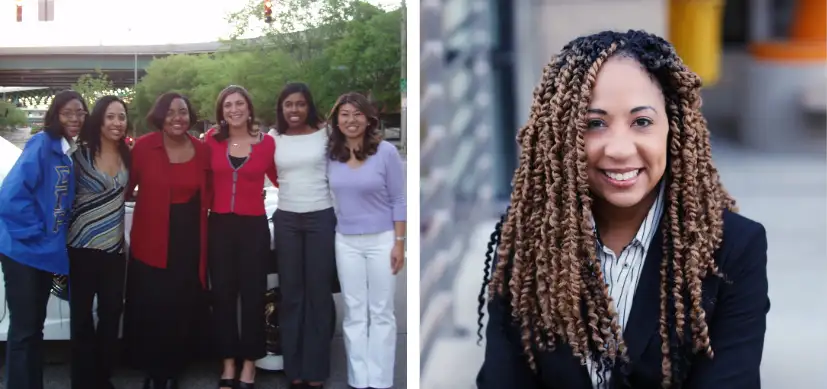
The researcher, clinical psychologist, professor and leader shares how her journey has been guided by collaboration, mentorship and a focus on impact at scale.
Every researcher’s path is shaped by a series of moments—some carefully planned, others entirely unexpected—that ultimately define how they choose to make an impact. For Lori Crosby, PsyD, that path began with a strong foundation in clinical psychology but evolved into something broader: a commitment to improving health outcomes not just one patient at a time, but across entire communities.
Today, Crosby is a nationally recognized leader in behavioral medicine and community-engaged research, known for her work addressing chronic conditions like sickle cell disease and advancing health equity for underserved populations. Crosby also serves as director of the Community Engagement Core for the Center for Clinical & Translational Science & Training (CCTST), a partnership between the University of Cincinnati College of Medicine and Cincinnati Children’s that helps to accelerate research throughout the Cincinnati region and beyond.
But her journey was far from linear. From an early experience in a research lab that reshaped her career ambitions to formative training at Cincinnati Children’s that highlighted the power of collaboration, each step reinforced her belief that meaningful change happens when science, patients and communities intersect.
In this Q&A, Crosby reflects on the experiences that guided her transition from clinician to researcher, what drew her back to Cincinnati Children’s, and how her work continues to center the voices and needs of the communities she serves. She also shares insights on mentorship, building a research team, and why keeping the “end impact” in mind is essential for anyone just starting out in science.
What inspired you to pursue a career in research?
When I started graduate school, I landed a job as a research assistant, despite being enrolled in a clinically based program. And in that lab, I quickly realized that a career in research would afford me the chance to impact so many more lives, at scale, than the 30 or 40 patients I might see in a week at a hospital, clinic or practice. I was also naturally drawn to the science. As soon as my feet hit the floor of the lab, I knew it was for me.
You completed your residency at Cincinnati Children’s, went somewhere else and then came back. What made you want to return?
During my residency at Cincinnati Children’s, I’d had the privilege of witnessing a whole team of specialists from different divisions working together to bring a training program to life, a program that was a first of its kind in the nation. It included experiences you couldn’t get in other places, like doing inpatient consultations, working in an adolescent medicine clinic and working in hematology and oncology—which, at the time, just didn’t happen in the field of pediatric psychology.
But despite my amazing experience here, I couldn’t stay after my residency simply because at the time, there wasn’t a fellowship to offer. So, I’d gone to Columbus, Ohio, for my clinical psychology fellowship. Then, as luck would have it, I came across an opening for a psychologist in Cincinnati—and jumped at the chance to return.
There are many reasons I wanted to come back, like the fact that a woman psychologist [Lori Stark, PhD] was leading the Division of Behavioral Medicine and Clinical Psychology. But two reasons really stood out: one personal and the other professional. For starters, my sister [Lisa Crosby, DNP, APRN] was working here as a nurse practitioner, and I thought it would be fantastic to live in the same city. But beyond that, I realized something during my residency that I knew would be difficult to find anywhere else: exceptional collaborations between departments and an unwavering commitment to advancing science here and around the world.
What makes Cincinnati Children’s stand out as a place to build a research career?
I have some of the best colleagues in the world. They’re open and collaborative, and they want me to succeed. They’re also open to ideas across disciplines and subspecialties. Which, in turn, drives innovation and the development of new solutions to address health challenges.
I also can’t ignore the fact that we have the best infrastructure a researcher could ask for, including services to help with grant applications and management, as well as a research foundation that extends internal opportunities for grants—I even received one as an early-career researcher.
What is it like to have your own lab and build that team?
As a Black woman, it’s exciting to have my own research lab, where I can mentor the next generation of psychologists, physicians and public health professionals. I also consider it a privilege to conduct transformative research around the treatment of sickle cell disease—and believe in the difference it can make in people’s lives.
With so much at stake for so many, I often challenge my team to connect with the patients and families we serve. Their lived experiences strengthen our research, and the relationships help us remember what’s most important. I also ask them to stay connected to our stakeholders and community resources so we can apply our findings in real practice. That’s the impetus of what we do in our lab.
Is there anything that has surprised you about being at Cincinnati Children’s, whether it’s culturally, professionally or scientifically?
More than anything, seeing the medical center transform from a local, general hospital to a world-class institution. I’m also proud because in 2015 when we built the 445,000 square foot Clinical Sciences Pavilion, we made an intentional effort to be inclusive. I love that and often brag about it to new residents and fellows.
Is there any advice you would give to someone who’s just starting their research career?
Find good mentors. I’ve been fortunate in my career to have strong mentorship both within Cincinnati Children’s—from Monica Mitchell [PhD, MBA, pediatric psychologist, senior director of Community Relations and professor] and many others—and outside of the organization, and I feel strongly you need both the inside and outside voices to really succeed in this profession.
The second piece of advice is to think through the impact you want to have. If you start with the end in mind, then your research will get you there.
If you could go back and tell your younger self one thing, what would it be?
I followed a unique path: I did straight clinical work for about 10 years before switching over to research. Fortunately, that was a point in time when you were able to do it, but that’s much harder now.
Outside of the lab, what do you enjoy doing? What helps you recharge?
I love spending time with my family and friends. That’s number one. I have a daughter I absolutely adore. She’s 12. I also enjoy dancing, movies, traveling and reading to recharge.
Is there something about your background or your personal journey that people might not expect but has shaped who you are as a scientist?
I gave a talk once, where I shared how I was influenced by growing up in Dayton, Ohio, a city steeped in culture and full of innovators. Poet Paul Laurence Dunbar [1872-1906] is from Dayton. So were the Wright brothers. Dayton is also home to the Kettering Foundation, NCR, and Wright-Patterson Air Force Base. There, I experienced innovation in music, dance, industry and art. It was everywhere. And I think it still rings true today. Being raised to believe that innovation was expected, that it was the norm, made me the scientist I am today.
Don’t Miss a Post:
- Subscribe to the Research Horizons Newsletter
- Follow Cincinnati Children’s Research Foundation on Bluesky, X and LinkedIn
Latest Posts
About this blog
The Research Horizons blog features news and insights about the latest discoveries and innovations developed by the scientists of Cincinnati Children's. This blog does not provide medical advice, diagnosis, or treatment. Email researchnews@cchmc.org with questions or ideas.
Subscribe to Our Newsletter