

10-Year Study Affirms Life-Changing Benefits of Hydroxyurea for Sickle Cell Anemia
Research By: Russell Ware, MD, PhD
Post Date: June 3, 2026 | Publish Date: May 27, 2026

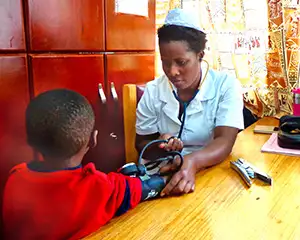
Cincinnati Children’s researchers collaborate with colleagues in Uganda and beyond to help children where the disease burden is highest. New findings published in NEJM.
Fewer serious complications. Fewer hospitalizations and blood transfusions. Better growth and development. And a markedly lower risk of death from the complications of sickle cell anemia.
These are the benefits documented from 10 years of continuous hydroxyurea treatment provided in the NOHARM trial to a group of young children in Uganda, which has one of the world’s largest number of people living with the painful disorder known for causing sickle-shaped red blood cells. These improved outcomes were highlighted May 27, 2026, in a report published by The New England Journal of Medicine.
Russell Ware, MD, PhD, director of the Division of Hematology and the Global Health Center at Cincinnati Children’s, was the lead author of the report. He has been working for years with researchers and clinicians across sub-Saharan Africa to demonstrate the safety and effectiveness of low-cost hydroxyurea treatments.
“In a low-resource environment like sub-Saharan Africa where about 50% of children with sickle cell anemia will die by age 10 years, we have reduced the death rate to about 1-2% per year. That’s at least an 80% improvement over the natural history of this condition in this region,” Ware says.
In sub-Saharan Africa, an estimated 300,000 to 400,000 babies are born with sickle cell disease. Far fewer infants are born with sickle cell disease in the United States, but their life expectancy now exceeds 50 years of age. That’s because the U.S. offers widespread mandatory newborn screenings, and children have access to multiple forms of treatment, including penicillin provided early in life, hydroxyurea, regular blood transfusions and other forms of care to manage organ damage. In recent years, new and expensive gene therapies have offered cures to some people with the disease.
Hydroxyurea – an older medication initially used to treat cancer and HIV – is available in Africa for anywhere from 10 cents to $1 per capsule. The drug prompts the body to produce fetal hemoglobin (HbF), which helps prevent red blood cells from sickling. Regular use of the drug reduces the frequency of painful crises, episodes of acute chest syndrome, and the need for blood transfusions.
In the new NEJM report, Ware and colleagues add that providing the “maximum tolerated dose” is notably more effective than smaller doses and still pose no major long-term safety concerns. The researchers found that many patients can tolerate doses as high as 30 mg/kg/day versus initial “fixed” doses of 15-20 mg/kg/day used earlier in their studies.
“These findings matter globally because they show that a proven sickle cell therapy can work safely and effectively even in settings complicated by malaria, malnutrition, and limited access to care,” Ware says.
A Call for Expanded Use
The study co-authors urge global health organizations, national leaders across Africa, philanthropists and other concerned people to continue expanding the availability of hydroxyurea in low-resource areas.
In addition to their work in Uganda with the NOHARM cohort of children, Ware and colleagues have conducted studies with similar positive results in five other African nations, including the REACH trial in Angola, Democratic Republic of Congo, Kenya, and Uganda; the PIVOT trial in Ghana, the ADAPT trial in Uganda, and the SPHERE trial in Tanzania.
“Since we started our clinical trials in 2014, the usage and acceptance of hydroxyurea have greatly increased,” Ware says. “National guidelines for sickle cell disease in Uganda, Kenya and Tanzania now recommend hydroxyurea. Also, the World Health Organization includes it as an “essential medicine” for sickle cell treatment.”
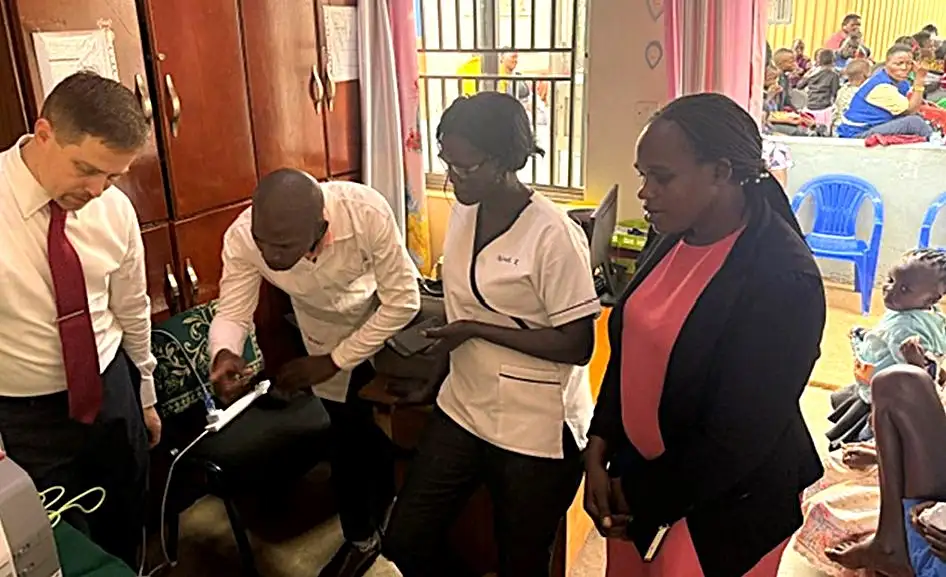
In addition to Africa, the researchers have conducted the SACRED clinical trial in the Dominican Republic and the EXTEND study in Jamaica, using hydroxyurea to prevent stroke in children with sickle anemia.
Cincinnati Children’s faculty working on these clinical trials include Luke Smart, MD, Alexandra Power-Hays, MD, Teresa Latham, PhD, and Adam Lane, PhD.
Signs of progress spurred by their work include:
- The WHO is creating guidelines on hydroxyurea and urging pharmaceutical companies to make it less expensive.
- Earlier this year, a Ugandan company started producing hydroxyurea, which could make the product less expensive for people in East Africa compared to importing drugs from India and Europe.
- Meanwhile, Ware and Smart sit on an American Society of Hematology task force that will publish new guidelines for hydroxyurea use in the next six months.
“As exciting as the progress has been, we still have a long way to go in terms of assuring that every child who could benefit from hydroxyurea can receive it,” Ware says.
What’s next?
Even more long-term study is needed to understand how people are affected by a lifetime of hydroxyurea treatment.
“Our children are now becoming teens and some even young adults. Navigating hydroxyurea use in the adolescent and young adult population is the next frontier, especially with regard to benefits like organ protection and potential risks to fertility or even cancer,” Ware says. “We’re also working with our pharmacology colleagues to generate lower-cost methods to achieve individualized dosing levels.”
Don’t Miss a Post:
- Subscribe to the Research Horizons Newsletter
- Follow Cincinnati Children’s Research Foundation on Bluesky, X and LinkedIn
| Original title: | Ten Years of Hydroxyurea for Ugandan Children with Sickle Cell Anemia |
| Published in: | The New England Journal of Medicine |
| Publish date: | May 27, 2026 |
Research By
The Ware Lab team focuses on translational hematology research to improve our overall understanding of sickle cell disease with the long-term goal of improving the lives of affected children.
Latest Posts


About this blog
The Research Horizons blog features news and insights about the latest discoveries and innovations developed by the scientists of Cincinnati Children's. This blog does not provide medical advice, diagnosis, or treatment. Email researchnews@cchmc.org with questions or ideas.
Subscribe to Our Newsletter