

Five-Hospital Study Sheds New Light on Pediatric MRI Safety
Research By: Jonathan Dillman, MD, MSc
Post Date: May 8, 2026 | Publish Date: May 8, 2026

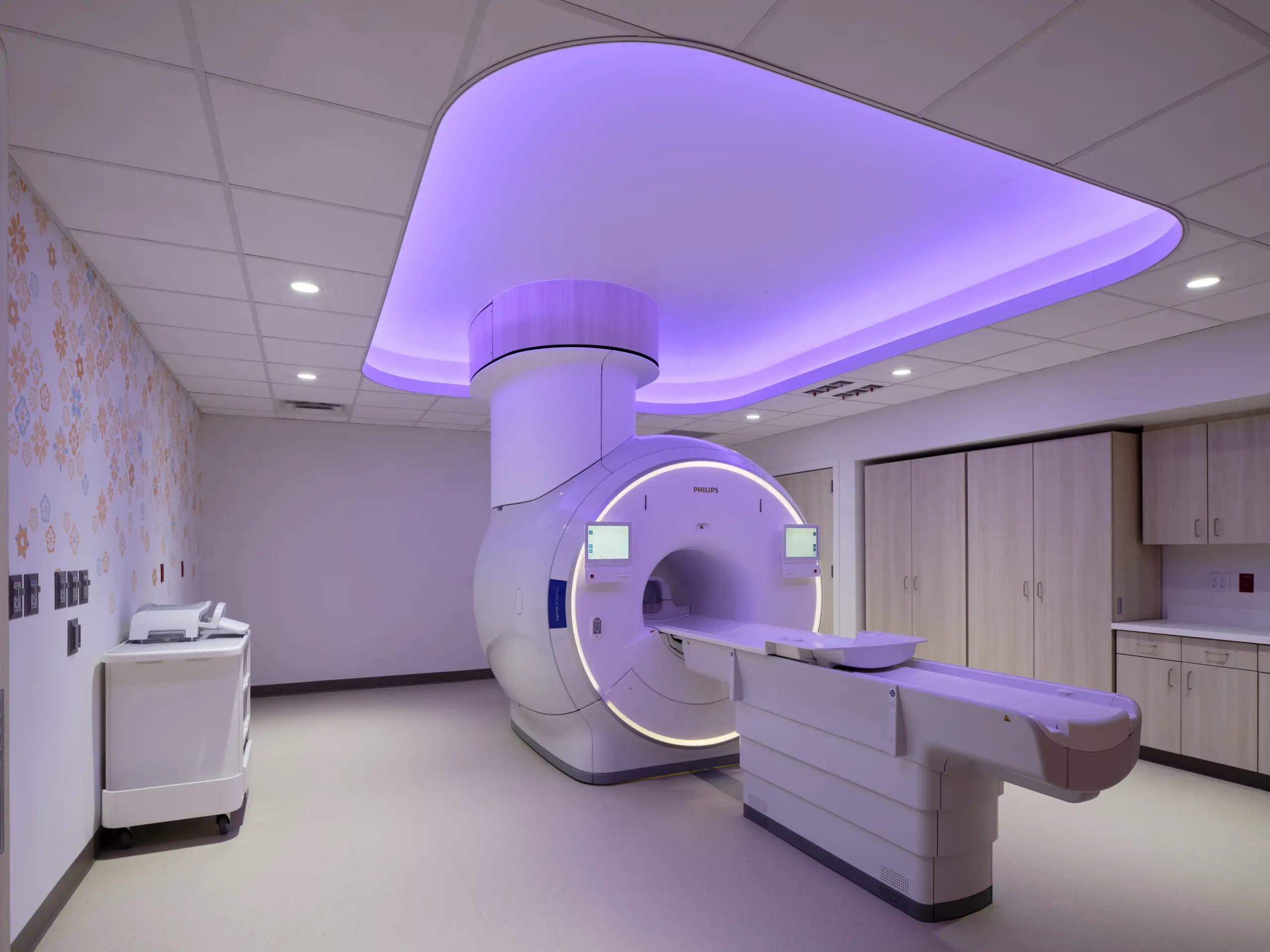
The first large, contemporary multi-institutional review of zone IV events finds that serious harm is rare but more work is needed to reduce lapses
Data on MRI safety events in pediatric imaging are surprisingly limited. To help close that gap, Jonathan Dillman, MD, MSc, and colleagues set out to measure how often safety events happen in the MRI scanner room, what types occur and how serious they are.
Working with first author Anna Guan of the University of Cincinnati College of Medicine, Dillman served as corresponding author of a study published May, 8, 2026, in the Journal of the American College of Radiology. The authors describe it as the first large, contemporary multi-institutional study of MRI safety events in pediatric imaging departments. Dillman is a professor of radiology, associate chief of research and medical director of the Imaging Research Center in the Department of Radiology at Cincinnati Children’s.
“There’s been very little data on how often MRI safety events happen in pediatric imaging or why,” says Dillman. “Pooling records from these events from five children’s hospitals gave us a much clearer picture.”
A Closer Look at Zone IV
Zone IV, the scanner room in the four-zone MRI safety model established by the American College of Radiology (ACR), carries unique safety risks because of the scanner’s powerful magnetic field, which is always turned on. And in pediatric imaging, those risks are compounded by the presence of caregivers, the use of sedation or anesthesia, and children’s limited ability to communicate discomfort.
To examine how these challenges play out in clinical settings, members of the ACR Pediatric Quality and Safety Committee reviewed institutional MRI safety records from 2017 through 2022 at five children’s hospital systems: Cincinnati Children’s, Children’s Healthcare of Atlanta, Seattle Children’s Hospital, Lucile Packard Children’s Hospital Stanford and Texas Children’s Hospital.
Uncommon but Persistent
Across nearly 541,000 pediatric MRI exams, the sites reported 146 zone IV safety events—about 2.5 per 10,000 exams. Projectiles accounted for 30%, burns or thermal injuries for 13%, and implant-related events for 10%. The remaining 47% fell outside those categories.
Medical equipment and supplies were the most common sources of projectiles, with anesthesia-related and ventilation-related equipment among the leading contributors. Staff personal items, such as pens, name badges and cell phones, were another common source. Electrocardiogram (ECG) leads were involved in nine of the 19 skin burns or thermal injuries.
In adults, by contrast, the U.S. Food and Drug Administration (FDA) adverse event reports suggest thermal injuries are a more common cause of MRI-related harm.
Most events caused no serious harm: 10 of the 146 were classified as serious safety events. Still MRI safety protocols weren’t correctly followed in 88 events (60%) and 78 events (53%) directly involved patients.
Implants: A Growing Challenge
At one site, six serious safety events involving cochlear implants were reported. In all six cases, the MRI scan caused the implant’s internal magnet to shift out of its intended position.
“All six of these events happened even when everyone followed the manufacturer’s guidance,” Dillman says. “That’s why reporting to manufacturers and regulators matters. It’s how device design and MRI compatibility improve.”
The authors estimate that 20% to 30% or more of children undergoing MRI may have implants, particularly among inpatients. Given how common these devices may be, the authors emphasize the need for closer coordination among radiologists, technologists, device and scanner manufacturers, and the FDA. Using device checklists consistently during screening can also help teams identify potential risks before a scan.
Learning Across Institutions
The findings point to stronger screening of personal items and medical equipment before anyone enters zone IV. The authors also suggest that the study speaks to the benefits of a “learning health network,” where health systems share data and spread best practices.
“Unfortunately, no single hospital sees enough of these events to learn everything on its own,” Dillman says. “However, when we share what goes wrong—and what goes right—we can learn as a community and make MRI safer for every child.”
About the Study
Anna Guan, of the University of Cincinnati College of Medicine, was first author. Co-authors from Cincinnati Children’s included Shireen Hayatghaibi, PhD, Rama Ayyala, MD, and Blaise Jones, MD.
Experts from these institutions collaborated: Seattle Children’s Hospital, Lucile Packard Children’s Hospital Stanford, Children’s Healthcare of Atlanta, and Texas Children’s Hospital.
Dillman reports relationships with GE HealthCare and Philips Healthcare that include funding grants.
Don’t Miss a Post
- Subscribe to the Research Horizons Newsletter
- Follow Cincinnati Children’s Research Foundation on Bluesky, X and LinkedIn
| Original title: | Pediatric MRI Safety: Frequency, Types, and Severity of Zone IV MRI Safety Events at Five US Children’s Hospitals |
| Published in: | Journal of the American College of Radiology |
| Publish date: | May 8, 2026 |


Latest Posts

About this blog
The Research Horizons blog features news and insights about the latest discoveries and innovations developed by the scientists of Cincinnati Children's. This blog does not provide medical advice, diagnosis, or treatment. Email researchnews@cchmc.org with questions or ideas.
Subscribe to Our Newsletter