

Fetal MMC Repairs Found Safe for Women with Obesity
Research By: Braxton Forde, MD
Post Date: August 19, 2025 | Publish Date: Aug. 14, 2025

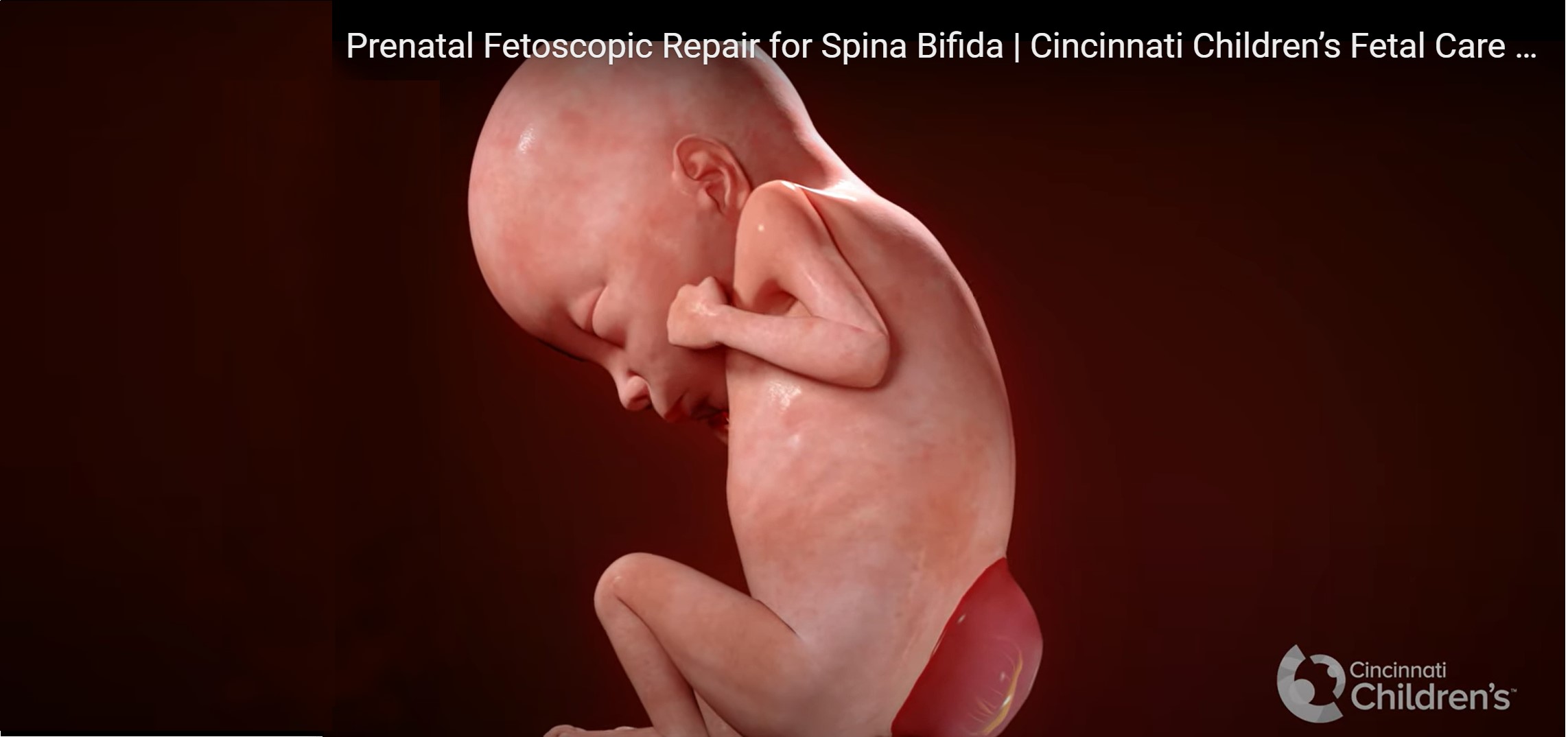
Experts in performing fetal surgery have long cautioned that laparoscopic procedures involving obese mothers can pose elevated risks of complications. However, new research led by experts with the Cincinnati Children’s Fetal Care Center report that fetoscopic myelomeningocele (MMC) repair in cases involving women with Class 2 obesity are both safe and feasible.
The team, led by first author Braxton Forde, MD, and senior author Jose Luis Peiro, MD, PhD, (now at NYU Langone Health), reported their findings online in Pregnancy, the official journal of the Society for Maternal-Fetal Medicine.
MMC repairs help reduce brain fluid build-up and mobility limitations that can be caused by spina bifida. The Cincinnati Children’s Fetal Care Center, one of the nation’s leading fetal surgery centers, has performed more than 160 MMC repairs since 2011.
Class 2 obesity describes people with Body Mass Index (BMI) measures between 35 and 40. Prior to this study, minimal data existed about fetal surgery outcomes in this population. But since 2022, the Cincinnati Children’s Fetal Care Center has performed procedures involving mothers with Class 2 obesity while following other criteria established by the Management of Myelomeningocele Study (MOMS) Trial.
From January 2022 to December 2024, the team performed 38 MMC repairs, including 12 involving women with obesity. While overall surgical times were longer for the obese group, there were no significant differences in outcomes.
“Having a BMI between 35 and 40 should not by itself be considered an absolute contraindication to in utero MMC repair,” the co-authors conclude.
Learn more about the Cincinnati Children’s Fetal Care Center
| Original title: | Maternal laparotomy to fetoscopic myelomeningocele repair in patients with Class 2 obesity is safe and feasible |
| Published in: | Pregnancy |
| Publish date: | Aug. 14, 2025 |
Research By

Our lab focuses on the interactive functions of the placenta and amniotic sac in the setting of fetal therapy.
Latest Posts

About this blog
The Research Horizons blog features news and insights about the latest discoveries and innovations developed by the scientists of Cincinnati Children's. This blog does not provide medical advice, diagnosis, or treatment. Email researchnews@cchmc.org with questions or ideas.
Subscribe to Our Newsletter