

Are ‘Too Many’ Preschoolers Taking ADHD Meds?
Research By: Tanya Froehlich, MD, MS
Post Date: October 27, 2025 | Publish Date: Aug. 29, 2025

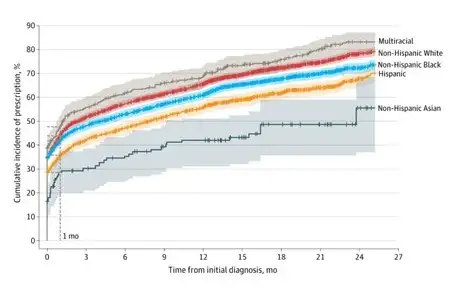
Recent study suggests that a recommended first step—parent training in behavior management—is often not completed before ADHD medications are started. Study co-author discusses the reasons why.
Attention-deficit/hyperactivity disorder (ADHD) is being diagnosed more frequently among preschool children (ages 3-5), a trend that has stirred questions and debate among parents, professionals and pundits. Are pediatricians stepping in too soon?
To learn more about prescribing practices, researchers at eight medical centers participating in the PEDSnet Clinical Research Network analyzed the de-identified electronic medical records of 9,708 young children who were diagnosed with ADHD across a seven-year period. Their findings were published Aug. 29, 2025, in JAMA Network Open.
Cincinnati Children’s was one of the participating centers.
The study found several wide variations in the rates of ADHD diagnosis across the eight centers and in the timing of prescriptions for the diagnosed children. Diagnosis and prescription rates varied by race, ethnicity and insurance type.
Notably, the study found that 42% of the preschoolers diagnosed with ADHD were prescribed medications either at their initial visit or within 30 days. This pattern appears to run counter to an American Academy of Pediatrics recommendation that calls for providing parent training in behavior management before prescribing medications in most cases. For children at this age, methylphenidate is generally recommended as a second-line treatment.
Tanya Froehlich, MD, MS, Director, Division of Developmental and Behavioral Pediatrics, was a co-author of the study. We asked her to further discuss what these findings may mean for pediatricians and families:
It could be possible to walk away thinking that prescribing ADHD medications to preschoolers is “wrong,” when that’s not quite what the study indicates, correct?
It’s important for parents and clinicians to know that many preschool-aged children with ADHD benefit greatly from medications, with some families reporting that ADHD medications were a “game-changer” for the better for their young children.
In some cases, due to significant safety risks or severe impairment in child functioning, clinical practice guidelines from the American Academy of Pediatrics and the Society for Developmental and Behavioral Pediatrics state that it can be very appropriate to start a preschool-age child on ADHD medications before starting or completing behavior therapy. Child ADHD is linked to many negative outcomes — such as disordered parent-child relationships, elevated family stress, expulsion from school or childcare settings, and increased accidents and injuries — and many of these adverse outcomes have been shown to improve with medication treatment.
Why do you think there are such significant variations in ADHD medication prescription trends?
The study found that preschool age children with ADHD who were white race, were male, had co-existing disruptive behavior disorder, or had public health insurance were more likely to be prescribed ADHD medication early (within 30 days of their ADHD diagnosis) compared to their counterparts. There are likely many factors contributing to and underlying these findings.
For example, prior studies have shown that white families tend to have more positive perceptions of ADHD medications than non-white families, possibly contributing to their greater willingness to try medicine to treat their child’s ADHD. Boys with ADHD tend to have more hyperactive-impulsive symptoms leading to concerns about safety and injury risks. (Whereas, girls may often show mostly inattentive symptoms without as much hyperactivity-impulsivity.) As a result, families may try ADHD medications sooner in preschool boys than girls in an effort to reduce boys’ impulsivity and thereby protect them from injury.
Children with ADHD and coexisting disruptive behavior disorders (DBD) are at higher risk of expulsion from preschool and other childcare settings. Since ADHD medication have been shown to reduce disruptive behaviors as well as ADHD symptoms, families of children with ADHD and DBD may consider medication treatment earlier than other families in an effort to prevent their expulsion, especially if the child’s daytime out-of-home care placement is crucial for parents to maintain employment.
In contrast to families with private insurance who may have an easier time accessing parent training in behavior management, parents of children with public insurance often face systemic barriers to accessing behavior therapy for child ADHD, and so may turn to medications in effort to secure expeditious treatment for their child’s ADHD.
What can be done to address the gaps and variations?
Pediatricians should receive training to identify child behavioral or ADHD-related concerns expeditiously, and then make early and timely referrals for families to receive parent training in child behavior management. This early support can lead to behavioral improvement so that concerns don’t escalate to the point where the child’s safety is at risk or functioning has deteriorated to the point where medication is needed to turn things around quickly.
Parents in turn need to be educated that evidence-based behavior therapy for addressing ADHD in young children does not consist of the therapist working one-on-one with the child to “fix” the child, as this is not effective for addressing ADHD in preschool-age children. Instead, parent training in behavior management–which teaches parents how to modify the social and physical environment to increase positive behaviors and reduce problematic behaviors in children — is what has been shown to improve ADHD-related symptoms and impairments in kids.
We also need initiatives to educate preschool teachers and childcare personnel in effective ways to manage disruptive behaviors and promote positive behaviors in young children with ADHD. Such efforts would allow more preschool children with ADHD to be successful in out-of-home care settings so that medication is not needed to prevent expulsion.
Additionally, evidence-based parent training in child behavior management needs to be more available, accessible, and affordable in our communities. Too often, pediatricians would like to refer families for evidence-based ADHD behavior therapy, and families would like to attend, but there are no providers close to the family’s home, the wait lists are too long, the sessions are too expensive (or not covered by insurance), or the sessions are not offered at a time when the family can participate.
What should parents do if they want to know more?
If parents have concerns that their preschool-aged child may have ADHD, they should discuss their concerns with their pediatrician, who can conduct an evaluation for ADHD or make a referral to a qualified specialist (such as a psychologist, developmental-behavioral pediatrician, or psychiatrist). The Cincinnati Children’s Center for ADHD offers preschool ADHD evaluations.
Alternatively, children do not need to have a formal diagnosis of ADHD for families to benefit from parent training in behavior management. The behavior management principles taught in these sessions will help to improve behavior in any child with hyperactive, impulsive, or disruptive behaviors regardless of whether they meet formal criteria for ADHD.
Our Center for ADHD offers group parent training in behavior management for parents of preschoolers, in addition to offering one-on-one sessions. If parents are interested in learning more about the pros and cons of ADHD medications, they can ask their child’s pediatrician or consult a developmental-behavioral pediatrician or psychiatrist.
Are there other resources available?
There are some effective online, on-demand trainings in parent behavior management that are available to address preschool ADHD, such as Triple P On-line, which is free for families residing in Ohio. However, families living in other states may not be able to afford the out-of-pocket costs, and families lacking internet access would not be able to use it.
Don’t Miss a Post:
- Subscribe to the Research Horizons Newsletter
- Follow Cincinnati Children’s Research Foundation on Bluesky, X and LinkedIn
| Original title: | ADHD Diagnosis and Timing of Medication Initiation Among Children Aged 3 to 5 Years |
| Published in: | JAMA Network Open |
| Publish date: | Aug. 29, 2025 |
Research By

My research focuses on interventions for attention deficit hyperactivity disorder (ADHD) and other developmental-behavioral issues, including predictors and treatment response correlations.


Latest Posts

About this blog
The Research Horizons blog features news and insights about the latest discoveries and innovations developed by the scientists of Cincinnati Children's. This blog does not provide medical advice, diagnosis, or treatment. Email researchnews@cchmc.org with questions or ideas.
Subscribe to Our Newsletter