

AI Tool Transforms Hydronephrosis Diagnosis
Research By: Lauren Erdman, PhD
Post Date: October 1, 2024 | Publish Date: Oct. 1, 2024

James M. Anderson Center for Health Systems Excellence | Top Scientific Achievement

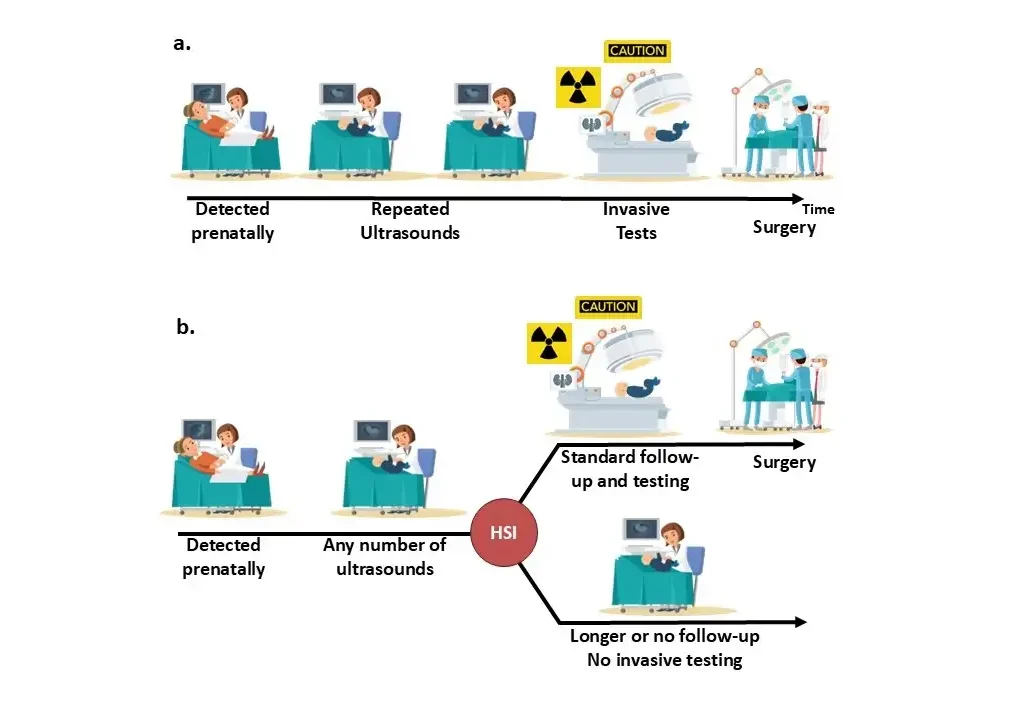
A multidisciplinary team has developed an artificial intelligence (AI) system that predicts which infants with hydronephrosis—swelling of the kidneys detected before birth—are likely to need surgery, using only ultrasound images.
The new Hydronephrosis Severity Index (HSI) demonstrated accuracy above 90% across multiple pediatric hospitals in North America. These results, published in December 2024 in Scientific Reports, indicate that AI can facilitate faster, more objective, and less invasive kidney imaging interpretation for families.
Led by Lauren Erdman, PhD, from the James M. Anderson Center for Health Systems Excellence at Cincinnati Children’s who began this work at the Hospital for Sick Children in Toronto, the research team trained the deep learning model using more than 1,900 ultrasound images. The HSI distinguished between obstructive and non-obstructive cases of hydronephrosis with exceptional sensitivity (≥90%) and specificity (>70%), even when tested on independent patient data from Stanford, the University of Iowa, and the Children’s Hospital of Philadelphia.
“This work shows how AI can help us make confident, timely decisions that spare many children unnecessary radiation and hospital visits,” Erdman says. “It’s a major step toward safer, more personalized kidney care.”
The study found that using HSI could reduce invasive nuclear scans by more than 50% for patients not requiring surgery, helping providers focus attention on children who need it most. The technology also offers opportunities to standardize care across hospitals and improve equity by reducing bias introduced by human interpretation.
Researchers plan to pilot the model’s clinical use, automate image selection, and explore its integration into ultrasound and imaging software to further streamline care and reduce costs.
About the study
Collaborators included teams from the Hospital for Sick Children, Hospital for Sick Children Research Institute, University of Toronto, Stanford University, University of Iowa, University of Pennsylvania Perelman School of Medicine, Einstein Healthcare Network, and Children’s Hospital of Philadelphia.
This research was supported by the Canadian Institutes of Health Research, the Bitove Family, and the Hospital for Sick Children’s Women’s Auxiliary Volunteers.
Explore the 2025 Research Annual Report
Don’t Miss a Post:
- Subscribe to the Research Horizons Newsletter
- Follow Cincinnati Children’s Research Foundation on Bluesky, X and LinkedIn
| Original title: | The Hydronephrosis Severity Index guides paediatric antenatal hydronephrosis management based on artificial intelligence applied to ultrasound images alone |
| Published in: | Scientific Reports |
| Publish date: | Oct. 1, 2024 |
Research By

I am a computational researcher aiming to develop technologies to translate and transform pediatric clinical care using machine learning.

Latest Posts

About this blog
The Research Horizons blog features news and insights about the latest discoveries and innovations developed by the scientists of Cincinnati Children's. This blog does not provide medical advice, diagnosis, or treatment. Email researchnews@cchmc.org with questions or ideas.
Subscribe to Our Newsletter