

A Bold Investment to Make the Future of Medicine Happen
Post Date: November 17, 2025 | Publish Date:

Ribbon-cutting celebrates a big step one: $60M construction project wrapping up for the Cincinnati Children’s new Applied Gene and Cell Therapy Center
Oddly enough, one of the newest and most sophisticated biotech treatment production centers in the nation is a bit tricky to find.
The new Applied Gene and Cell Therapy Center at Cincinnati Children’s reflects a massive investment that offers new hope to many people whose lives are counting on the promise of new generation of genetic and cellular therapies. Yet this brick and shaded glass building would look familiar in any light industrial park, tucked among other businesses that routinely orbit highway interchanges. Motels. Gas stations. Chain restaurants.
This is Sharonville, Ohio. A city of its own, a few miles north of Cincinnati, standing in the heart of the industrial Mill Creek Valley. Just down the road is a massive jet engine factory that decades ago spurred the Eisenhower administration to fund the construction of I-75, now the descending aorta of American commerce running from Canada to Florida.
From the parking lot of the new center, visitors can hear the passing trucks and cars thrum. Soon, new history will be made here–a pediatric hospital is sharply expanding its role in the pharma business.
Cincinnati Children’s, a leading and growing force in pediatric care, research and medical education, is doing more to push innovative, life-changing ideas into production. This building will advance a core aspect of the medical center’s non-profit mission: helping more of the many people born with rare diseases get treatments that may not appear lucrative for the private sector to develop.
“Our Applied Gene and Cell Therapy Center is the launchpad for new cures. This center takes promising science, makes it real, and helps bring hope to patients and families who need it most,” says Tina Cheng, MD, MPH, chair of Pediatrics, chief medical officer for Cincinnati Children’s, and director of the Cincinnati Children’s Research Foundation.
What will the new center make?
The new center is led by Chaozhong (Charles) Zou, PhD, an expert in cell and gene therapy product development and manufacturing. He has served in various leadership roles with industry leading cell and gene therapy companies like Kite Pharma and Takeda Pharmaceuticals.
Zou says the center will serve a mix of clients. Some projects are related to Cincinnati Children’s own research, others involve contract production work for other universities, start-up biotech companies, government labs, and bigger pharmaceutical clients.
The main role for the facility will be producing batches of therapeutics for use during human clinical trials. The center is big, expensive and complex because these investigational products must meet a long list of strict safety and quality standards to ensure every dose remains effective, pure and consistent throughout the stages of a clinical trial.
One side of the building is built for producing cell manipulated products for use in CAR-T cell therapies, some of which have shown striking successes in cancer treatment. These treatments work by collecting, modifying and returning a person’s own T cells to the body so that the person’s immune system can recognize and attack tumors. Immune therapies also are being developed for a range of other diseases and conditions.
The other side of the center will focus on producing “viral vectors” for cell and gene therapies. This process involves modifying a virus to disarm its disease-causing capabilities while retaining its power to penetrate cells and multiply. These modified viruses then carry healthy genetic material into cells where they can help slow or reverse conditions caused by mutated or malfunctioning genes. Globally, those therapies have successfully treated a growing list of conditions, including some forms of cancer, blood disorders, and several inherited immune deficiencies.
The potential for this new wave of technology is a swell of hope not just for those with conditions that have no effective treatments, but for safer and more tolerable treatments to reduce or eliminate the often-harsh side effects of chemotherapies that have helped save other lives.
“I’ve been doing this for over 40 years, and over those 40 years things have changed. Things have gotten better,” says Stella Davies, MBBS, PhD, MRCP, director of Bone Marrow Transplantation and Immune Deficiency. “When I first started, most of the children we treated did not live. Now, most of those children, but not all of them, live. How we got from there to here was by using more and more intense treatments, treatments that are hard for children.
“The wonderful thing that has happened in the last 10 years is that we have learned how to treat some of these diseases — and I hope eventually all of these diseases — without chemotherapy.”
The big job of tackling rare diseases
For people like Matthew Thorne and their families, this facility cannot launch soon enough.
Matthew, now 41, was the third member of his immediate family to be diagnosed with dyskeratosis congenita, a rare, genetic form of bone marrow failure also known as a telomere biology disorder.
Patients with these conditions have cells in their bone marrow that carry chromosomes with extremely short telomeres. Somewhat like the aglets that protect the tip of a shoelace, telomeres wear down each time a cell divides, which limits how many times a cell can divide before it dies. People born with shortened telomeres can experience premature biological aging in a variety of affected tissues, and increased risk of early death.
Matthew’s brother, Michael, was the first to be diagnosed. He received a bone marrow transplant, followed by a liver transplant, but died in 2010 at the age of 28.
Their mother, Mary, also had the disease. She developed lung failure and received a lung transplant but passed away two years later in 2019 at the age of 64.
When he was 24, Matthew sought to enlist with the U.S. Marines because he wanted to serve a cause greater than himself. But he was medically disqualified. About 12 years later, in 2020, Matthew found another opportunity to serve.
Matthew volunteered to be the first clinical trial participant to receive EXG-34217, an investigational gene therapy developed by Elixirgen Therapeutics, Inc., that increases the length of telomeres.
Matthew received this treatment in February 2022 and has been doing well since. Early data from the clinical trial was announced in February 2025 with data published in NEJM Evidence.
“Being an inpatient at Cincinnati Children’s during that process was one of the most inspiring times of my life,” Matthews says. “That experience reshaped my sense of purpose. I realized that while I might never wear the uniform of a Marine, my mission was still the same: to serve something greater than myself.”
There are more than 7,000 rare diseases (defined in the US as conditions affecting fewer than 200,000 people). Some are well-known, like sickle cell disease or multiple sclerosis. Others are nearly unpronounceable.
Now, thanks to years of global biomedical breakthroughs, there’s a backlog of great ideas waiting to take off. There’s an urgency not just to invent, but to produce.
Experts at Cincinnati Children’s constantly treat people with rare diseases. In fact, in July, the medical center received a $27 million federal grant to continue serving as the data management and coordinating center for the national Rare Diseases Clinical Research Network (RDCRN).
But when the entire “market” for curing a disease may involve fewer than 100 patients across the country, how can high-tech gene and cell therapies ever get made? Cincinnati Children’s has been working with industry collaborators to tackle this challenge.
For the telomere-lengthening study, Cincinnati Children’s made the clinical trial doses of EXG-34217 for the company. Cincinnati Children’s Kasiani Myers, MD, also served as principal investigator for the study.
Sharply expanding capacity
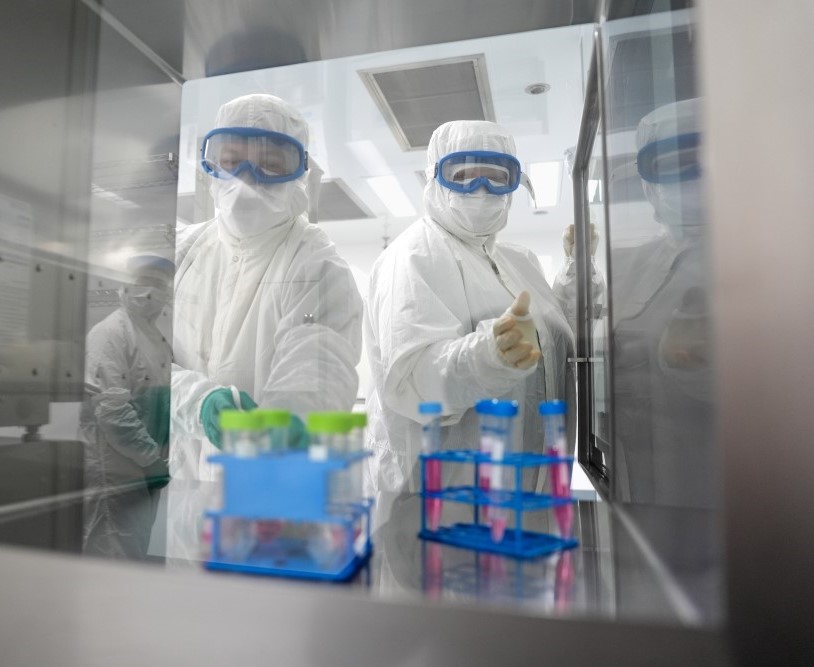
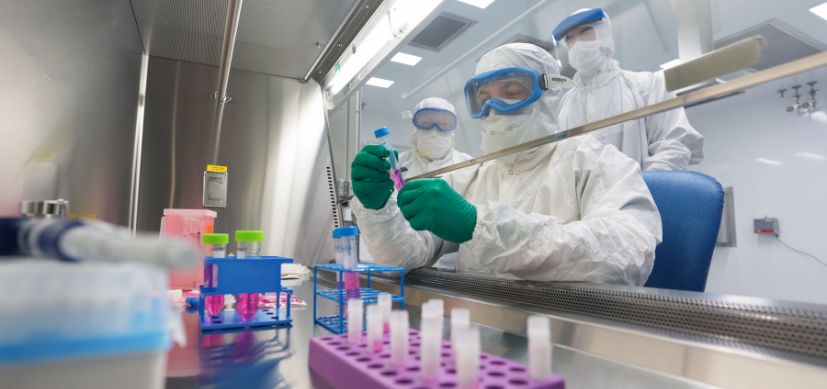
High up on the 11th floor of a glassy research tower along symbolic Albert Sabin Way on Cincinnati Children’s Burnet Campus, a highly-trained crew has worked since 2008 in bright white “bunny suits” to convert carefully engineered viruses and genetically edited living cells into life-changing medicines.
This is where teams produced the clinical trial batches of the medication that helped Matthew. This is where the clinical trial version of a gene therapy for sickle cell disease–invented by Punam Malik, MD–was made. This is where Cincinnati Children’s produced clinical trial products for a CAR-T therapy that received initial FDA approval in February 2022.
“On behalf of Cincinnati Children’s Hospital Medical Center, we want to congratulate Janssen Biotech, Inc. and Legend Biotech Corporation on the FDA approval of CARVYKTI™ (ciltacabtagene autoleucel) for the treatment of adults with relapsed or refractory multiple myeloma after four or more prior lines of therapy, including a proteasome inhibitor, an immunomodulatory agent, and an anti-CD38 monoclonal antibody,” the medical center states. “Cincinnati Children’s is proud to have provided manufacturing and testing of the vector and cell products used in the initial Phase I/II study supporting the registration of CARVYKTI™.”
These and other successes have inspired a demand for expansion. In response, the new center will jump from 10,000 square feet to more than 55,000 square feet.
Instead of seven clean rooms for cell manipulation and viral vector production, the new center will have 12. Instead of being limited to stacks of trays that may produce 30 to 60 liters of product at a time, the new center will have bioreactor tanks that can produce 200 liters at a time.
“Not only will we be able to support more clinical trials and larger clinical trials, we will be able to take on the entire post-approval production of certain therapies for rare diseases,” says Dawn Lowe-Daniels, senior director at the Applied Gene and Cell Therapy Center.
Inside the future of medicine
The Applied Gene and Cell Therapy Center is an utter transformation of the former J&N Automotive Supplies building, a place that had been packed with conveyor belts and storage shelves for making and shipping auto parts. Planners liked the building because it offered a big flexible shell, located close to a highway.
Not much of it is left.
“We needed a larger space to meet the growing demand for products that must be manufactured in a complex facility within a highly regulated environment,” Zou says. “This new facility will support more than 200 people working to the highest safety and quality standards to develop advanced therapies.”
From floor to ceiling, every square inch of this space reflects the latest in biological materials-handling and production. Every element was built with the need to be available for regulatory inspection in mind. Key quadrants are compartmentalized so that if repairs are needed in one area, work can continue in others.
“We didn’t have that capability in our previous space,” Lowe-Daniels says.
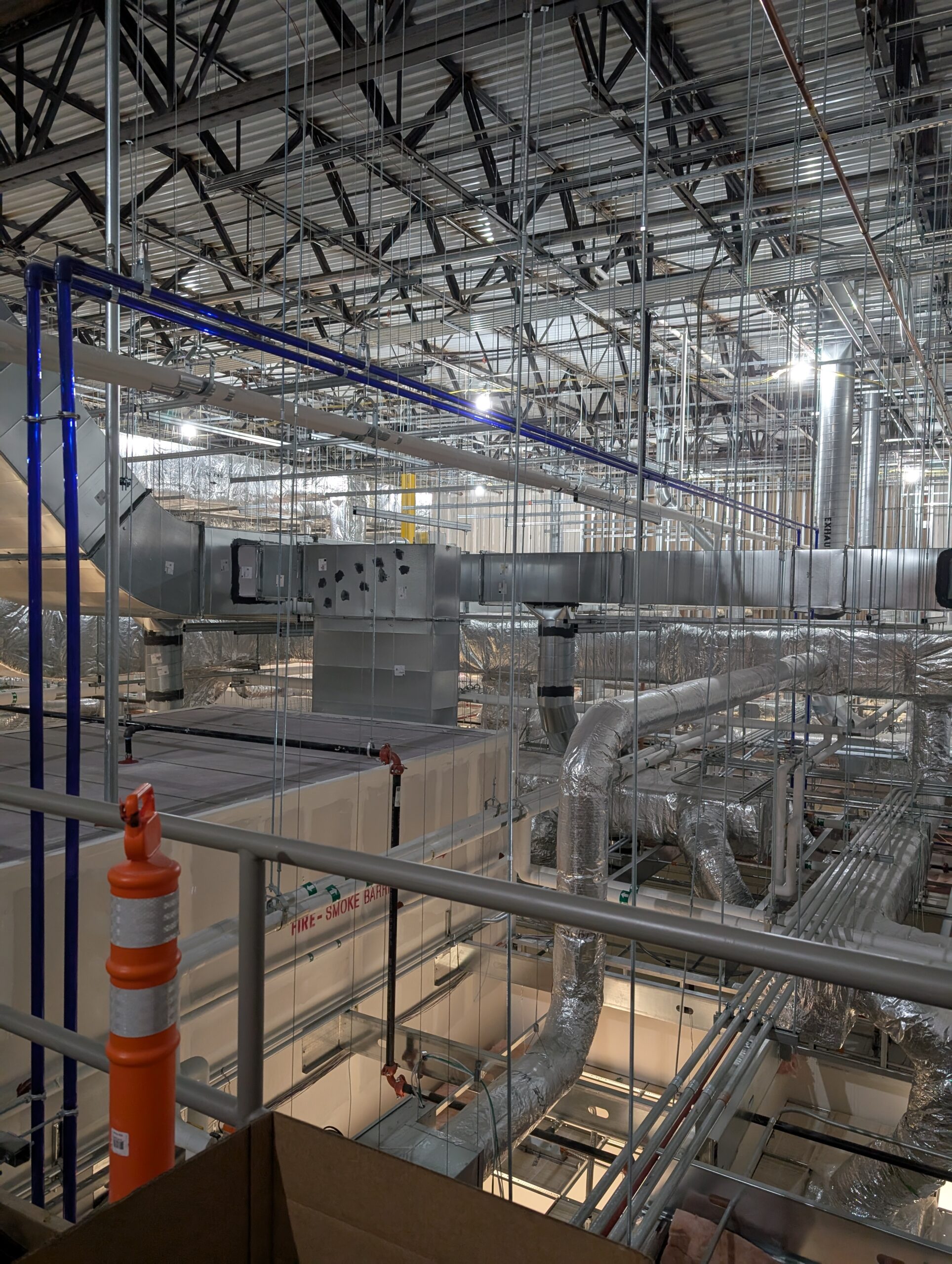
The most awe-striking feature: a gleaming maze of more than three miles of pipes and ductwork woven into the building’s “walkable ceiling.” This includes four massive and intentionally separate air-handling systems that make the rest of the work possible.
One system for the viral vector processing side, another for the cell production side. A third for the rest of the lab space. A fourth for a warehousing area.
When people think of the masks, gloves, gowns and sterile fields of the modern surgical suite, many assume that must be the pinnacle of sanitary air space. The comparison almost makes Darin Seaman, director of Operations, Controls and Support for the Applied Gene and Cell Therapy Center chuckle. “The air inside our production bays is about 100 times cleaner than the typical operating room.”
This air is corralled like an invisible herd of cattle and driven where it’s supposed to go. The flow direction matters, the pressure matters, the temperature matters, the humidity and particulate counts matter.
How does it work?
“We use 100% outside air that gets pre-heated through an exhaust heat recovery system, then it gets pre-heated again with hot water, then pushed over chilled water to remove all the humidity,” he says. “Then we run it through one set of HEPA filters, then we distribute the air via a laminar air flow device that also has a final HEPA filter. Plus we use UV light on the coils to help with disinfecting.”
This HVAC system on steroids pushes 20 to 30 air exchanges per hour. An older family home might achieve one full exchange per hour.
Air monitors are everywhere. Alarms trigger when tolerances are exceeded. Work pauses until situations are addressed.
Technically, the cleanest spaces in the new center are certified ISO Class 5 biosafety cabinets. That means no more than 3,520 particles bigger than 0.1 microns are allowed per cubic meter of air. A standard hospital operating room (meeting ISO 7 standards) can have up to 352,000 particles per cubic meter.
(For the curious, the craziest ultra-sterile environments – for making products like supercomputer chips and nanobots — are considered ISO Class 1. They allow no more than 10 particles per cubic meter, and they run up to 600 air changes an hour.)
Even more than perfect air
Regulations? You don’t know about regulations. The rulebooks defining how a facility like this must be built and operated could fill a library if printed on paper.
Consider that bland looking flooring. That’s not tile from the local hardware store.
The flooring has to be tough enough to withstand near-constant heavy-duty cleaning. The cove base installation has to be flawless. There cannot be any seams to allow contamination to hide.
During construction, the crews left corners open to reveal the multiple layers and coatings involved. This was done because even these material applications require inspection.
Likewise, those aren’t just while walls and ceilings. The paint …er… “coatings” are serious materials designed to be contamination resistant. Even these surfaces must be cleaned daily. Then they get re-cleaned even more thoroughly multiple times a year.
Naturally, such cleaning involves more than a mop and bucket. The clean rooms get regularly fogged with a billowing mist of germ-killing hydrogen peroxide solution. This is why a number of cabinets and boxy equipment surfaces in these rooms are built with a slight tilt—to allow the cleaning solution to run off.
Even the loading dock is built for handling special materials, with spaces for quarantining and testing incoming supplies before using them in the clean rooms.
About those bunny suits
Once operational, the work inside the clean rooms is much closer to a choreographed dance than a collection of lab workers buzzing about. Workers come in one way and go out another to stay in sync with the all-critical air flow.
They suit up, just so, in designated dressing spaces with sticky mats to catch any floor dust that would dare. Donning a bunny suit to avoid contaminating the exterior with dirty human flecks and fluff is a learned skill. People have to get certified to prove they can do it, and the job comes with regular re-certification tests.
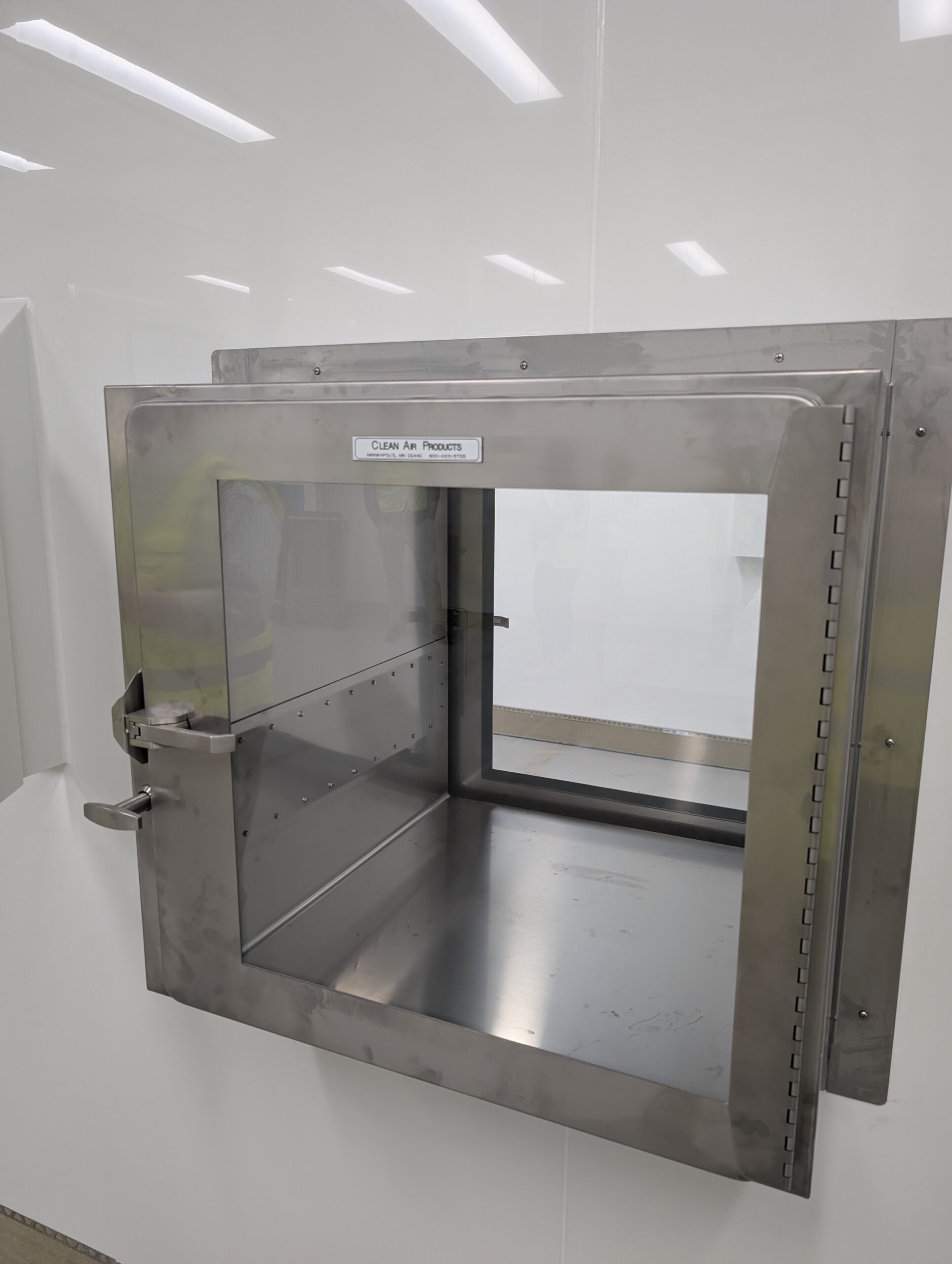
Crews work in four-hour shifts and don’t get bathroom breaks. Once inside, any incoming supplies or outgoing finished products get passed through chunky airlocks built into the walls.
A year of ‘validation’ ahead
Building the air ducts, applying the materials, and stocking the building with all its needed equipment was an 18-month task from groundbreaking to ribbon-cutting.
But the facility is not ready to rock quite yet.
The air control system has to work as promised, regardless of the outside weather. All equipment and processes must be inspected and certified according to standards set by the US Food and Drug Adminstration, including Current Good Manufacturing Practices (cGMP), ISO 14644 rules, and more.
One nail-biting test ahead for the new production center is called a “smoke test.” Once the smoke goes in, it’s not supposed to come out in any wrong places. Fail that test and nothing else moves forward until repairs are confirmed.
Zou and his team are working to have the facility ready to begin production in spring 2027.
Thousands of Matthew Thornes will be waiting.

Latest Posts

About this blog
The Research Horizons blog features news and insights about the latest discoveries and innovations developed by the scientists of Cincinnati Children's. This blog does not provide medical advice, diagnosis, or treatment. Email researchnews@cchmc.org with questions or ideas.
Subscribe to Our Newsletter