

Rare Diseases: From Data to Discovery, From Discovery to Care
Research By: Maurizio Macaluso, MD, DPH
Post Date: February 27, 2026 | Publish Date:

At first glance, the numbers for rare diseases may seem small—each affects fewer than 200,000 people in the United States. But collectively, rare diseases impact about 30 million Americans. Achieving faster diagnoses, better treatments, and even cures, takes a massive research effort—including the ability to handle massive datasets.
But data alone can’t improve outcomes. It takes a network of people making connections that turn information into knowledge, and insights into discoveries. In the Rare Diseases Clinical Research Network (RDCRN), many of these people are based at Cincinnati Children’s.
Collaborating to Advance Research
Although there are many different types of rare diseases—scientists have defined about 10,000—people who live with these diseases face common challenges. It can take months or even years for families to find out exactly which rare disease an adult or child might have. And for many, a diagnosis doesn’t lead to treatment—effective therapies exist for less than five percent of rare diseases.
Why are there so few treatments? A lack of patient data, diagnostic criteria, and genetic information can make clinical trials difficult to design. With lower numbers of patients, enrolling enough study participants is a major challenge. And when a drug does make it from discovery to market, the process can take as long as 10 to 15 years and cost up to $2.6 billion, which is especially daunting when the potential market for the drug might be small.
To help speed progress, Congress passed a law in 2002 authorizing several agencies within the National Institutes of Health (NIH) to launch the RDCRN. The network is made up of consortia—groups of scientists, clinicians, patients, and advocates—collaborating to advance research in at least three different rare diseases.
Over the years, the RDCRN has supported hundreds of studies at over 300 clinical sites around the world, resulting in more than 3,000 publications. The diseases may be rare, but they produce big data—and that data needs a home.
Creating a Data Ecosystem
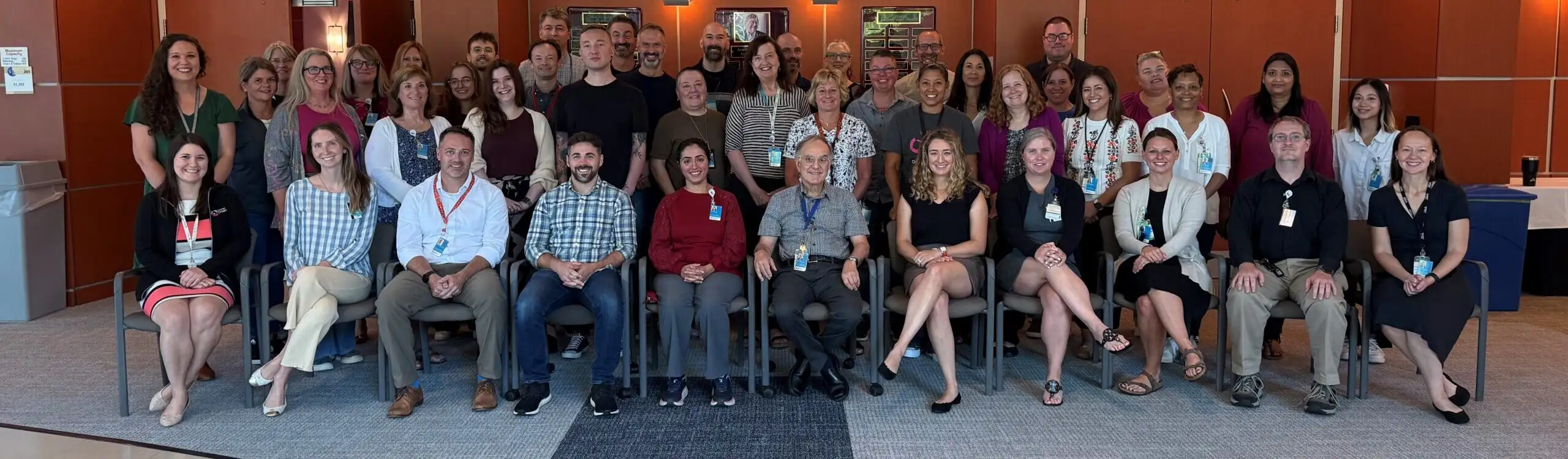
In 2019, Cincinnati Children’s received a $28 million grant to establish the Data Management and Coordinating Center (DMCC) for the RDCRN. Experts from many different divisions within Cincinnati Children’s—including Biostatistics and Epidemiology, Biomedical Informatics, and the Anderson Center—are lending their skills to create a data ecosystem where research would thrive.
The DMCC acts as the central hub of the network, securely storing the large amounts of data generated from studies. Together, the team crafts policies and procedures to ensure standardized data, strong regulatory support, and well-connected clinical sites. Armed with the tools to collect and analyze high-quality data, research teams can design and carry out innovative clinical trials.
“Clinical trial readiness is centered on having promising new treatments, but requires knowledge of the natural history of the disease and suitable endpoints, well-organized and supported clinical sites, innovation in trial design and in the technologies used to conduct the research, and leading-edge data management and analysis,” says Maurizio Macaluso, MD, DrPH, director of the Division of Biostatistics and Epidemiology and contact principal investigator of the DMCC. “It is critically important to involve patients, families, and advocates in all aspects of the research, from study design to advocacy with the regulatory agencies.”
Exploring New Ways to Promote Data Sharing
Now with a renewed five-year grant, the DMCC currently supports 21 research groups studying over 280 diseases with 180 patient advocacy group partners.
Cincinnati Children’s hosts clinical sites within several of the research consortia, including:
- Advancing Rare Disorders: Vascular mAlformation Research Network with CaNVAS (ARDVARC)
- Brain Vascular Malformation Consortium (BVMC)
- Consortium of Eosinophilic Gastrointestinal Disease Researchers (CEGIR)
- Developmental Synaptopathies Consortium (DSC)
- Network for Advancing Sex Chromosome Aneuploidy Research Readiness (NASCARR)
- Spastic Paraplegia Centers of Excellence Research Network (SP-CERN)
In the new grant cycle, the DMCC is exploring innovative ways to promote data sharing that leads to discovery, both within and beyond the network.
“We are looking forward to facilitating the transfer of research data from our rare disease studies to an NIH data repository expressly built for the RDCRN, making our data broadly available to researchers and to the community at large,” says Michael Wagner, PhD, Division of Biomedical Informatics and co-principal investigator of the DMCC.
With new research groups and international collaborations, the data will keep flowing from sources across the globe—including right here at Cincinnati Children’s.
Learn more about the RDCRN and the DMCC.
Learn more about Rare Disease Day at the NIH
Read more about new cystic fibrosis research led by experts at Cincinnati Children’s
Don’t Miss a Post:
- Subscribe to the Research Horizons Newsletter
- Follow Cincinnati Children’s Research Foundation on Bluesky, X and LinkedIn
Research By

Latest Posts


About this blog
The Research Horizons blog features news and insights about the latest discoveries and innovations developed by the scientists of Cincinnati Children's. This blog does not provide medical advice, diagnosis, or treatment. Email researchnews@cchmc.org with questions or ideas.
Subscribe to Our Newsletter