

Adherence Feedback Reduces Seizures in Children
Research By: Avani Modi, PhD
Post Date: April 3, 2026 | Publish Date: Jan. 24, 2026

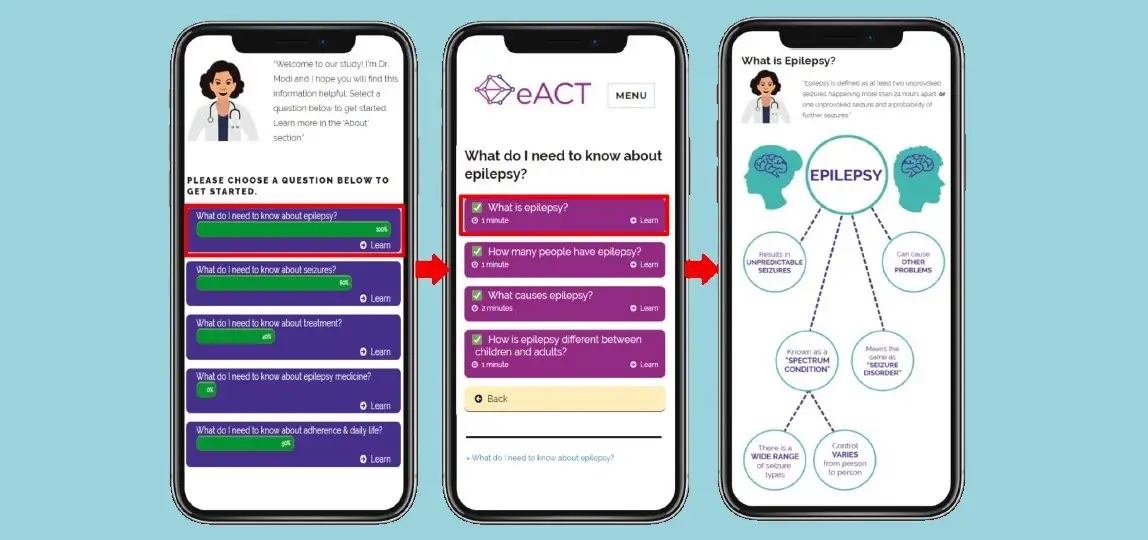
A multi-center study led by experts at Cincinnati Children’s reports better outcomes for children with epilepsy when parents receive a mix of digital medication reminders and education modules. But will insurers begin covering the costs?
For children with epilepsy, anti-seizure medications can make life-improving differences. But only when families stick to the program – which often isn’t as easy as it might sound.
The good news: a robust effort to encourage adherence does help. The more challenging news: effective behavioral interventions require consistent work from care providers that incur costs only rarely covered by health insurers.
These are the key findings from the SMART clinical trial, a four-center study involving more than 400 families who received a behavioral adherence intervention called Epilepsy Adherence in Children and Technology (eACT).
Details were published online Jan. 24, 2026, in the journal Epilepsia. Findings also will be presented April 7, 2026, at the 8th annual Excellence in Child Health Day research symposium at Cincinnati Children’s.
“Seizure reduction was found across all groups suggesting that all the behavioral and mHealth strategies were helpful regarding seizure control, which is extremely novel,” says corresponding author Avani Modi, PhD, director, Division of Behavioral Medicine and Clinical Psychology at Cincinnati Children’s. “Prior to this study, we had not seen significant impacts of behavioral interventions on seizure control.”
Why adherence matters
Previous studies have shown that up to 60% of young children with epilepsy have suboptimal adherence. The potentially serious consequences from missed doses include a 3-fold increased risk of seizures.
The eACT behavioral intervention includes four behavioralcomponents: education modules delivered to families via a website, automated digital reminders, individualized adherence feedback, and two problem-solving sessions with a therapist (if needed).
About 70% of the study participants involved medically underserved families across the three sites. The researchers focused on these children as they are considered higher risk for non-adherence.
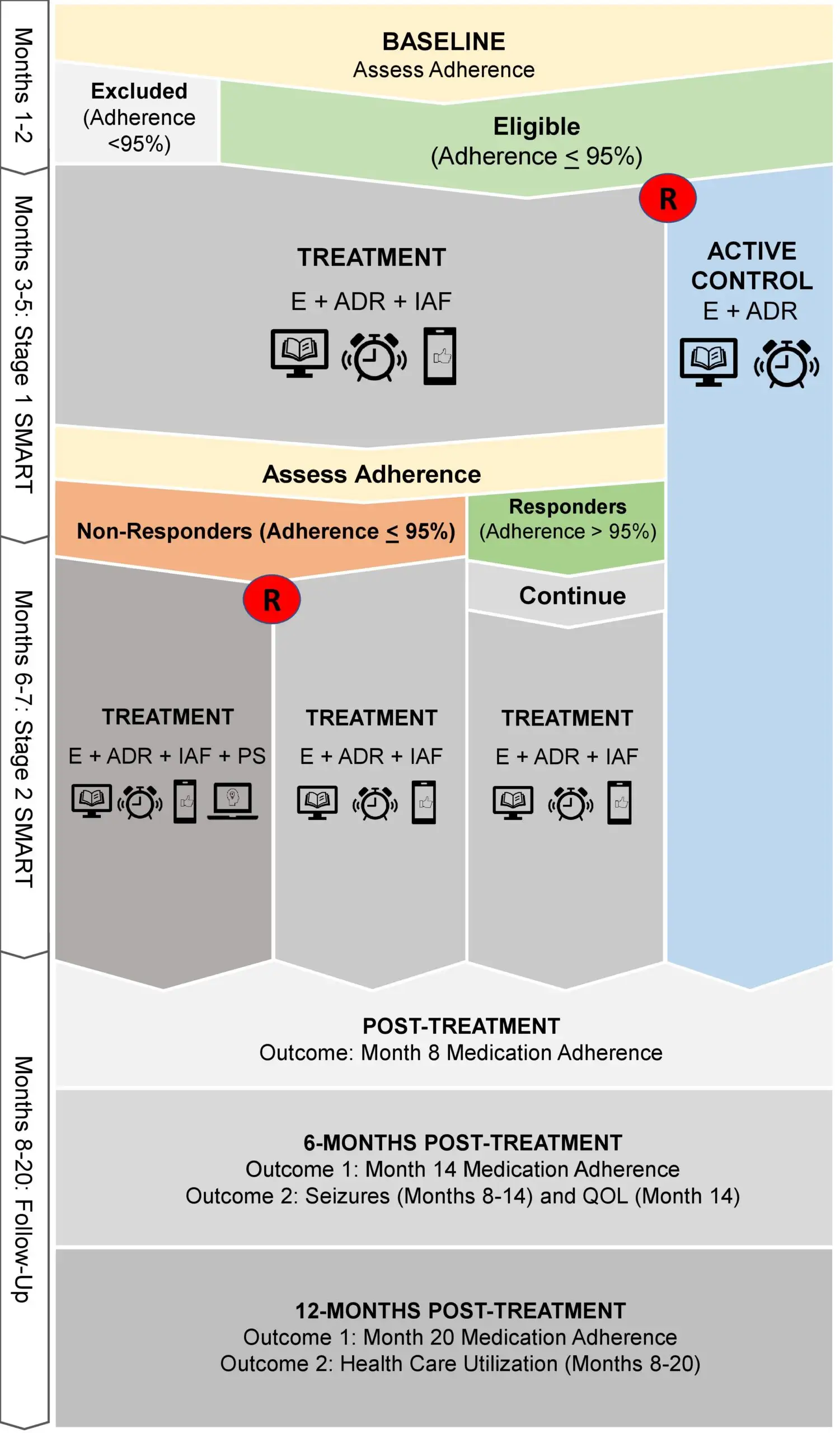
Trial participants were divided into three groups: one that received mHealth education and automated digital reminders; another that also received mHealth education, digital reminders, and weekly adherence feedback; and a third group that received additional problem-solving feedback if they continued to have suboptimal adherence.
Adherence improved by 13 percentage points among the families that received weekly feedback, which suggests that feedback around these behaviors can be beneficial when used.
“This is not too dissimilar from using smartwatches to monitor steps or apps that monitor diet. My belief is that individual feedback needs to remain in place to maintain behavior change,” Modi says.
After the five-month intervention ended, the researchers noted that adherence rates declined among all three groups. However, all the groups still showed an increased probability of seizure freedom at 6 and 12 months after the program. These results suggest that families likely need continuous feedback to achieve high adherence rates over time.
Cincinnati Children’s has built adherence encouragement into its epilepsy clinic services for years. The Comprehensive Epilepsy Center at Cincinnati Children’s is a key member of the national Epilepsy Learning Healthcare System run by the Epilepsy Foundation, which shares information among pediatric and adult hospitals and epilepsy centers on how to address barriers to adherence. Modi also participates in efforts underway at the American Epilepsy Society to spread strategies to address adherence barriers.
Looking forward, it will be up to hospitals and medical practices to decide how to adopt the most successful adherence interventions. Funding for the interventions largely ended with the completion of the SMART clinical trial.
“I wish insurance would compensate for adherence monitoring as we know it has an impact on health, but they generally do not,” Modi says.
About the study
Cincinnati Children’s co-authors included Stacy Buschhaus and Tracy Glauser, MD. Co-authors also included experts with the Medical University of South Carolina, Nationwide Children’s Hospital, the University of Georgia, the Children’s Hospital of Orange County, and North Carolina State University.
Funding for this research included a grant from the National Institutes of Health (R01NR017794)
Learn more
View a 2022 paper describing family feedback and satisfaction with the mHealth intervention
View a 2024 paper describing the design and methods used in the clinical trial
Learn more about learning health networks at Cincinnati Children’s
| Original title: | mHealth adherence in pediatric epilepsy: Outcomes of a sequential, multiple assignment, randomized trial (SMART) |
| Published in: | Epilepsia |
| Publish date: | Jan. 24, 2026 |
Research By

My research lab focuses on adherence to pediatric medical regimens, including the measurement of adherence, identification of adherence barriers, and the development and testing of adherence interventions.

Latest Posts


About this blog
The Research Horizons blog features news and insights about the latest discoveries and innovations developed by the scientists of Cincinnati Children's. This blog does not provide medical advice, diagnosis, or treatment. Email researchnews@cchmc.org with questions or ideas.
Subscribe to Our Newsletter