

Large Trial Finds Azithromycin Fails to Improve Preschool Wheeze
Research By: Richard M. Ruddy, MD
Post Date: June 29, 2026 | Publish Date: May 18, 2026

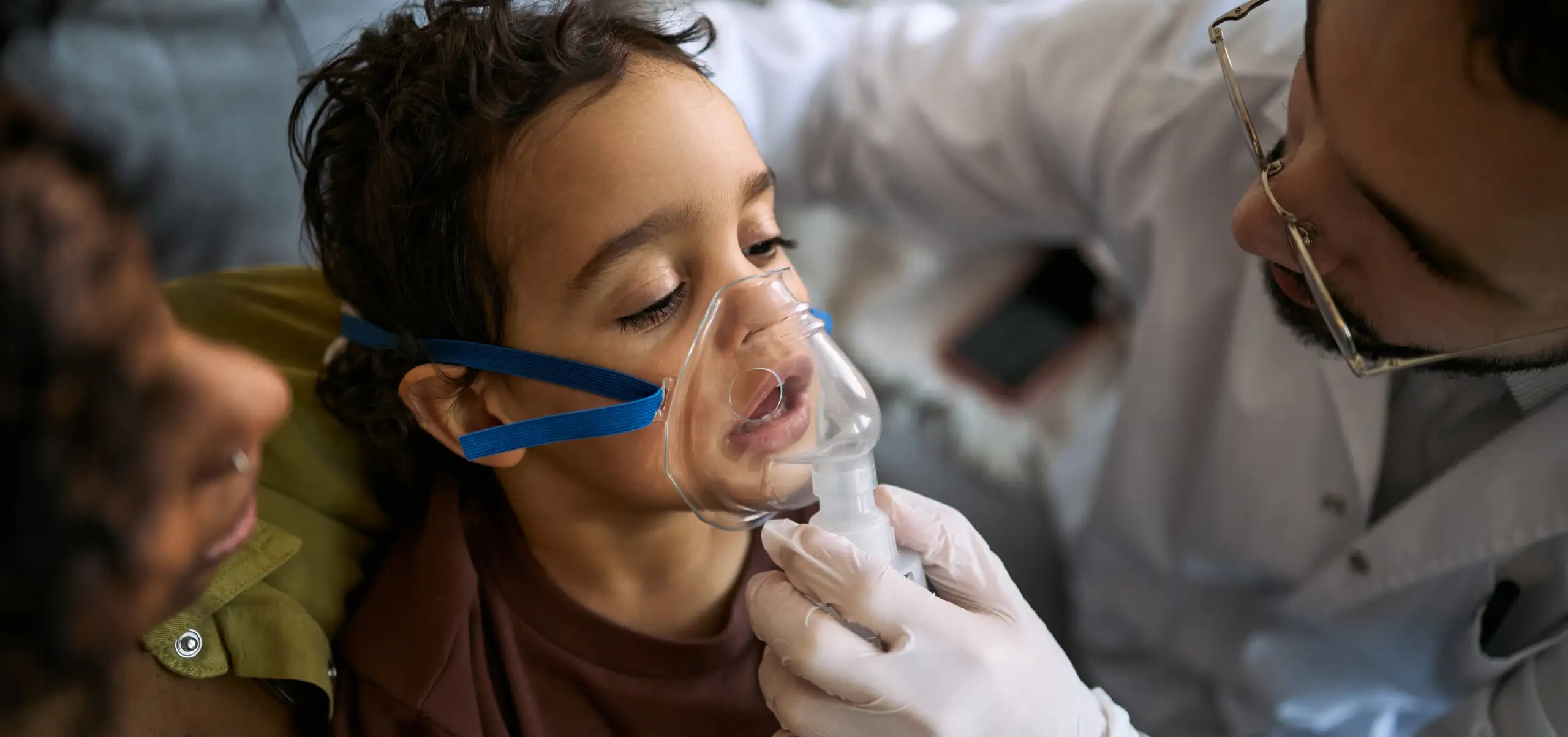
Research results reinforce current approaches to managing preschool wheezing without routine antibiotic use.
For years, clinicians have questioned whether bacteria may play a role in some preschool wheezing illnesses. This has led to interest in whether antibiotics like azithromycin could improve outcomes for children with severe wheezing requiring emergency care.
A multicenter trial published in The New England Journal of Medicine found that azithromycin did not improve outcomes in these children, helping to answer this longstanding question.
The AZ-SWED trial, conducted through the Pediatric Emergency Care Applied Research Network (PECARN), evaluated whether a five-day course of azithromycin improved outcomes in preschool children presenting to the emergency department with significant wheezing. Investigators also examined whether outcomes differed based on the presence of common airway bacteria thought to contribute to wheezing illnesses.
“Studies do not have to show benefit to change practice. Sometimes the most important contribution is giving clinicians confidence in what not to do,” says Richard Ruddy, MD, professor in the Division of Emergency Medicine who served as a co-investigator for the study.
A large emergency department study
The study enrolled 840 children between 18 and 59 months of age across eight pediatric emergency departments in the United States. Each child received standard care for wheezing, including bronchodilators (inhaled medications that open the airways) and systemic corticosteroids (medications that reduce inflammation). Children were also randomly assigned to receive either azithromycin or placebo for five days.
Investigators also examined whether outcomes differed based on the presence of three airway bacteria previously found more commonly in children with recurrent wheezing episodes, including Streptococcus pneumoniae, Moraxella catarrhalis, and Haemophilus influenzae. Children were grouped based on whether these bacteria were detected using a swab from the upper airway (behind the nose).
The primary outcome was symptom severity over five days using the Asthma Flare-up Diary for Young Children (ADYC), a validated caregiver-reported tool designed for young children with wheezing.
What the study found
The results showed no meaningful clinical benefit from azithromycin.
Among children in whom one or more of the prespecified airway bacteria were detected, symptom scores were nearly identical between the azithromycin and placebo groups. Similar findings were seen in children without bacterial detection.
Secondary outcomes also showed no significant differences. Length of stay in the emergency department, hospital length of stay, hospitalization rates, and return visits within 72 hours were similar regardless of treatment assignment. Approximately half of all enrolled children required hospitalization, reflecting the severity in this population.
Azithromycin increased bacterial clearance from the upper airway, but this did not improve symptoms or clinical outcomes.
“We saw the expected antibiotic effect of reducing bacterial carriage in the airway, but that effect did not translate into children feeling better, recovering faster, or improving clinical outcomes. That distinction is important because our goal is to improve outcomes that matter to children and families, not simply change test results,” says Ruddy.
Respiratory viruses remained common in this population. Rhinovirus was found in more than 70% of participants, supporting the role of viral infections as a major driver of these wheezing episodes, which may help explain why antibiotics did not improve outcomes.
The trial was ultimately stopped early after a planned review showed it was very unlikely that continuing to enroll participants would improve the results.
What this means for care
The findings may help explain why earlier outpatient studies showed mixed results. Some prior studies suggested azithromycin might help when started early in milder illnesses.
For emergency clinicians, the results support continued emphasis on evidence-based management of asthma and wheezing rather than routine antibiotic use in these cases.
At Cincinnati Children’s, this approach is already standard practice—treating preschool wheezing with asthma-focused therapies and using antibiotics only when clearly indicated.
“This study helps answer a question pediatric emergency clinicians have wrestled with for years,” says Ruddy. “For children with established moderate-to-severe wheezing, adding azithromycin did not improve outcomes. It supports our current approach of focusing on treatments that address airway inflammation rather than routinely adding antibiotics.”
Together, these findings provide strong evidence against routine use of antibiotics for preschool children with wheezing treated in the emergency department.
About the study
Matthew Lipshaw, MD, MS, Division of Emergency Medicine was a site co-investigator for the study and has since relocated to the University of Michigan. Shruti Sharma, Division of Emergency Medicine, was the lead clinical research coordinator.
The AZ-SWED trial reflects the power of large pediatric emergency medicine research networks to answer clinically important questions across diverse patient populations and care settings. Cincinnati Children’s participated through the Hospitals of the Midwest Emergency Research Node (HOMERUN) within PECARN (funded by HRSA).
Kurt Denninghoff, MD, and Fernando Martinez, MD, from the University of Arizona, were first and corresponding authors of the study, respectively. Additional external collaborators included experts from the University of Utah (the Data Coordinating Center), Children’s Hospital of Philadelphia and Perelman School of Medicine, Emory University, Medical College of Wisconsin, Children’s Healthcare of Atlanta, Children’s Hospital of Pittsburgh, University of Michigan, New York Presbyterian Morgan Stanley Children’s Hospital, University of Texas Southwestern and Boston Children’s Hospital.
Additional coverage of the study was provided by the University of Arizona.
Don’t Miss a Post:
- Subscribe to the Research Horizons Newsletter
- Follow Cincinnati Children’s Research Foundation on Bluesky, X and LinkedIn
| Original title: | Azithromycin for Preschoolers with Wheezing in the Emergency Department |
| Published in: | The New England Journal of Medicine |
| Publish date: | May 18, 2026 |
Research By


Latest Posts
About this blog
The Research Horizons blog features news and insights about the latest discoveries and innovations developed by the scientists of Cincinnati Children's. This blog does not provide medical advice, diagnosis, or treatment. Email researchnews@cchmc.org with questions or ideas.
Subscribe to Our Newsletter