

Supporting Family Caregivers of Children and Young Adults with Cancer and Other Blood Diseases
Research By: Naomi Joffe, PhD
Post Date: June 16, 2026 | Publish Date: March 1, 2026

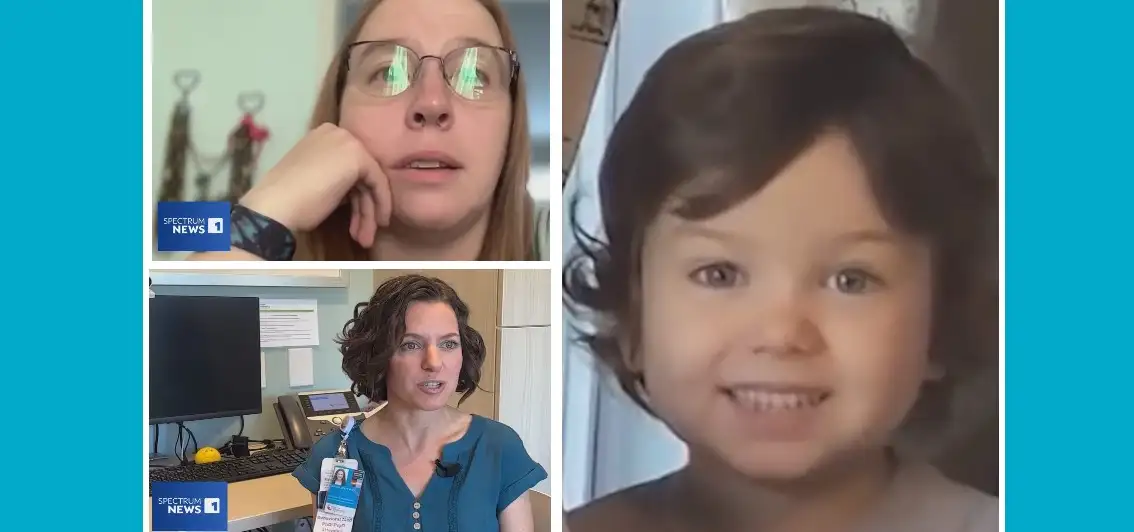
Cincinnati Children’s program serves as a national model for addressing caregiver mental health needs during children and young adults’ medical treatment
When a child or young adult faces a cancer diagnosis, or other serious blood disease, they count on their parents and loved ones to be strong for them. Sometimes, that means the caregivers need help themselves.
The Caregiver Mental Health program at Cincinnati Children’s was recently featured by Spectrum News 1 as area resident Taylor Fox described her experiences with her daughter Tessa, who died at age 5 after a three-year battle with a rare form of leukemia. Although Tessa passed in October 2023, her mom still receives counseling from the program and remains connected to the medical center in other ways.
“When patients have leukemia, or other conditions that require bone marrow or stem cell transplants, they can be in the hospital for a long time. Also, in many cases, families have travelled here from long distances and cannot easily access support services that might be available at home,” says pediatric psychologist Naomi Joffe, PhD. “So we developed a specific program for caregivers, most often parents, but it could be grandparents, spouses, or significant others of our young adult cancer patients — whoever is serving as a primary caregiver. We wanted them to be able to receive the support they need while they’re here. We also know that financial barriers are substantial for these families, so we have worked to address that.”
The caregiver program at Cincinnati Children’s started as an outgrowth of research showing that children with cancer fare better on several outcome measures when their caregivers get treatment for anxiety or depression when it occurs. Fueled initially by a philanthropic gift, further research justified the costs, which are now covered by insurance when possible, and by the medical center when not.
The caregiver experience is challenging. They manage appointments and medications, and day-to-day needs. They’re communicating constantly with medical teams. They serve as both an emotional backbone for their loved one, and as their advocates. So, if the caregiver has trouble concentrating or making decisions, it can affect the patient.
This is why, even though most children with cancer now survive into adulthood, almost a third of caregivers for children with cancer qualify for diagnoses of anxiety and depression, according to a recent study.
“When we think about bone marrow transplant patients, around half of caregivers are experiencing stress symptoms acutely during their child’s treatment,” Joffe says. “So, our support can be very impactful. The diagnosis holds lots of uncertainty. Families don’t know what the journey will look like throughout. They don’t know what their loved one’s outcome is going to be, and they’re dealing with that while also managing all the aspects of normal life at the same time.”
Cincinnati Children’s is among the world’s leading centers for treating children with cancer. Families come here from all over the world, including many patients who have relapsed from previous unsuccessful treatments at other centers–an even more stressful experience for families.
The Caregiver Mental Health Program is jointly supported by the Cancer and Blood Diseases Institute and the Mental and Behavioral Health Institute at Cincinnati Children’s. Key aspects of the program include:
- Services offered to our CBDI caregivers who are not otherwise able to access mental health care due to their loved one’s medical care.
- In-hospital counseling sessions, often occurring on the same floor as patient care.
- Four psychologists, a psychology fellow, plus an adult-care psychiatrist who can prescribe medications as needed.
- Medications filled by the hospital pharmacy so caregivers can access medication while providing care for their loved one.
- Therapy services for caregivers during their loved one’s treatment, with bereavement services available after a loss.
- Services billed to insurers that cover the care, with out-of-pocket costs covered by the Cancer and Blood Diseases Institute.
After launching the program, the team tracked program usage and costs that occurred during the federal fiscal year of 2024 (Sept. 1, 2023, through Aug. 30, 2024). Providers dedicated about 630 hours to caring for 60 client caregivers, including session time (66% of total hours), plus supporting activities and documentation.
The total costs associated with the program for one year were $51,395, according to a study published online in November 2025 in the Journal of Pediatric Psychology.
This program is one of many comprehensive services that have helped Cincinnati Children’s earn its No. 1 ranking in pediatric cancer care from U.S. News and World Report. If you are a primary caregiver for a child or young adult with cancer or a blood disease, and you want to learn more about this program, visit our Patient and Family Wellness Center or ask your loved one’s medical team about how to get connected.
Don’t Miss a Post:
- Subscribe to the Research Horizons Newsletter
- Follow Cincinnati Children’s Research Foundation on Bluesky, X and LinkedIn
| Original title: | Costs of implementing a caregiver mental health program in a pediatric academic medical center: a budget impact analysis |
| Published in: | Journal of Pediatric Psychology |
| Publish date: | March 1, 2026 |
Research By


Latest Posts


About this blog
The Research Horizons blog features news and insights about the latest discoveries and innovations developed by the scientists of Cincinnati Children's. This blog does not provide medical advice, diagnosis, or treatment. Email researchnews@cchmc.org with questions or ideas.
Subscribe to Our Newsletter