

Road to Researcher: Senad Divanovic, PhD
Research By: Senad Divanovic, PhD
Post Date: November 17, 2025 | Publish Date:

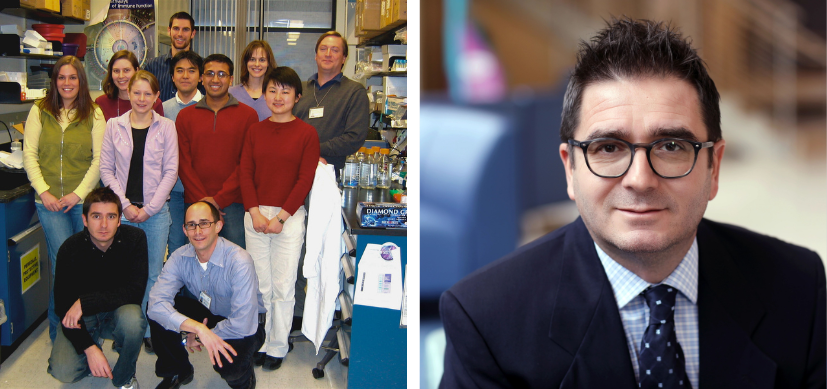
Resilience, persistence, innate curiosity, and the generosity of others have shaped every step of the journey for Associate Professor and Immunology Graduate Program Director of Admissions Senad Divanovic, PhD, to becoming a leading investigator at Cincinnati Children’s.
Born in Bosnia and Herzegovina, Divanovic was just a teenager when the Bosnian War forced him to flee his home in the 1990s. After moving through several countries, he arrived in the United States at age 16, carrying a little more than determination and a belief in the power of opportunity. His sister, who had come to the U.S. as an exchange student, connected him with a host family who welcomed him as one of their own and helped him finish high school. Their support gave him a profound sense of belonging and hope—something that would shape his life and career for decades to come.
That early influence became a guiding force in his work. Today, as an associate professor in the Division of Immunobiology, he channels that same spirit into caring for and mentoring his trainees with a goal to identify and inspire the next generation of scientists.
Divanovic first came to Cincinnati Children’s in 2000 to pursue his PhD, followed by a postdoctoral fellowship and the launch of his independent research program in 2010. His lab investigates how immune pathways shape health and disease, particularly the intricate connections between inflammation, metabolism and infection. Over the years, his team’s discoveries have deepened understanding of immune regulation and opened new avenues for treating complex disorders.
Among their most notable contributions are:
- Revealing how the IL-17 axis influences the progression of metabolic dysfunction-associated steatotic liver disease (MASLD)
- Revealing adipose tissue inflammatory contributions to metabolic and infectious diseases
- Pioneering the use of thermoneutrality as a more “human-like” model for studying inflammatory and metabolic diseases
- Identifying RP105 as a key negative regulator of TLR4 signaling in immune responses
Through this work, Divanovic has authored more than 88 publications and earned numerous awards, including recognition as a Cincinnati Children’s Research Foundation Endowed Scholar (2020) the recipient of the Basic Science Research Award (2025), University of Cincinnati Richard Akeson Excellence in Graduate Teaching Award (2022), and honors from the American Diabetes Association and the International Cytokine & Interferon Society.
Here he reflects on the path that led him from a teenage immigrant to researcher—and the lessons he hopes to pass on to the scientists of tomorrow.
Is there anything about your background or your personal journey that people might not expect, but that has shaped who you are as a scientist?
As a scientist, you need a certain level of resiliency, and commitment and passion for discovery. Knowing whether and when your funding will come through is challenging. You may write an outstanding grant proposal and not be funded. A lot depends on the timing of your proposed study and how the reviewers envision the proposed work will impact the field. Despite the challenges, you must believe in yourself, your trainees and in the success of foundational processes in your research program. Such criteria are necessary to overcome the common difficulties that all scientists face.
For me, the way I came to my position required quite a bit of resilience. I moved to the United States independently years ago. With the opportunities provided, I was able to complete my education in the U.S.
Upon my arrival, I barely spoke any English. I had to learn how to navigate the language, cultural barriers and educational process. Learning how to handle those critical tasks had a huge impact on me and drives me to extend opportunities to others. Extending an opportunity can truly change the life trajectory and, undoubtedly, it is a risk worth taking.
What inspired you to pursue a career in research?
My interest in research was born out of the biology classes I took as an undergraduate (at DePauw University.) It was at that time I realized the unlimited potential of scientific discovery. By nature, I’m a curious individual. Biology classes motivated me to learn about the complexity of biological processes that shape cellular function, and how such outcomes impact the organs and the overall health. That unlimited complexity of biology is what fueled my curiosity to understand the underlying processes and how they stop working in a disease setting. Hence, I wanted to pursue these ideas further, with the goal of alleviating human disease.
Was there a mentor, a project, or an experience early in your training that influenced the direction of your research?
I was attracted to the University of Cincinnati PhD program because of the work of Dr. Lawrence Stanberry [MD, PhD], who at the time was the head of the Division of Infectious Diseases at Cincinnati Children’s. However, soon after my arrival, Dr. Stanberry moved to another institution. Fortunately, at that time Cincinnati Children’s recruited a highly talented investigator from Johns Hopkins University’s School of Medicine, Dr. Christopher Karp [MD], whose research program focused on immunology of infectious and inflammatory diseases.
My interest in that line of research led me to first complete a rotation in Dr. Karp’s lab after which I opted to stay for my PhD training. Undoubtedly, Chris is the most influential person who has shaped my scientific career in various ways, from respecting scientific integrity to recognizing the need for relentless curiosity in research, to having a true passion for scientific discovery. Importantly, he also taught me the human aspects of the job, including mentorship and interaction with colleagues in a professional and supportive manner. In fact, the style of mentoring and training I received from Chris is what I apply now with my own trainees. Notably, the impact that Chris had on my career is a very small part of the overall impact he has had on the scientific community at large. Deservingly, he is now the director of Global Health Discovery and Translational Sciences at the Gates Foundation.
What makes Cincinnati Children’s stand out as a good place to build a research career?
It has a very large and scientifically broad research community that functions as a highly unified research community. It’s very compact in the way the researchers are set together. The researchers directly interact with clinical or physician scientists, which makes the research disease directed and provides a sense of being able to accomplish impactful discoveries connected to a bigger picture. It also provides a unique opportunity to train undergraduate, graduate students and fellows in your labs to allow for training of next generation scientists.
Essentially, I view Cincinnati Children’s research enterprise as an enzymatic reaction in a well-functioning cell, with all materials in place. The smaller the place feels, the more accessible it is to find a catalyst for next great discovery. In addition, Cincinnati Children provides strong support for all scientists and a development-friendly community for junior scientists that receive strong financial support, robust mentoring and guidance on how to successfully establish their career in research.
Has there been anything that has surprised you about being at Cincinnati Children’s, whether it’s cultural, professional or a scientific surprise?
I am somewhat surprised by how much the place has grown and the speed of that growth. During my 25 years at Cincinnati Children’s, I have seen it grow substantially from a small research building to what it is now. That comes with great potential, but also responsibility for additional support and investment in the research community. I must credit our leadership; they have seen the opportunity to invest in research and to fuel its growth.
You serve as the director of Admissions for the Immunology Graduate Program. How did you end up in that role?
I’m very passionate about education in general. My personal view is that providing opportunities for education, inclusive of training opportunities for the next generation of scientists, is critical for success. I was a lucky recipient of such opportunities when I came to Cincinnati Children’s. Being able to utilize those opportunities and making the most of them has certainly changed my career. As such, I view it as giving back, which is the least I could do. I interact with, train and mentor a lot of students and I use it as a vehicle to identify and recruit the best talent we can.
What advice would you give to someone who’s just beginning their research career?
Establish reasonable expectations and goals for a scientist at your level. Success requires resilience, patience, passion for discovery, curious nature, commitment, and a willingness to pivot from your trajectory as needed. Over time, you will get your training and knowledge on how to do identify critical questions, apply new techniques and technologies to solve key problems and move the field forward.
You need to be adaptable to change, as the science and approaches we use change frequently. More often than not, our hypotheses turn out not to be correct. We should not view this as a failure, but rather accept this as new knowledge that should be used as a guide for the next set of discoveries.
Science is not an 8-to-5 job. Although it is highly emotionally satisfying to solve a problem, the work never ends. The full answer is never reached, as there’s always another question to be asked. As such, it is an unbelievably rewarding job for those with passion for discovery, which must overcome the sacrifice.
If you could go back and tell your younger self something, what would that be?
Stay a bit more focused within one or two areas of scientific discovery. Since my initial training with Dr. Karp, I have always looked at scientific discovery in an open, holistic way. That’s where my curious nature prevails; once a key question is answered to the satisfaction of your curiosities, you move on to the next one.
Sometimes it can be overwhelming, and you can stretch yourself too thin. Focusing more on one area might be easier or lead to bigger recognition, but the impact it has on your personal satisfaction as a scientist is different for everyone. For me personally, the satisfaction of doing the discovery is more valuable than accomplishing goals or additional recognition.
What do you like to do outside of the lab? Is there anything that helps you recharge?
I’m a big soccer fan. In fact, everybody in my family is a huge soccer enthusiast and plays and competes on the soccer field. We passionately follow local, national and international soccer events. We also enjoy traveling, discovering other cultures and trying to learn about the world’s diversity in general.
Don’t Miss a Post:
- Subscribe to the Research Horizons Newsletter
- Follow Cincinnati Children’s Research Foundation on Bluesky, X and LinkedIn
Research By
Our research program focuses on the role of immune response in inflammation and metabolism.
Latest Posts
About this blog
The Research Horizons blog features news and insights about the latest discoveries and innovations developed by the scientists of Cincinnati Children's. This blog does not provide medical advice, diagnosis, or treatment. Email researchnews@cchmc.org with questions or ideas.
Subscribe to Our Newsletter