

Parents’ Role in the Triad of Adolescent Shared Decision Making
Research By: Adam Carle, MA, PhD | Ellen Lipstein, MD, MPH
Post Date: March 12, 2026 | Publish Date: Jan. 31, 2026

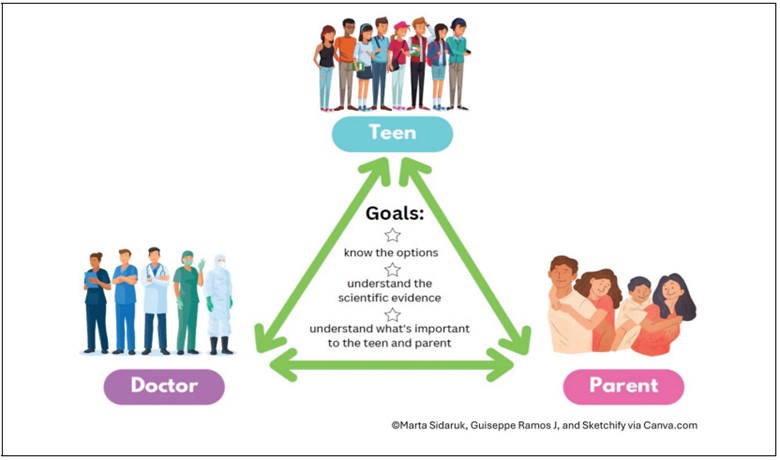
When an adolescent is living with a chronic health condition, every treatment decision—big or small—affects the entire family. And, while clinicians bring medical expertise and adolescents bring lived experience, parents often find themselves navigating the space between.
“The Doctor Only Knows What He Knows, but I Know What I Know”: Parent Perspectives on Shared Decision Making with Adolescents,” a recent article co-authored by experts from the James M. Anderson Center for Health Systems Excellence at Cincinnati Children’s, underscores that shared decision making (SDM) is a communication practice and a system-level process.
The study explores the three‑way dynamic among the adolescent, parent, and clinician. It reveals how parents view their role in SDM and what they need to feel confident and supported as their child grows more involved in their own care. The findings point to ways healthcare teams can strengthen relationships, reduce family stress, and improve decision‑making processes as teens assume more responsibility for their own care.
Lessons Learned
Drawing on in‑depth interviews with parents of adolescents managing long‑term conditions like asthma, ADHD, diabetes, and inflammatory bowel disease, the research highlights how parents view their roles as protectors, advocates, interpreters of medical information, and experts on their child’s preferences and needs. Across interviews, one theme was clear: trust, clarity, and structured support are essential for effective triadic SDM.
- Parents want to play an “executive role” in shared decision making. Parents described wanting to guide how involved their child should be in decisions based on their maturity, experience, and the clinical situation. Parents noted that their level of involvement may shift depending on the clinical situation.
- Parents view themselves as experts in medical information and in knowing their child. Many parents feel responsible for fully understanding treatment options and potential outcomes and for interpreting information for their child. This dual-expert role creates pressure to fully understand options and “get the decision right.” This highlights the importance of clinicians checking for understanding and acknowledging parents’ insights.
- Trusting relationships are foundational for effective triadic shared decision making. Families value clear explanations, direct engagement with adolescents, and reassurance that choices can be revisited over time. Families and clinicians felt these behaviors could help reduce anxiety, build confidence, and ensure all members of the triad feel heard and supported.
These lessons underscore that shared decision making with adolescents is more than a single conversation—it is a developmental partnership that adapts to the evolving needs of the triad (adolescent, parent, clinician).
Looking Ahead
By understanding how parents view their role and what they need to feel confident, clinicians can create more supportive, age‑appropriate, and family‑centered decision-making experiences.
As new tools emerge to better assess and strengthen triadic SDM, healthcare teams have growing opportunities to improve both the decision‑making process and outcomes for adolescents living with chronic conditions.
About the Study
Cincinnati Children’s co-authors include Adam Carle MA, PhD, Mary Anne Ammon, and Ellen Lipstein MD, MPH. Co-authors also include experts from the University of Cincinnati and Xavier University of Louisiana.
| Original title: | The Doctor Only Knows What He Knows, but I Know What I Know: Parent Perspectives on Shared Decision Making with Adolescents |
| Published in: | MDM Policy and Practice |
| Publish date: | Jan. 31, 2026 |
Research By

Adam is a clinically and quantitatively trained investigator who uses advanced statistical methods to study health disparities among adults and children, especially children with special health care needs.

The Lipstein Lab uses qualitative and quantitative methods to understand and improve the way families and clinicians make decisions together in the setting of chronic conditions.

Latest Posts


About this blog
The Research Horizons blog features news and insights about the latest discoveries and innovations developed by the scientists of Cincinnati Children's. This blog does not provide medical advice, diagnosis, or treatment. Email researchnews@cchmc.org with questions or ideas.
Subscribe to Our Newsletter