

EoE: The Fifth Member of the Atopic March
Research By: Wan Chi Chang, MS | Jocelyn Biagini, PhD | Marc Rothenberg, MD, PhD | Gurjit Khurana Hershey, MD, PhD
Post Date: March 31, 2026 | Publish Date: Feb. 9, 2026

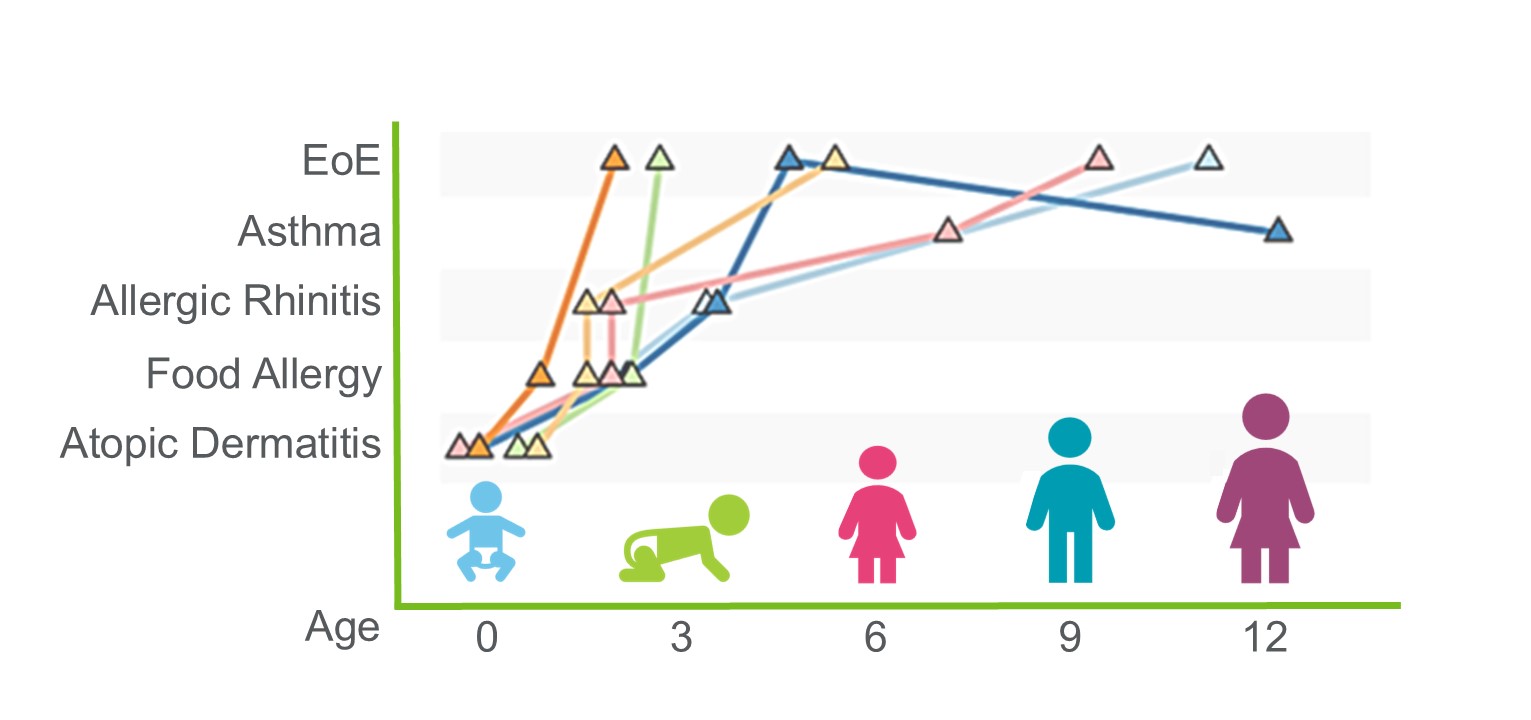
Researchers at Cincinnati Children’s identify eosinophilic esophagitis as part of the atopic march
Children with early-life atopic dermatitis (AD) are at a higher risk of developing other atopic comorbidities, including eosinophilic esophagitis (EoE). A recent study in the Journal of Allergy and Clinical Immunology, published February 2026, shows that children with AD within the first two years of life are 10 times more likely to develop EoE by age 8.
“These finding are important because EoE is relatively rare and epidemiologic studies of EoE in the context of the atopic march are limited. This study now provides a framework for clarifying the individual trajectories of allergic comorbidity development in children with AD that develop EoE. Ultimately, this will enhance clinical awareness for proactive screening to identify EoE in children with early-onset allergic manifestations,” says Jocelyn Biagini, PhD, senior author of the study.
Expanding the Atopic March
The “atopic march” describes the typical progression of allergic diseases, often beginning in early life. Atopic dermatitis (AD) is widely considered the first step in this march, as it commonly precedes the development of other allergic disorders.
Researchers in the Division of Asthma Research have built the first mechanistic longitudinal cohort study of pediatric AD—the Mechanisms of Progression of Atopic Dermatitis to Asthma in Children (MPAACH). Participants complete comprehensive annual visits to monitor AD severity and the emergence of other atopic diseases.
By following this cohort, researchers identified that the prevalence of EoE was 1.4% among children with early-life AD—10 times higher than in the general population.
Got Milk [allergy]?
The study found that all children who developed EoE had at least one additional allergic comorbidity besides AD. The risk of EoE was significantly higher for children with food sensitization or food allergy—and every child with EoE had at least one food allergy.
Sensitization or allergy to milk had the strongest association with EoE among all foods examined. These findings support another recent study from researchers at Cincinnati Children’s showing that a single-food elimination diet excluding milk yielded similar remission rates and symptom improvement as a more extensive elimination diet.
Moving Forward
Study co-authors advocate for including EoE in the atopic march. This addition may increase clinical awareness and proactive screening for EoE in patients with early-life AD, particularly those who also develop food allergies early in life.
About the study
Wan Chi Chang, MS, Division of Asthma Research, was the first author of the study. Co-authors also included Latha Satish, PhD, and Gurjit Khurana Hershey, MD, PhD, from the divisions of Asthma Research; Lisa Martin, PhD, from Human Genetics; and Julie Caldwell, PhD, and Marc Rothenberg, MD, PhD, from Allergy and Immunology.
Funding sources included a grant from the National Institutes of Health (U19 AI70235).
| Original title: | Longitudinal enrichment of eosinophilic esophagitis in children with AD: The MPAACH cohort |
| Published in: | Journal of Allergy and Clinical Immunology |
| Publish date: | Feb. 9, 2026 |
Research By


Our research focuses on understanding the epidemiology of asthma, with an emphasis on how environmental exposures and genetic factors interact to drive asthma risk.

The Rothenberg CURED Research Laboratory, supported by the Campaign Urging Research for Eosinophilic Diseases (CURED), is focused on elucidating the mechanisms of allergic responses, especially in mucosal tissues such as the gastrointestinal tract and lung.

My lab combines epidemiologic, basic, translational and clinical research approaches to answer fundamental questions related to childhood asthma, atopic dermatitis, food allergy and allergic rhinitis.

Latest Posts
About this blog
The Research Horizons blog features news and insights about the latest discoveries and innovations developed by the scientists of Cincinnati Children's. This blog does not provide medical advice, diagnosis, or treatment. Email researchnews@cchmc.org with questions or ideas.
Subscribe to Our Newsletter