

NIH Renews Funding for Eosinophilic Gastrointestinal Disease Research Group
Research By: Marc Rothenberg, MD, PhD
Post Date: November 2, 2026 | Publish Date:

Renewed federal funding will help researchers expand studies of rare eosinophilic gastrointestinal diseases while advancing biomarker discovery, patient care and future clinical trials
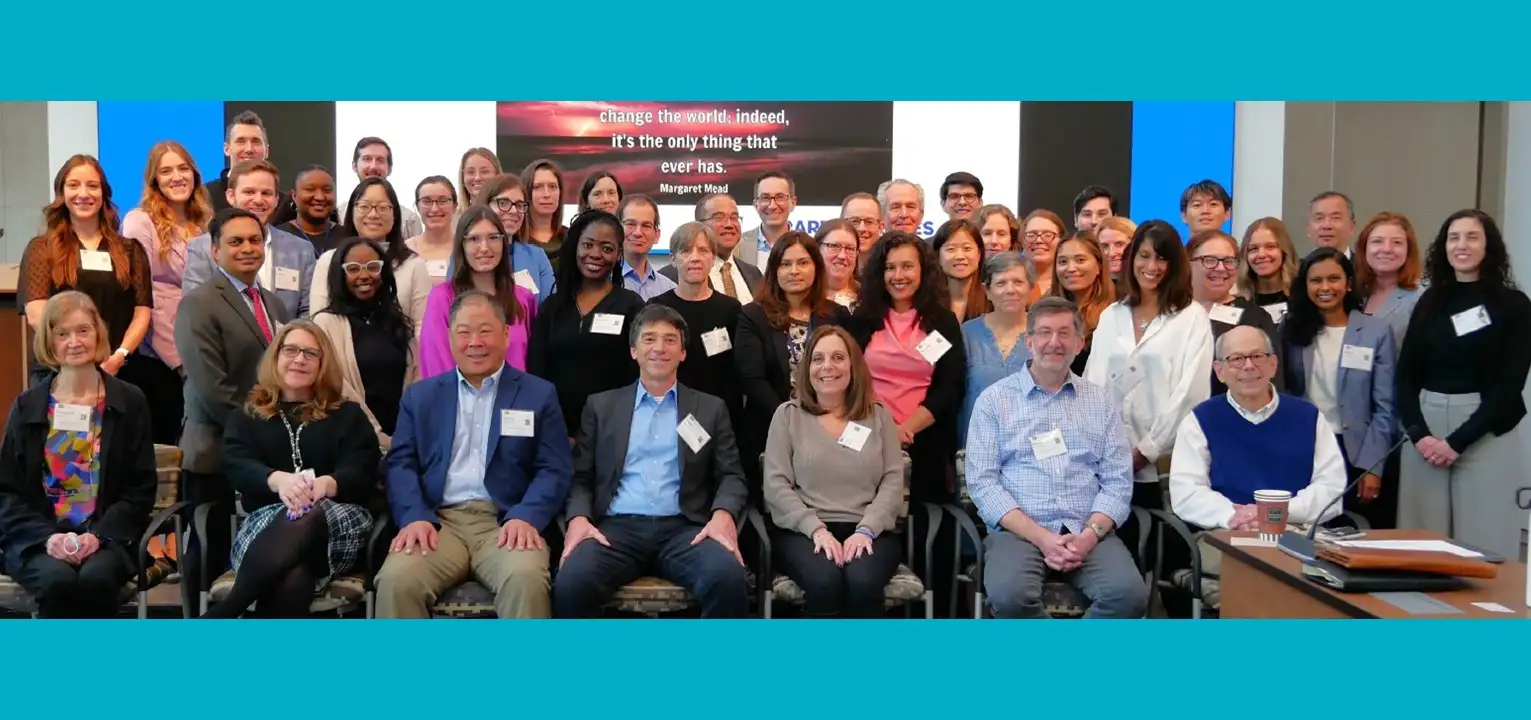
The Consortium of Eosinophilic Gastrointestinal Disease Researchers (CEGIR) has received a $7.7-million, 5-year grant from the National Institutes of Health (NIH) to continue research on rare eosinophilic gastrointestinal diseases (EGIDs).
Through collaboration between researchers, clinicians, patients, family members, and advocates, CEGIR studies a growing group of patients with a unique opportunity for long-term analysis. Led by Marc Rothenberg, MD, PhD, director of the Cincinnati Center for Eosinophilic Disorders and Division of Allergy and Immunology at Cincinnati Children’s, and Glenn Furuta, MD, director of the Gastrointestinal Eosinophilic Diseases Program at Children’s Hospital Colorado and Section Head of Pediatric Gastroenterology and Hepatology at University of Colorado School of Medicine, the group aims to increase knowledge, treatment, education, and clinical trial readiness in EGIDs.
EGIDs are a group of chronic immune system disorders in which eosinophils—a type of white blood cell—build up in the gastrointestinal tract, associated with inflammation and injury. For individuals diagnosed with EGIDs, it can be difficult to live normally, with many patients unable to eat many or even all types of food.
A Collaborative Effort to Reach Rare Populations
Compared with other forms of allergy and gastrointestinal inflammatory diseases, EGIDs are not well understood. Because they are rare, it can be difficult to recruit patients for studies, and research is still in the early stages.
To accelerate discoveries in EGIDs, CEGIR was established in 2014 through an initial grant from the NIH. Since then, the group has conducted controlled clinical trials, natural history studies, pilot studies, and training programs for new investigators. This work has helped establish consensus diagnosis and treatment guidelines for EGIDs, as well as FDA approval of the first two drugs for an EGID (eosinophilic esophagitis). Much has been accomplished with the support of patients and patient advocacy groups, our professional networks, and clinicians and researchers from around the globe.
Collaborative research is key for progress in understanding and treating these rare diseases, and CEGIR’s research is designed with the insight of multiple stakeholders, including patients. CEGIR works with dedicated patient advocacy groups, including the Campaign Urging Research for Eosinophilic Disease (CURED) and the American Partnership for Eosinophilic Disorders (APFED). Their partnership has been critical at every step of the way.
Today, CEGIR includes 17 clinical sites nationwide—including their administrative coordinating center at Cincinnati Children’s—and 89 active members. Now, as they begin their third grant cycle, they will focus on studying eosinophilic gastritis (EoG), eosinophilic enteritis (EoN), and eosinophilic colitis (EoC).
Studying Interconnected Diseases
Current and future projects will improve the accuracy of disease diagnosis and patient well-being by quantifying clinical states, endoscopic abnormalities, tissue pathology, and molecular and cellular pathoetiologies. By following patients over time, the team can establish natural histories and relationships between different types of EGIDs—especially as CEGIR discovered that EGIDs can occur as a continuum with involvement of multiple segments of the gastrointestinal tract.
“CEGIR is now poised to advance the scientific premises that EGIDs comprise distinct but related disorders defined by biomarkers, clinical presentations, clinical outcome metrics, and eosinophil-associated histopathologic features,” says Rothenberg. “Defining these parameters will facilitate clinical trial readiness and mechanism-based precision therapy.”
Another focus will be on upadacitinib, an FDA-approved treatment for several chronic inflammatory diseases. Upadacitinib works by targeting the signaling pathway triggered by cytokines involved in allergic inflammation, which can occur when the immune system reacts to a threat or overreacts to harmless triggers, such as environmental or food allergens. Emerging data from CEGIR studies have highlighted the role of type 2 allergic immunity in EoG and EoN. Based on these findings, CEGIR plans to conduct an early-stage, proof-of-concept clinical trial testing the use of upadacitinib in EoG.
Looking Ahead
In addition to advancing current research, CEGIR is also looking ahead to the future of the field. Their Pilot-Feasibility Governance and Career Enhancement Cores focus on supporting early-stage investigators by fostering research training and patient care in EGIDs. As they advance in their careers, CEGIR scholars transition into leadership roles, ensuring the continuation of EGID research and clinical care innovations.
“I am so grateful to our amazing team of researchers from excellent institutions across the USA, who all work relentlessly and innovatively to improve our understanding and better treatment of rare EGIDs,” says Rothenberg.
“We have made many advances during past cycles of CEGIR, yet gaps still remain in knowledge and patient needs. I am confident that the best is yet to come and better treatments will be forthcoming based on scientific advancements by CEGIR,” says Furuta.
About the Research Group
CEGIR research is supported by the National Institute of Allergy and Infectious Diseases of the National Institutes of Health and National Center for Translational Science under Award Number U54AI117804. The content is solely the responsibility of the authors and does not necessarily represent the official views of the National Institutes of Health.
Don’t Miss a Post:
- Subscribe to the Research Horizons Newsletter
- Follow Cincinnati Children’s Research Foundation on Bluesky, X and LinkedIn
Research By

The Rothenberg CURED Research Laboratory, supported by the Campaign Urging Research for Eosinophilic Diseases (CURED), is focused on elucidating the mechanisms of allergic responses, especially in mucosal tissues such as the gastrointestinal tract and lung.
Latest Posts

About this blog
The Research Horizons blog features news and insights about the latest discoveries and innovations developed by the scientists of Cincinnati Children's. This blog does not provide medical advice, diagnosis, or treatment. Email researchnews@cchmc.org with questions or ideas.
Subscribe to Our Newsletter