

Disruption in Science: Threats and Opportunities
Post Date: May 15, 2026 | Publish Date:

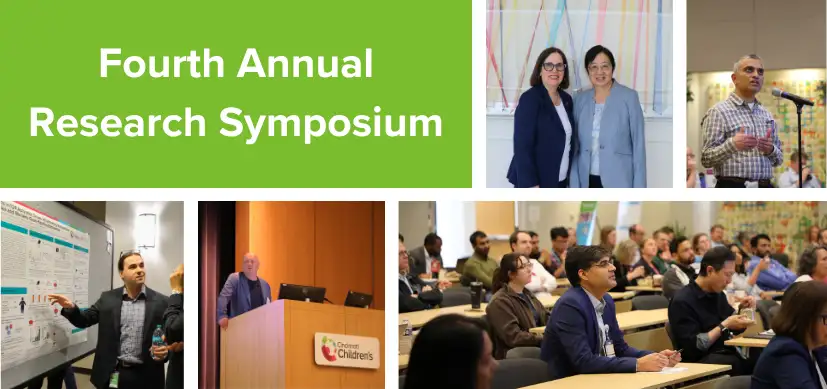
4th Annual Research Symposium at Cincinnati Children’s blends highlights of exciting projects with big-picture perspectives on the future of academic medicine
In 2023, the newest paid version of ChatGPT (o3) surprised many by performing at the level of a person with a 137 IQ on a standardized intelligence test—smart enough to quality for membership in Mensa.
Microsoft’s “BioGPT” product, trained on 15 million PubMed abstracts, can read mountains of scientific papers faster than any human graduate student, and not forget any of it. This explosive increase in the capability of large language models is already transforming the world of science. If used ethically, this technology has enormous potential value for finding safer, better compounds for everything from new medications to food additives.
So says Thomas Hartung, MD, PhD, a Johns Hopkins toxicology professor and director of the U.S. and Europe Centers for Alternatives to Animal Testing (CAAT). Hartung spoke May 14, 2026, at the fourth annual Cincinnati Children’s Research Symposium as part of the medical system’s Envisioning Our Future for Children speaker series.
“So this is really a development that in just a bit more that three years has gone from gimmick to I would say genius,” Hartung says.
Thanks to newer agentic AI models, hallucination rates – a huge early concern – have dropped from above 9% to below 1%. At the same time, the amount of data feeding into large language models has mushroomed exponentially as costs plummet and capacity soars for technologies like whole genome testing and mass spectrometry.
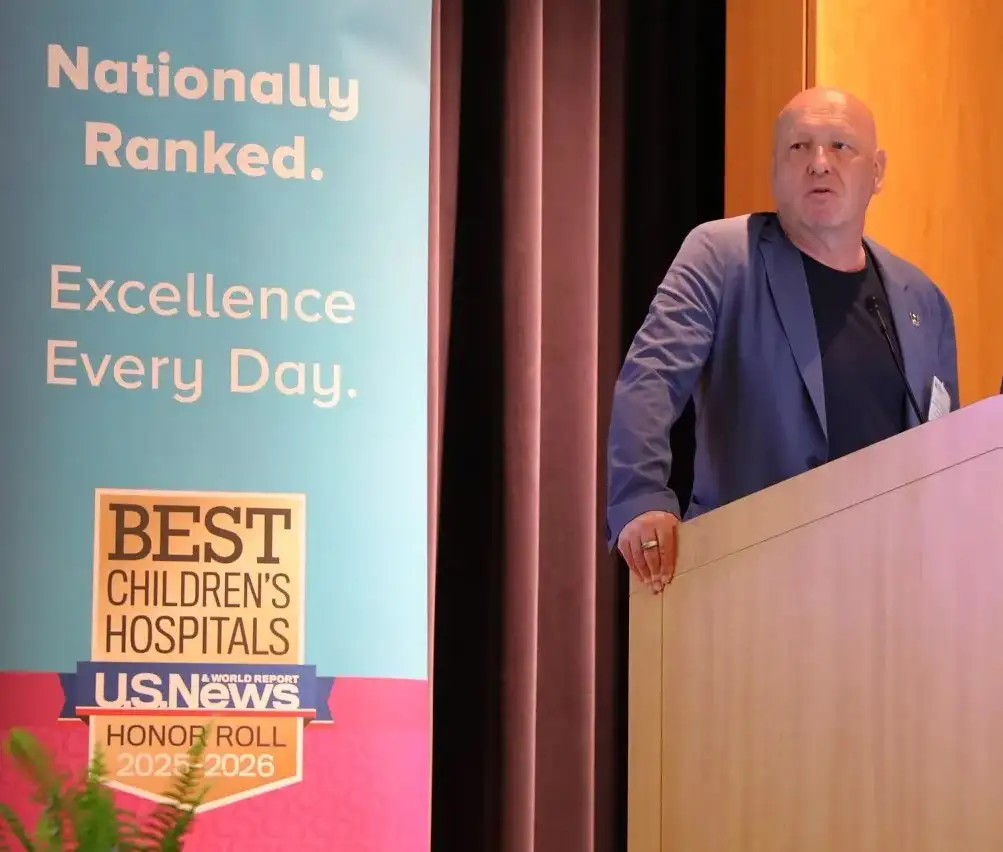
In the cross-cutting field of toxicology, this technology revolution suggests a transformational ability to test the human health risks of virtually any chemical exposure in stunningly short periods of time. And along the way, sharply reduce the need to continue using animals as the biological models for the testing.
Hartung’s talk touched on emerging research platforms ranging from human tissue organoids to digital twins and virtual humans, all with the growing ability to more accurately predict and measure how health can be affected by the interaction between unique people and their personal environments. He described this interaction as the human “exposome.”
“The exposome is a very interesting value proposition because 40 years after the (first) human genome, we know that 5% of diseases are fully genetic and 40% have a genetic component,” Hartung says. “But this leaves 70 to 90% of diseases, especially chronic diseases, with exposure (as an important component).”
Watch a recording of Hartung’s lecture.
‘Weatherproofing’ the research mission
Hartung’s address book-ended the Envisioning presentation from Elena Fuentes-Afflick, MD, MPH, chief scientific officer of the Association of American Medical Colleges. She recapped a list of challenges the medical-scientific workforce has recently faced, especially for those interested in pediatrics.
On one hand, the U.S. set a record in 2025 by exceeding 100,000 enrolled medical students for the first time. Large numbers of those students are participating in research projects during their training, and the impact of student-authored research publications has been rising.
However, the rates of students saying they seek to be active in pediatrics or to devote significant amounts of time to research during their careers remain low. Concerns about unpredictable funding support, delayed entry into well-paying careers, and struggles to improve work-life balance are widespread.
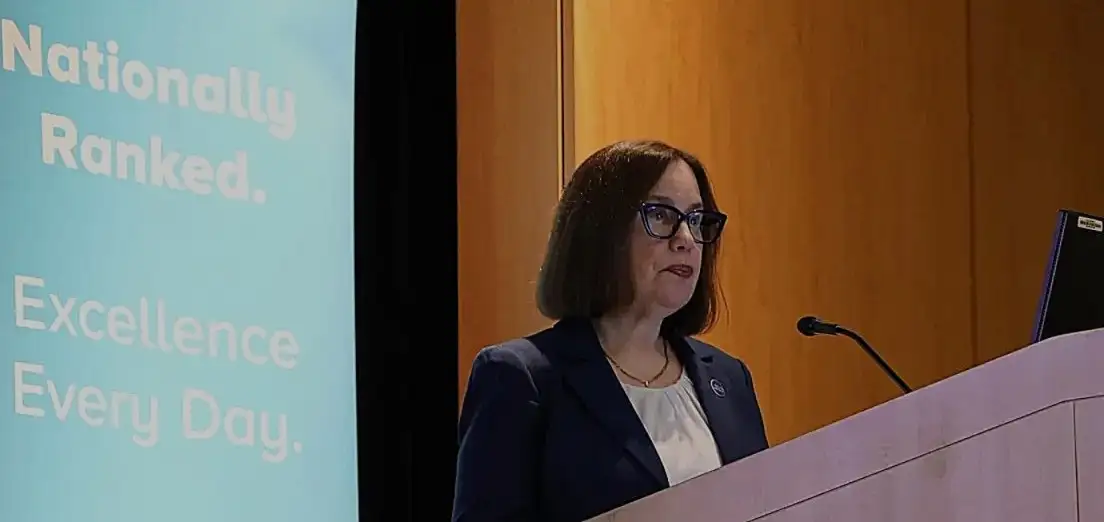
“We know that people have many career opportunities when they complete their training,” Fuentes-Afflick says. “So in academic medicine in particular, how do we ensure that we will have a robust pipeline of trainees to enter and join us in the workforce?”
Critical to maintaining a flowing pipeline:
Ongoing advocacy for research funding. Noting recent, but not ultimately successful, efforts from the current administration to slash funding from the National Institutes of Health, Fuentes-Afflick says the AAMC found itself suing the government for the first time since the Truman administration. “We are working every day on the Hill,” she says. “The most important lesson, I think, for (Congress) to come away with is that research is valuable. Research saves lives.”
Reducing the length of training. Just this year, the American Board of Pediatrics announced efforts to shave a year from the training time required for certain pediatric subspecialties.
Addressing burnout. Medical schools and graduate programs can do more to instill a sense of confidence in pursuing careers in academic medicine. Across the U.S., only 36% of faculty in recent surveys reported having formal mentoring, and 23% say they have had no mentoring at all—gaps that need improvement. Meanwhile, expanding programs to reduce training debt and to expand childcare services for trainees and faculty members could help with talent retention.
“We have talked about these issues for a long time,” Fuentes-Afflick says. “But as institutions, as organizations, I think working together we can implement effective strategies.”
Watch a recording of Fuentes-Afflick’s presentation.
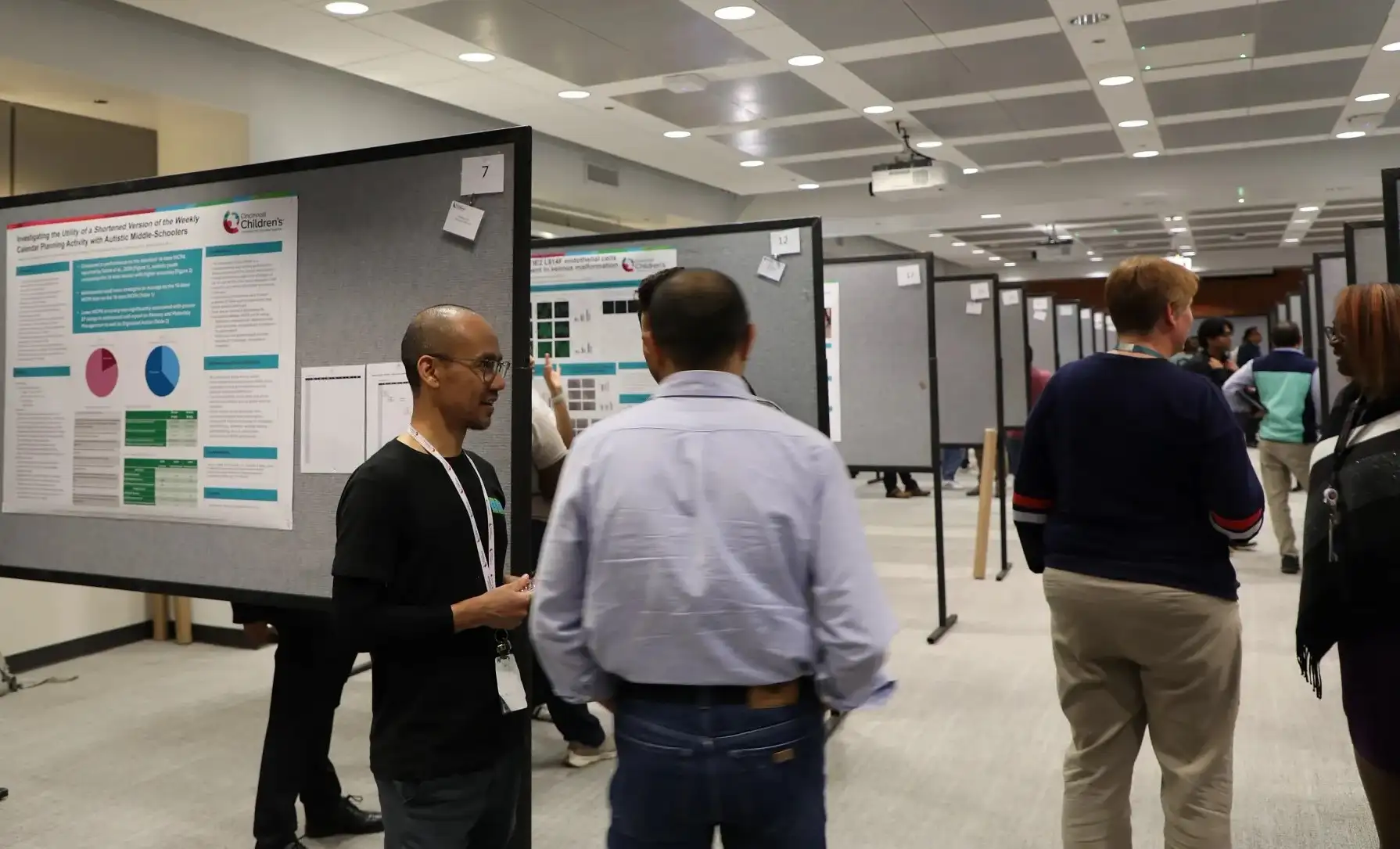
A pipeline of innovation on stage
Amid the big picture discussions, the symposium featured more than 50 poster presentations and several “short talks” updating attendees about potentially far-reaching research projects.
Nathan Salomonis, PhD, Division of Biomedical Informatics, shared highlights of his team’s work to identify cellular RNA splicing programs that could be important for treating acute myeloid leukemias, which have lower survival rates than other forms of childhood leukemia. The discoveries relied upon deep learning and computational informatics to predict which “neoantigens” would be best to target for improved CAR-T therapies.
Marie-Dominique Filippi, PhD, Division of Experimental Hematology & Cancer Biology, described progress in work that seeks to help teams performing stem cell transplants to pinpoint and harvest the youngest, most-effective stem cells for the procedures.
Punam Malik, MD, director of the Cincinnati Comprehensive Sickle Cell Center, updated her ongoing research to develop a less-expensive, simpler method to deliver gene therapy to people with sickle cell disease. Importantly, her team is improving the percentage of healthier, modified blood stem cells that reach targets in the bone marrow versus other tissues, which could further drive down the costs of the therapy.
John Erickson, MD, PhD, co-director for the Center for Perinatal Immunity, recapped research that pinpoints the CASP1 enzyme as a crucial factor for improving the ability of antibodies to fight off Listeria monocytogenes infections, which can be serious health threats during pregnancy. The study is based on new learnings about the function of acetylated salic acid, a tiny sugar with an apparently large impact on antibody function.
Ryan Brady, MD, MS, Division of Endocrinology and Diabetes, described early findings suggesting that functional MRI scans show differences in brain structure that indicate obese youth with Type 2 diabetes experience cognitive impacts not felt by obese youth who do not have diabetes.
Cassandra Goldfarb, PhD, Division of Behavioral Medicine and Clinical Psychology, shared findings that when youth live with chronic pain, the sleep disruptions they experience shift their circadian body rhythms into an unhealthy ‘night owl’ chronotype that worsens their pain experiences.
Do Hyup Kim, PhD, a bioinformatics analyst with the Division of Asthma Research, showed that gene expressions differ significantly between children with atopic dermatitis (AD) and children with AD and allergic rhinitis, potentially explaining why itching symptoms can be worse when both conditions are active.
Yuichiro Tanaka, MD, PhD, Division of Allergy and Immunology, successfully mimicked the effects of eosinophilic gastritis (EoG) in tiny human stomach organoids to help show that EoG severity can be worse when genes linked to EoG are overexpressed in the antrum portion of the stomach versus the fundus. This finding helps explain why some patients have different responses to treatments.
For More Details
Watch the full presentations from our ‘Envisioning’ speakers

Latest Posts
About this blog
The Research Horizons blog features news and insights about the latest discoveries and innovations developed by the scientists of Cincinnati Children's. This blog does not provide medical advice, diagnosis, or treatment. Email researchnews@cchmc.org with questions or ideas.
Subscribe to Our Newsletter